The basic rule
Can you distill your own spirits? What the law says in Germany
No. In Germany, nobody may distill spirits without a permit, not even in small amounts for personal use. Distilling is only legal if you operate a bonded distillery or a flat-rate distillery, or if, as a raw-material owner, you have your own fruit distilled at a flat-rate distillery.
Can you distill spirits in Germany? The basic rule
The answer lies in the Alcohol Tax Act, or AlkStG for short. Under Section 4(2), alcohol may generally only be produced in a bonded distillery. This means a tax warehouse with a sealed still that requires a permit from the main customs office. The law allows exactly two exceptions: the flat-rate distillery under Section 9, and the raw-material owner under Section 11. Anyone who doesn't follow one of these three routes is distilling without a permit. That's illegal.
The quantity makes no difference. One liter of plum brandy from your own garden falls under the ban just as much as a hundred liters. The purpose doesn't matter either. Whether the spirit is given away, drunk yourself, or made purely out of curiosity is irrelevant to the permit requirement. What matters is the process itself: anyone who separates alcohol from a fermented mash by distillation is producing alcohol in the sense of the law.
By the way, Schnaps isn't a legal term at all. It's everyday German for spirits of any kind. Tax law simply speaks of alcohol, meaning ethanol, regardless of whether it later becomes fruit brandy, pomace brandy, grape brandy, or grain spirit. So what matters for the permit isn't the category in the glass, but how it's produced.
Bonded distillery, flat-rate assessment, raw-material owner: the three legal routes
The bonded distillery is the standard commercial setup. Its still is kept under customs seal, the alcohol produced is measured, and tax is paid on the actual amount made. This is how large distilleries operate, as do many smaller fruit distilleries that sell their brandies commercially.
The flat-rate distillery is the farming version. It distills without a customs seal, and customs calculates the alcohol at a flat rate based on the amount of raw material used. A maximum of 300 liters of pure alcohol per year is permitted. This requires a farming operation of at least 3 hectares, though for fruit growing or viticulture, 1.5 hectares is enough.
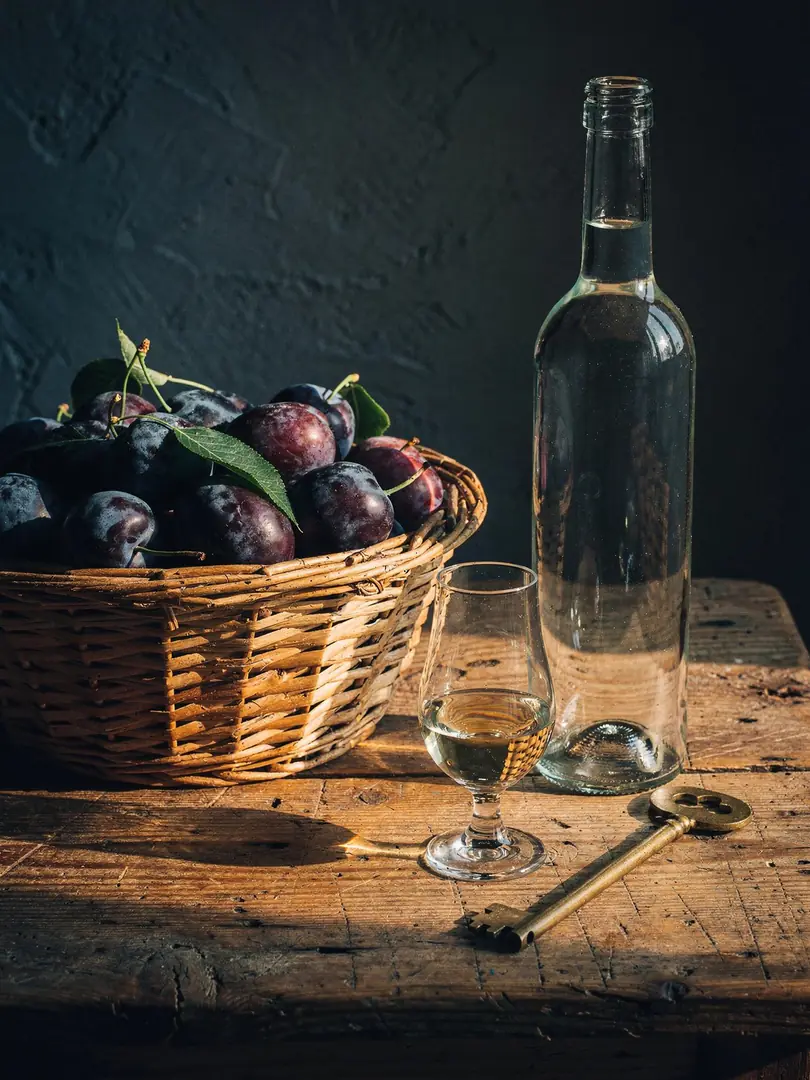
The third route is also open to private individuals. A raw-material owner doesn't own a still, but instead has their own home-grown fruit distilled at a flat-rate distillery, up to a maximum of 50 liters of pure alcohol per year, and only one person per household may do this. For most people with a traditional orchard meadow or a large garden, this is the only legal path to a brandy of their own.
Is there a tax-free allowance for personal use?
Two figures persistently circulate online: that you're allowed to distill either two liters or fifty liters privately. Both are wrong. The two liters come from Section 68 of the Alcohol Tax Ordinance and concern stills themselves. Anyone buying or selling a still with a capacity of more than two liters must report this to the main customs office. That doesn't grant any permit to distill.
The fifty liters, meanwhile, is the maximum for a raw-material owner, specifically liters of pure alcohol, distilled at an approved flat-rate distillery. Pure alcohol means alcohol calculated at 100% ABV. Fifty liters of that works out to roughly 125 liters of spirit at 40% ABV. There is no tax-free allowance in Germany for private individuals with their own still. Austria does have a tax-free home distilling allowance, but even that applies only to farmers under the flat-rate system.
Why distilling is so strictly regulated in Germany
The main reason is tax. Every liter of pure alcohol carries an alcohol tax of €13.03. For customs to collect it, they need to know where alcohol is being produced and how much. Anyone distilling without a permit is therefore breaking the ban and, as a rule, evading tax at the same time. That can trigger criminal tax proceedings.
Safety is another factor. Methanol forms in every fruit mash from the pectin in the fruit, and EU Spirit Drinks Regulation (EU) 2019/787 sets maximum limits for it. Licensed distilleries work with tested equipment and know their raw materials inside out. A tabletop still in the kitchen can't offer that same safety.
The strict system also has historical roots. Until the end of 2017, many distilleries supplied their alcohol to the state spirits monopoly. Terms like flat-rate assessment or distilling rights date from that era and live on in today's law. Anyone wanting their own brandy from their own fruit today has two realistic options: commission a nearby flat-rate distillery as a raw-material owner, or apply for a permit of their own as a farmer.