Clear or Golden
Does Fruit Brandy Age in Glass or in Cask?
Most fruit brandies don't mature in oak casks but rest in glass or stainless steel instead, so the fruit aroma stays clear and the spirit reaches the bottle colorless. Brandy, Cognac, Armagnac, and Calvados, on the other hand, must age in oak according to their rules.
Does Fruit Brandy Age in Cask? Usually Not, and That's Deliberate
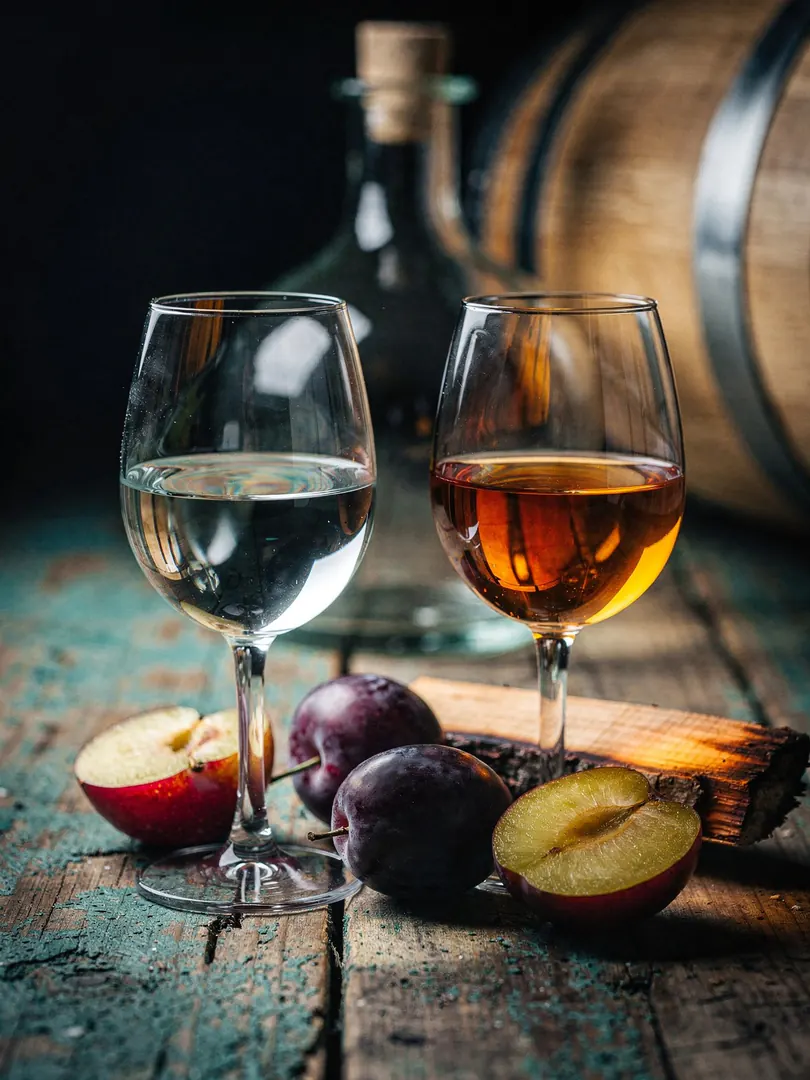
A kirschwasser, a Williams, or a quetsch typically sits in the glass clear as water. That's not down to any special filtering. Every fresh distillate is colorless, even the later Cognac distillate runs water-clear from the still. A spirit only gains color through wood or through caramel coloring, that is, burnt sugar used for coloring.
Fruit distillers above all want to showcase the fruit: the almond note of cherry, the juiciness of pear, the spicy character of quetsch plum. Oak would layer vanilla, tannin, and roasted notes on top of that. That's why the fresh spirit rests in vessels that release nothing, usually glass demijohns or stainless steel tanks. There it rounds out without changing its character.
The EU Spirit Drinks Regulation (EU) 2019/787 doesn't prescribe any maturation at all for fruit spirit, legally Category 9. The distiller decides for themselves whether and how long the spirit rests. There's also no maturation requirement for fruit spirit made from macerating unfermented fruit in alcohol and then distilling it.
Which Spirits Must Go into Wood: Brandy, Cognac, Calvados
Spirits made from wine are a different story entirely. Category 5, Brandy, requires maturation in oak: at least one year in containers of 1,000 liters or more, or at least six months in smaller casks. The shorter period for smaller casks has a reason. The smaller the cask, the more wood surface each liter touches, and the faster the wood takes effect.
How important this rule is becomes clear when you look at the neighboring category. Category 4 is called Spirit Drink and also refers to a wine distillate, but without any required maturation. What separates Spirit Drink from Brandy is, at its core, the oak cask. Regional rules go even further: Cognac must rest in oak for at least two years, Armagnac at least one year, Calvados two years, and Calvados Domfrontais even three.
For pomace brandy there's no requirement at all. A young Grappa reaches the bottle colorless and fresh. If it ages in wood, Italian rules allow it to be called "invecchiata" or "vecchia" from twelve months, and "riserva" or "stravecchia" from eighteen months.
Barrel-Aged Fruit Brandy: Permitted, But the Exception
Fruit brandy may certainly go into wood. Distillers use oak, but also ash, acacia, or cherry wood, which have a gentler effect. Barrel-aged spirits made from quetsch plums, apples, or pears are a fairly common sight. These fruits have enough character to hold their own alongside wood notes. For delicate aromas like raspberry or Williams pear, most distillers stick with glass.
Strict rules apply to color in fruit brandy. Coloring is generally prohibited. Only if a fruit brandy has matured in contact with wood for at least one year may caramel coloring be added, and then only to adjust the color. A golden fruit brandy without wood aging would therefore not be legally compliant.
Barrel-aged fruit spirit is more widespread in Southeast Europe than in the Alpine region. The Croatian geographical indication Hrvatska stara šljivovica carries the word "stara," meaning old, right in its name. Many Hungarian Pálinka distillers also offer wood-aged variants alongside their clear spirits.
Glass or Cask: How to Spot It in the Glass and on the Label
Color is the first clue. A fruit brandy with a golden or amber hue has been in wood. A colorless wine distillate, on the other hand, may not be called Brandy unless it has completed its time in oak; Blanche Armagnac, for instance, is a separately regulated, colorless Armagnac without wood aging.
Labels often carry phrases like "aged in oak cask" or "cask-matured." Such statements are voluntary but must be accurate. On the nose, wood reveals itself through vanilla, caramel, spice, or nutty notes, while a spirit aged in glass smells cleanly of fruit.
A borderline case is Pisco from Peru. It's a wine distillate, but according to Peruvian regulation it may not go into wood at all. It rests for at least three months in neutral containers and reaches the market colorless. Wood, then, isn't a quality marker in itself, but a stylistic choice that some rules require and others forbid.
If you want to understand exactly how wood works its magic, you'll find the answers in the stops that follow: which types of wood exist, where the color comes from, and what happens with volume inside the cask.