From VS to XO
Drinking Cognac: neat, on the rocks, or in a cocktail?
Cognac can be enjoyed neat, on the rocks, with tonic, or in a cocktail; according to the trade body BNIC, roughly two-thirds of Cognac consumed worldwide ends up in cocktails. Young VS qualities are meant for mixing, while aged XO Cognacs show their depth best neat and at room temperature.
Drinking Cognac: there's more than one right way
Cognac has the image of a drink for leather armchairs and fireside evenings. The numbers tell a different story. The Bureau National Interprofessionnel du Cognac, known as BNIC, the trade association based in the town of Cognac, wrote in 2022 that two-thirds of the Cognac consumed worldwide ends up in cocktails. The largest market by volume is North America, where Cognac has long been mixed in bars.
This fits the structure of what's available. Of all Cognac bottles sold in 2025, according to BNIC figures, 55.2 percent were VS, 38.0 percent VSOP, and only 6.8 percent XO. So the bulk is young Cognac, and that's primarily intended for mixed drinks. Anyone who only knows Cognac as a digestif for special occasions is seeing just a small slice of the picture.
VS, VSOP, XO: which Cognac for what?
The letters on the label indicate the minimum age, always referring to the youngest brandy in the blend. A VS has spent at least two years in oak, a VSOP at least four. For XO, since April 1, 2018, the minimum is ten years; before that, it was six.
This gives a simple guideline. A VS tastes fresh, fruity, and lively, with pronounced wine fruit and still little oak. It's the classic Cognac for long drinks and cocktails. A VSOP is rounder and versatile: just as good in a cocktail as neat or with an ice cube. An XO has developed notes of dried fruit, nut, spice, and sometimes leather through long cask aging, which would be lost in a mixed drink. It's usually drunk neat.
Cognac neat: glass, temperature, and patience
When tasting Cognac neat, it's best to use a tulip glass and drink it at room temperature. After pouring, it's worth waiting a few minutes. The spirit gets some air, the initial alcohol hit dissipates, and the aromas from grape and oak come forward.
Then follows the same approach as with any spirit: look, smell, a small sip to acclimate the mouth to the alcohol, and only afterward the actual tasting sip. With an aged Cognac, it's worth paying attention to the finish. Good qualities linger long on the palate, and many cellar masters even assess the aroma of the empty glass, where the oak notes can linger for a long time.
Cognac on the rocks isn't a breach of etiquette, but it does change it. The cold dampens the aromas, and the melting ice gradually dilutes it. For a young VS or VSOP on a warm day, this is a refreshing way to enjoy it; for an aged XO, it's usually a shame.
Cognac in a highball and in a cocktail
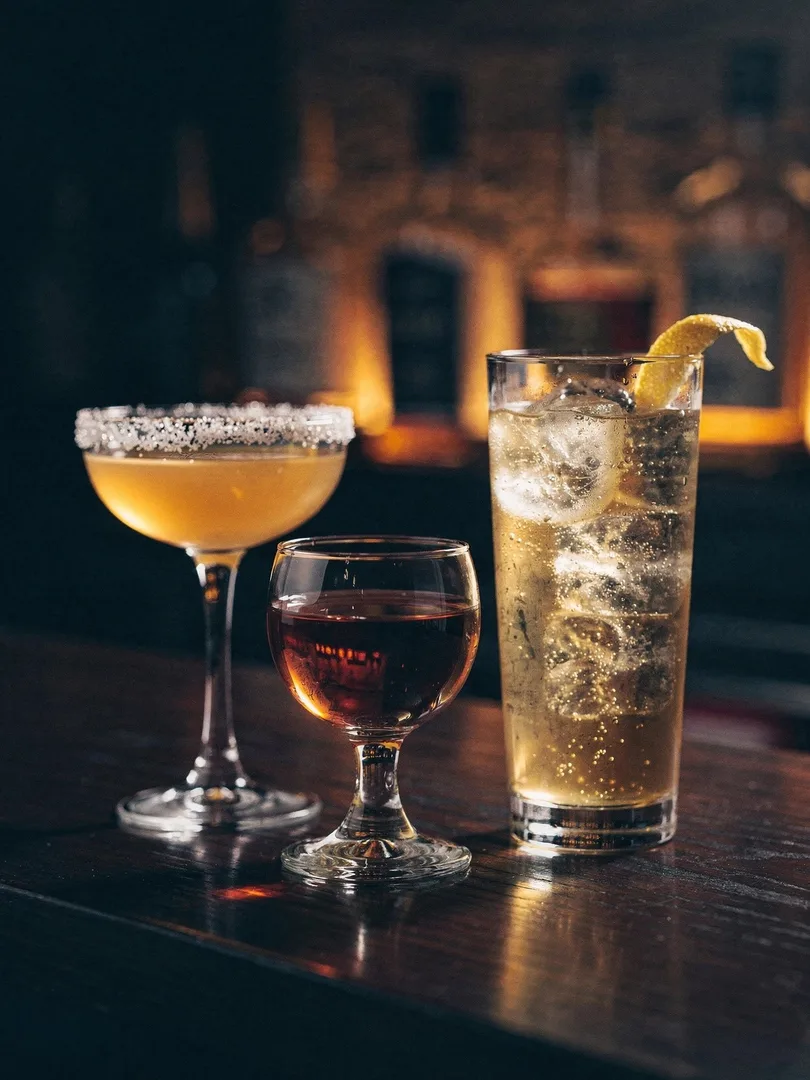
The simplest option is the highball: Cognac with tonic water or ginger ale over ice, often with a citrus twist. It's light, uncomplicated, and shows off the fruit of young Cognac. Alongside that are classic cocktails like the Sidecar with orange liqueur and lemon juice, or the Brandy Crusta, both from early bar culture.
In a cocktail, it's all about the balance of sweetness, acidity, and alcohol. A VS brings enough fruit to hold its own against lemon and liqueur, without losing expensive cask aromas in the process. An aged XO, by contrast, would contribute barely more to a cocktail than a good VSOP.
Armagnac, brandy, Calvados: does this apply to them too?
Much of what applies to Cognac can be applied to its neighbors. Armagnac is usually distilled in a single pass in a column still, known as the alambic armagnacais, and matures for at least one year in oak. It often comes across as more robust and spicier than Cognac. Many enthusiasts drink it neat, though young qualities work just as well in a cocktail.
Brandy, as an EU category, isn't tied to any particular origin. It requires at least 36 percent alcohol and maturation in oak; everything else is up to the producer. That's why the range spans from simple mixing brandy to long-aged spirits meant for the tulip glass. Calvados, finally, is a spirit distilled from cider, not wine, bringing apple rather than grape to the glass. For all three, the rule holds: young tends to be mixed, aged tends to be neat.