What the nose checks for
Nosing like a distiller: fruit, stone, wood, off-notes
A good spirit smells first of its raw material — cherry, pear, plum or grape. Depending on the style, there's also a stony note from the pit and wood notes from the cask. Solvent, vinegar, rotten eggs or mustiness, on the other hand, are off-notes pointing to faults in the mash or distillation.
Fruit first: how to smell a brandy's raw material
Distillers judge a spirit almost always with the nose before it ever reaches the mouth. They sniff briefly, pause, and sniff again, since after a few breaths the nose grows used to the smell and reports less. Alcohol is often up front. Behind it, the fruit needs to be recognisable — clearly enough that you could name it without the label.
Every fruit has its own signature. A Williams smells intensely of ripe, juicy pear, an apricot brandy of apricot and sometimes blossom, a plum brandy spicy and faintly of plum jam. How varied a single spirit can be is described in the specification for Swiss Zuger Kirsch and Rigi Kirsch: it lists nuances such as "floral," "spicy," "vegetal" and "sweetish," alongside a full-bodied, complex character.
The difference between Obstbrand and Obstgeist is also noticeable on the nose. A fruit brandy made from fermented mash smells of ripe, sometimes almost cooked fruit and carries light fermentation notes. An Obstgeist, made by steeping unfermented fruit in neutral alcohol, smells instead more like freshly picked fruit.
The stone note: almond, marzipan, and where the line lies
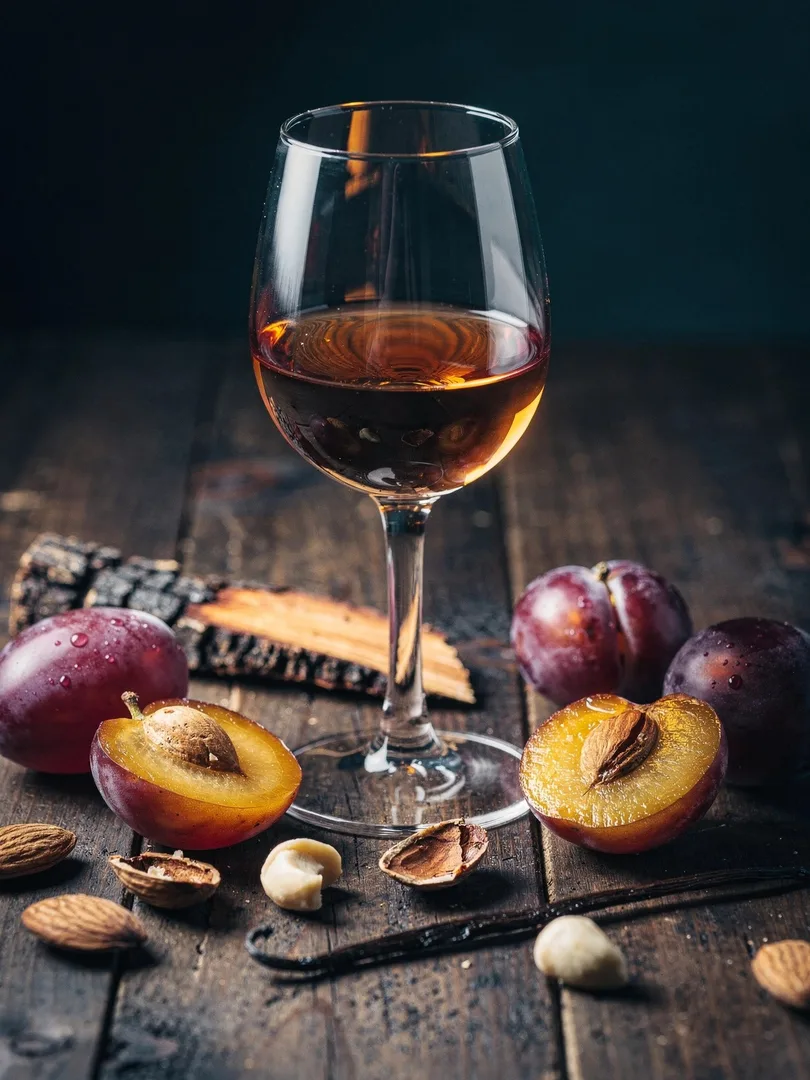
With cherry, plum, apricot or mirabelle, a hint of bitter almond is part of the typical profile. It comes from the pits. In Zuger and Rigi Kirsch this almond note is explicitly intended: the specification traces it to the regional small-fruited varieties with their high stone content. It can be barely perceptible or quite pronounced.
Too much, though, is a fault. If pits are crushed during mashing, more hydrocyanic acid ends up in the brandy. The EU caps it for fruit brandy at 7 grams per hectolitre of pure alcohol. An overpowering note reminiscent of marzipan or bitter-almond baking flavour is therefore a warning sign. Under light exposure, hydrocyanic acid can also form ethyl carbamate, a substance the German Federal Institute for Risk Assessment wants kept as low as possible.
Wood in the aroma: vanilla, dried fruit, nut
A spirit aged in an oak cask smells different. The wood contributes vanilla, caramel, toasty notes, nut and dried fruit. For Cognac, Armagnac, brandy and Calvados this ageing is mandatory, and its aroma merges with the flavours from wine or cider.
A wood-aged fruit brandy should still smell of fruit. Distillers also use ash or acacia alongside oak, which have a more restrained effect. If a golden plum brandy smells only of vanilla and wood, the cask has drowned out the fruit. A good wood-aged spirit shows both side by side.
Spotting off-notes: solvent, vinegar, must, sulfurous
The most common off-note recalls nail polish remover or glue. It comes from the foreshots, the first part of the distillate, which contains highly volatile substances like acetaldehyde and ethyl acetate. The Zug code of practice requires separating the foreshots for as long as they smell of acetaldehyde or ethyl acetate, in other words solvent. If too much of this remains in the spirit, it will have an unpleasant sting in the nose.
Other faults arise earlier, in the mash. The code of practice excludes mashes with the following notes from processing: musty or moldy notes, as well as notes of acetic acid, butyric acid, or acrolein, which it describes as a pungent smell, or an odor of sweat or mice. There is also a putrid smell distillers call sulfurous, often reminiscent of rotten eggs.
At the end of distillation comes the feints, with heavy, fusel-like substances. These are separated off and often redistilled. If any remain in the spirit, it will seem dull, heavy, and lacking clarity. Once you've consciously noticed such notes, you'll recognize them again. A clean spirit smells of fruit, and little else.