Plum, Apple, Cherry
Fruit & Raw Material
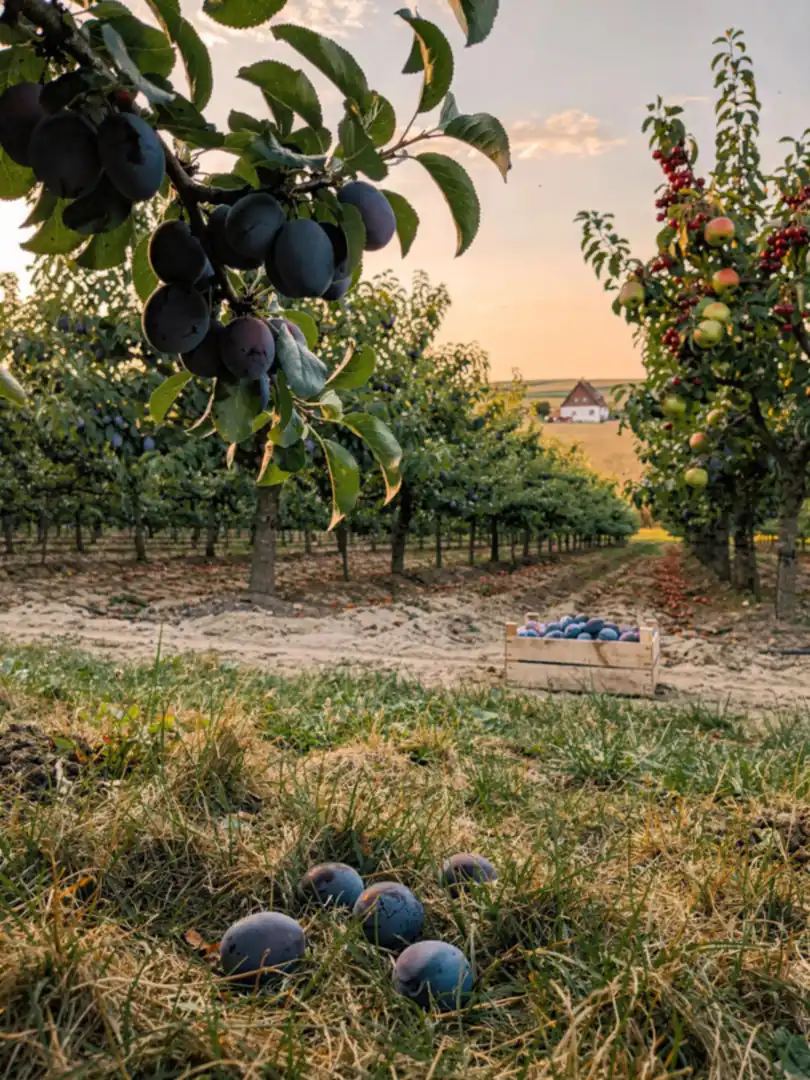
Anyone driving through Szatmár in late summer sees plum trees along field edges, in house gardens, and in long rows across larger plots. The Szatmár plum has given the region its reputation: Tarpa celebrates the Tarpai Szilvanapok, and in Szatmárcseke teams gather for the plum jam festival, where Szilvalekvár is cooked down in large kettles.
For distilling, it's not the prettiest plum that counts, but the ripest. Only once the fruit softens and its sugar rises does it bring enough aroma and alcohol into the mash. Unripe fruit tastes green and thin in the finished spirit. Both Szatmári Szilvapálinka and Békési Szilvapálinka are made from plums. But they come from different parts of the country—one from the northeast, the other from the southeast.
In the Nyírség, the sandy landscape around Újfehértó, grows the sour cherry variety named after the town. The Újfehértói fürtös bears its fruit in clusters, and the specification for Újfehértói meggypálinka permits only five varieties: Újfehértói fürtös, Debreceni bőtermő, Kántorjánosi 3, Petri and Éva. The villages the cherries must come from are also named by name.
With apples, a look at the fruit itself helps. The Szabolcsi alma is protected as a table apple. Its specification lists Gála, Jonathan, Jonagold, Golden Delicious, Red Delicious, Idared and Pinova, along with a minimum of 12 degrees Brix and the county's September weather as a key factor. This sugar content is of interest to the distiller too, since sugar is what later becomes alcohol.
So the region divides between stone and pome fruit. Plum and sour cherry each contain a pit, whose almond note can be tasted in the brandy, while the apple carries none and tends to come across lighter and fresher in the glass.