Fermentation Without Sugar
Mash & Fermentation
Keeping sugar out is the core of the Pálinka rule. Anyone preparing a mash may add neither sugar nor flavorings nor foreign alcohol, and must make do with whatever sugar the fruit brings on its own. A fruit with little sugar therefore yields less spirit than a sweet one, which is exactly why ripeness matters so much.
For Újfehértói meggypálinka, the process is laid out in the specification. The sour cherries are pitted, nothing may be added to the fruit pulp, and fermentation begins with dry yeast that has first been rehydrated in water.
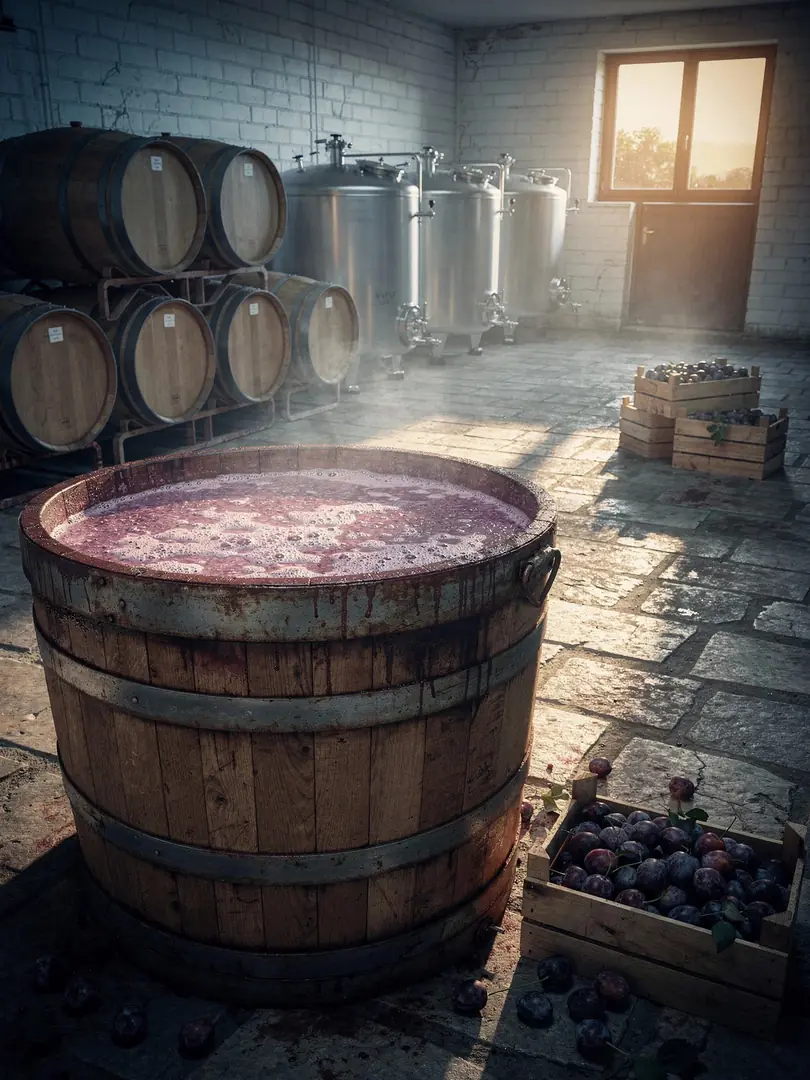
During fermentation, the yeasts convert fruit sugar into alcohol and carbon dioxide. The mash bubbles, the pomace rises to the top, and depending on the fruit and temperature, this takes anywhere from a few days to a few weeks. Fermentation takes place in stainless steel, plastic or wood—the main thing is that the vessel is clean and well sealed, since stray microbes and air exposure lead to acetic notes and off-flavors.
Pectin, the substance that gives fruit its firm structure, releases some methanol as it breaks down. Apples and plums contain a lot of it, which is why the distiller later separates off the heads, where such volatile compounds collect. Every spirit sold commercially must meet legal methanol limits, which are checked by the authorities.
With plums, the distiller decides whether the pits stay in the mash. With pits, the almond note comes through in the brandy; without them, it turns softer and rounder. Anyone mashing fruit at home still isn't allowed to distill it, since in Germany this requires official permission.