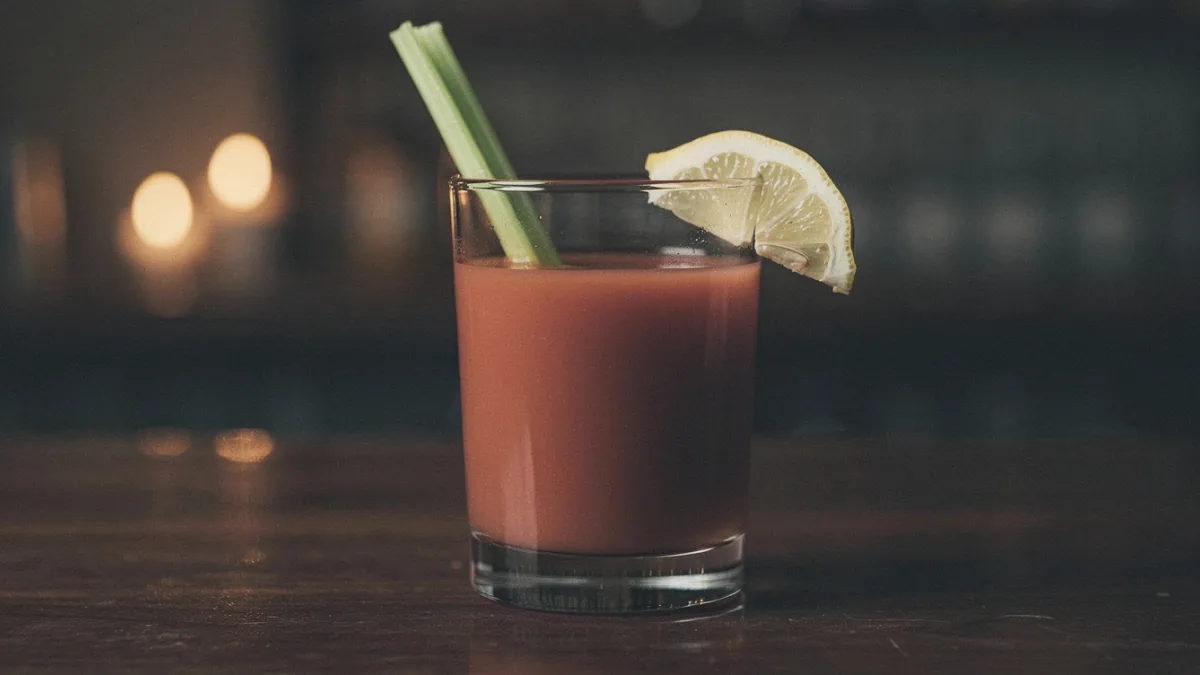
Preparation
- Add all the liquid ingredients to a mixing glass, starting with a little salt, pepper, and Tabasco.
- Stir gently with ice. Taste the seasoning carefully and add more if needed.
- Strain into the tumbler. For a long-drink presentation, use a highball glass with fresh ice.
- Garnish to finish: celery stalk and lemon wedge, as desired.
What does it taste like?
Tomato juice sets the stage: thick, savory, and just faintly sweet. Lemon adds acidity and lifts the tomato so it doesn't sit heavy. The seasoning follows right after. Worcestershire sauce tastes salty and robust, while celery salt and pepper push in the same direction. Tabasco layers heat on top—exactly as much as you choose to add. The vodka stays in the background and barely comes through. For 45 milliliters of vodka there are 90 milliliters of tomato juice, so the glass feels more like a cold, savory drink than a strong cocktail.
When does it work best?
The Bloody Mary is the cocktail for brunch. It suits a late breakfast, the lead-up to a savory meal, or anything salty. Anyone after something sweet is in the wrong place, since tomato, salt, and pepper rule the glass. Beginners can ease in gradually, since they control the heat and seasoning themselves. Without some fondness for tomato juice, though, this one won't win you over.
What matters
Season in small steps and taste after each one. You can't take salt or heat back out of the glass; once it's in, more tomato juice is the only fix. Worcestershire sauce often contains fish. If you swap it out, check the substitute's ingredient list and season even more carefully afterward. Stir gently with ice, exactly as described in the method: hard shaking makes the tomato juice foamy.
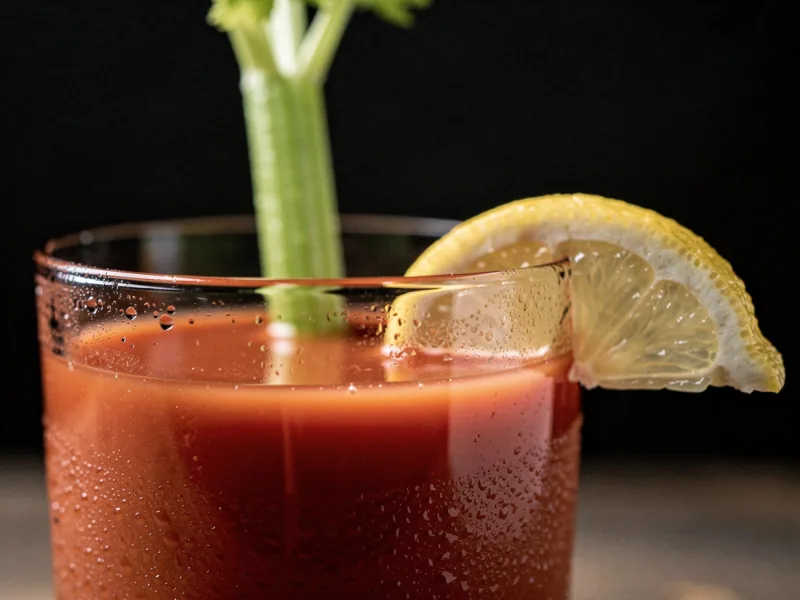
Where the drink comes from
Where the Bloody Mary comes from is disputed. The well-known accounts feature Fernand Petiot and George Jessel, though in different roles depending on the version. It helps to separate two things: the simple mix of vodka and tomato juice, and the later, heavily seasoned version. That very development explains why today's recipes vary so much in heat, acidity, and garnish. A single scene involving a famous guest certainly isn't enough to serve as the sole origin story.