Preparation
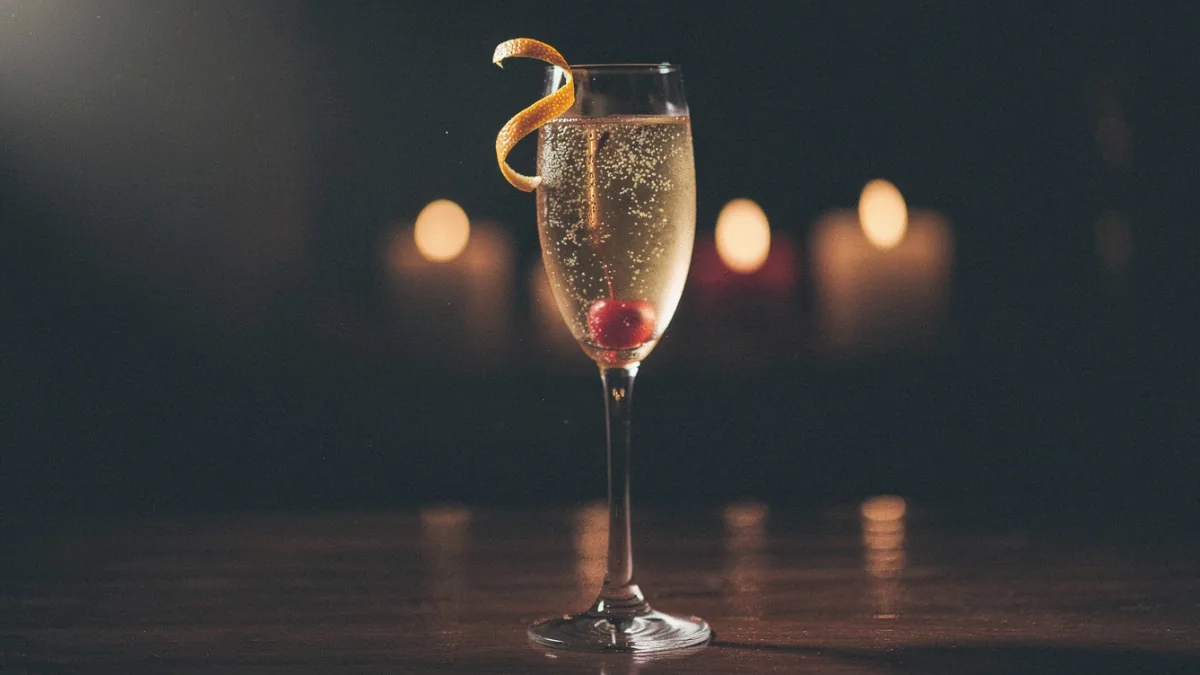
- Place a sugar cube in a champagne glass and soak it with the bitters.
- Add the Cognac and, if using, a few drops of Grand Marnier.
- Slowly top with cold Champagne. Do not shake.
- Finish by garnishing with orange zest and a cocktail cherry.
What does it taste like?
At first you'll mostly taste Champagne: dry, cold and full of bubbles. The two dashes of Angostura lay down a spicy bitterness underneath. Ten millilitres of Cognac add warmth and a bit of depth, without pushing to the front. Then the sugar cube starts to work. It dissolves from the bottom up, and with every sip the drink turns a touch sweeter. The last sip is noticeably sweeter than the first. It isn't a strong cocktail, since 90 millilitres of sparkling wine make up most of what's in the glass.
When does it work best?
A drink for a toast, a welcome, the start of a celebration. It's easy to like, since sparkling wine remains the base and the Cognac is only lightly dosed. Anyone who enjoys sparkling wine will feel right at home with it. Still, it takes a little patience, since the flavour shifts as you drink. It hardly works with food, but it's excellent beforehand.
What matters
Soak the sugar cube with the bitters first, then add the sparkling wine. The whole charm lies in that order, since it lets the cube dissolve slowly. Pour the Champagne along the side of the glass rather than straight in, or it will foam over and lose its fizz. There's no need to stir.
Where the drink comes from
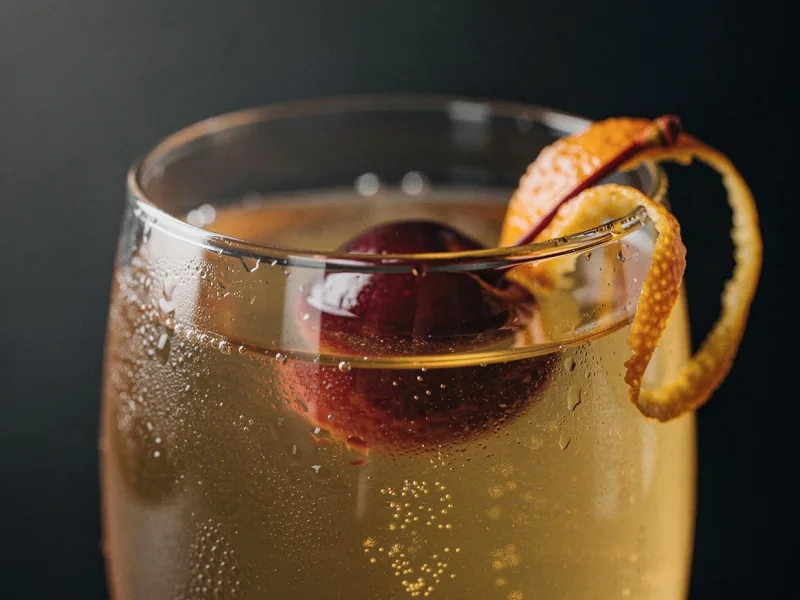
The Champagne Cocktail is one of the earliest cocktail forms, already written down in the 19th century. The idea behind it is simple: a good drink on its own gets extra spice from sugar and bitters. Cognac is a fixed part of this version, though the old recipes aren't consistent on that point. What makes it special is something else entirely — it never tastes the same twice. Because the sugar dissolves over the course of several minutes, time itself becomes part of this cocktail's recipe.