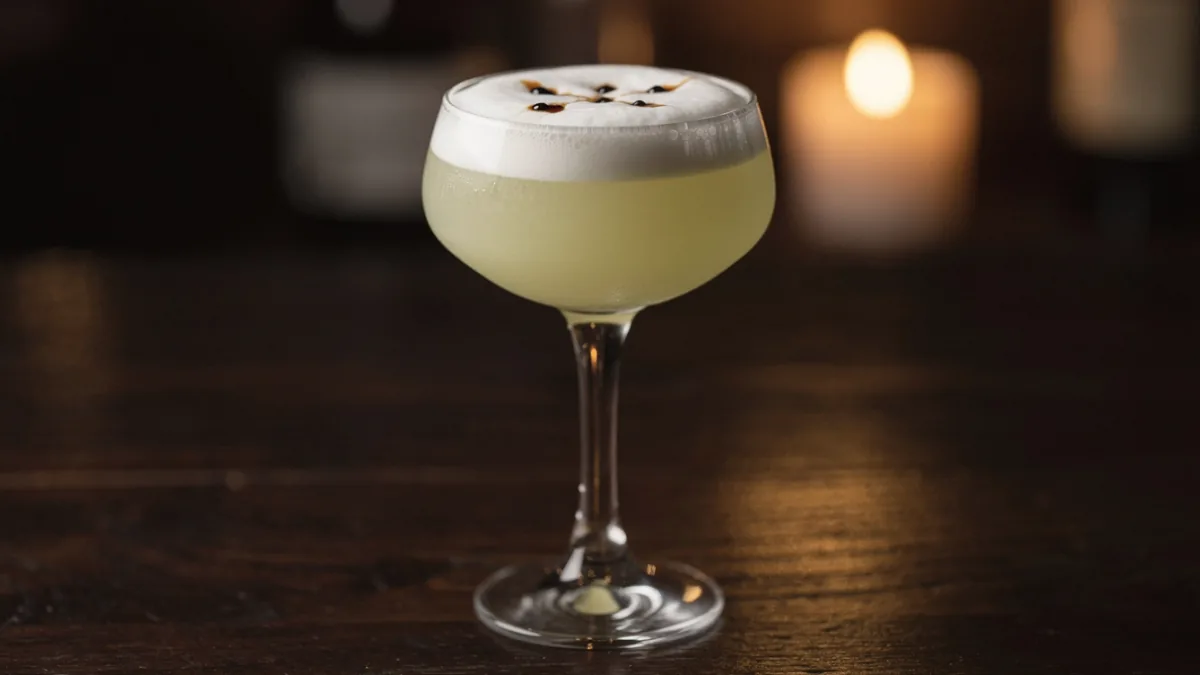
Preparation
- Chill the serving glass. Add all ingredients, including the pasteurized egg white, to the shaker.
- Shake vigorously with plenty of ice so the ingredients combine and air gets worked in.
- Strain off the shaking ice through a strainer into the chilled glass.
- Finish with a garnish: a few dashes of Amargo Bitters on the foam.
What does it taste like?
First you smell the bitters on the foam, spicy and a touch bitter. Then comes the lemon, clean and properly sour, since 30 milliliters is a generous amount. The sugar syrup softens some of that, but the drink doesn't turn sweet. Pisco is a grape brandy, so the base tastes of grape and blossom. The egg white doesn't add its own flavor, it just makes the surface creamy and the first sip smooth. With 60 milliliters of brandy, the Sour is strong despite its fresh character.
When does it work best?
The Pisco Sour is a great entry point into the world of sours. It tastes fresh, tart, and creamy all at once, with nothing bitter or smoky about it. It's especially good before a meal, since the acidity keeps the palate fresh. If you're not keen on very sour drinks, add a bit more syrup. Vegan guests should know it contains egg white.
What matters
Use pasteurized egg white and follow the product's guidance for the equivalent of one egg white. Shake especially hard to work air into the drink, otherwise the foam stays thin. Strain off the shaking ice, then let the foam settle briefly before adding the bitters. Apply them gently, or the drops will simply sink in.
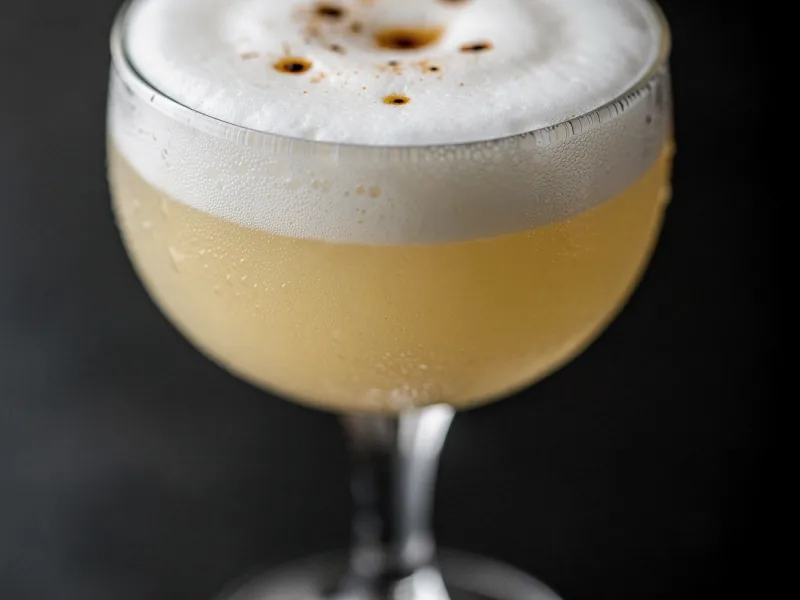
Where the drink comes from
The Pisco Sour is mostly associated with Peru and the bar culture of Lima. Chile has its own tradition, too. Both countries claim the drink as their own. There's no single, undisputed origin story, and such claims shouldn't be taken too literally either way. This version relies on egg white and bitters on the foam. Other regional recipes leave both out or change the proportions significantly. Both approaches have their place, but they don't taste the same.