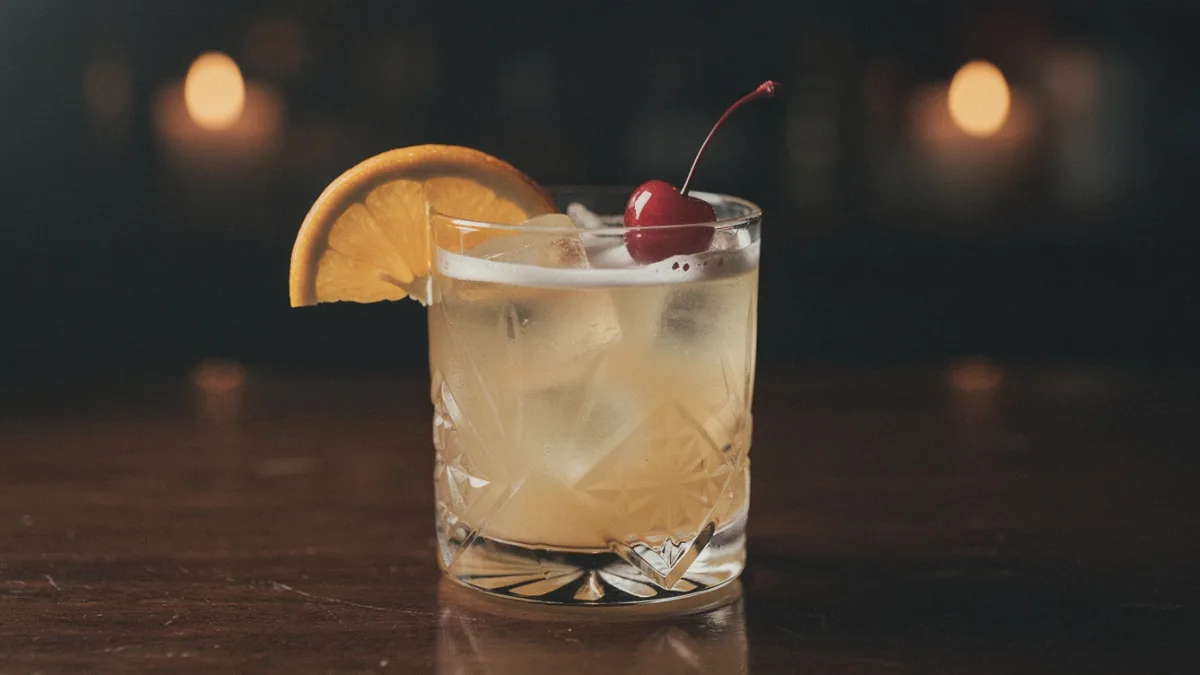
Preparation
- Measure the Bourbon, lemon juice, and syrup into the shaker. Optionally add pasteurized egg white.
- Shake hard with plenty of ice. If using egg white, pay special attention to thorough mixing.
- Strain into a tumbler over fresh ice. Alternatively, serve without ice in a pre-chilled coupe.
- Finish with a garnish: half an orange slice and a cocktail cherry, or alternatively orange zest.
What does it taste like?
Sour and sweet are nearly balanced: 25 ml lemon juice meets 20 ml sugar syrup. First comes the lemon, sharp and fresh. Then the Bourbon pushes forward, with vanilla and caramel notes from the barrel. The syrup rounds things out without making the drink taste like lemonade. With egg white, the surface turns foamy, everything feels thicker, and the acidity feels softer. Without egg white, it stays clearer and more direct. Either way, it's strong: 45 ml of Bourbon go in, diluted only by juice, syrup, and melting ice.
When does it work best?
A great starting point if you haven't liked whisky before. The lemon takes off its edge, the sugar catches the rest. The drink suits nearly any occasion: before dinner, in the afternoon, out on the terrace. Those who like it sweet might find it too sour; an extra splash of syrup helps. And if you like acidity, you won't need to change a thing.
What matters
Use freshly squeezed lemon juice; bottled juice tastes flat. Egg white is optional: without it, the Sour stays clear, with a few drops of pasteurized egg white you get a soft foam cap. For that you need to shake hard and long enough, otherwise the foam collapses right away. Taste before straining, since lemons vary in acidity.
Where the drink comes from
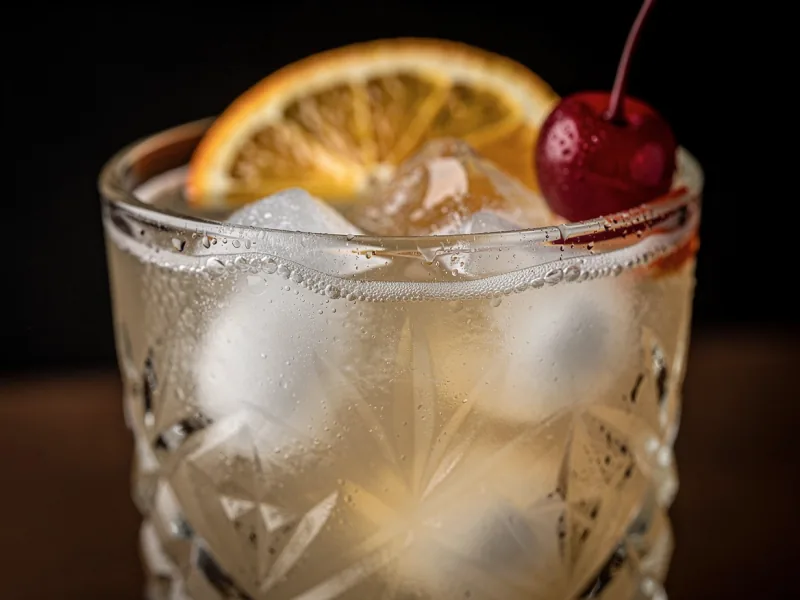
The Whiskey Sour is old. It has appeared in recipe collections since the 19th century, and its structure is beautifully simple: a spirit, something sour, something sweet. This very clarity has kept it alive. Swap the Bourbon for another spirit, use a different fruit, or float red wine on top: suddenly you have a new drink. The egg white isn't strictly essential. It determines the texture, not the recipe. If you want to understand Sours, this is where to start.