Preparation
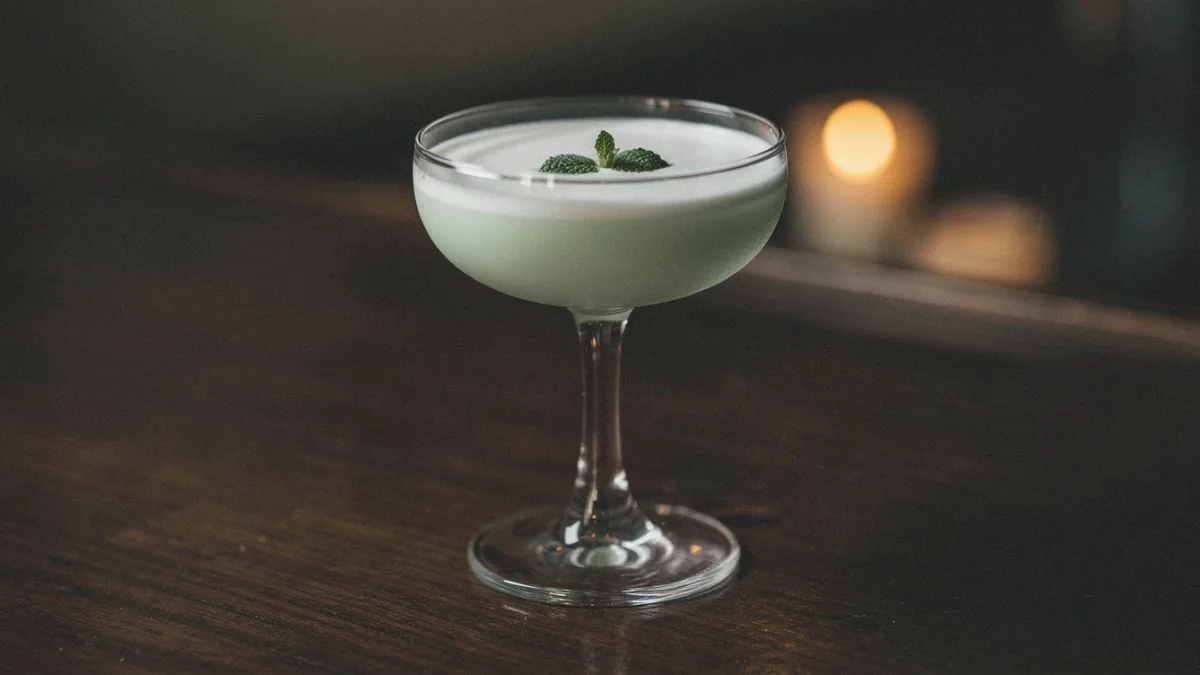
- Chill the serving glass. Combine all ingredients with plenty of ice in a mixing glass.
- Stir with a long bar spoon until well chilled and slightly diluted, roughly 20–30 seconds as a starting point.
- Strain through a bar strainer, without the stirring ice, into the chilled glass.
- Garnish to finish: mint leaf, if desired.
What does it taste like?
The Stinger tastes like a strong candy. Up front stands the Cognac with its warm notes from the barrel, and mint pushes in right behind it. The liqueur brings plenty of sugar, so the drink is distinctly sweet. There's no acidity at all—no juice, no lemon. That makes it dense and concentrated. The mint feels like coldness in the mouth and lingers through the last sip. Before stirring, it's 70 ml of Cognac and mint liqueur; the melted water increases the finished volume. You'll still feel the alcohol, even though the sugar cushions it.
When does it work best?
Drink the Stinger after a meal, not before. It replaces both the espresso and the dessert in one. It's best late in the evening, sipped in small amounts. For beginners, it's borderline: no juice, no lengthening, just plenty of sugar and plenty of alcohol. Anyone who enjoys sipping brandy neat and likes mint will find an old friend here.
What matters
Use white crème de menthe, not green. Green will tint the drink, and depending on the brand, it tastes different too. Stir long enough, about 20 to 30 seconds. The melted water is part of the recipe—without dilution, the mixture becomes too sharp and syrupy. Chill the glass beforehand. The Stinger goes into the glass without ice and would otherwise warm up quickly.
Where the drink comes from
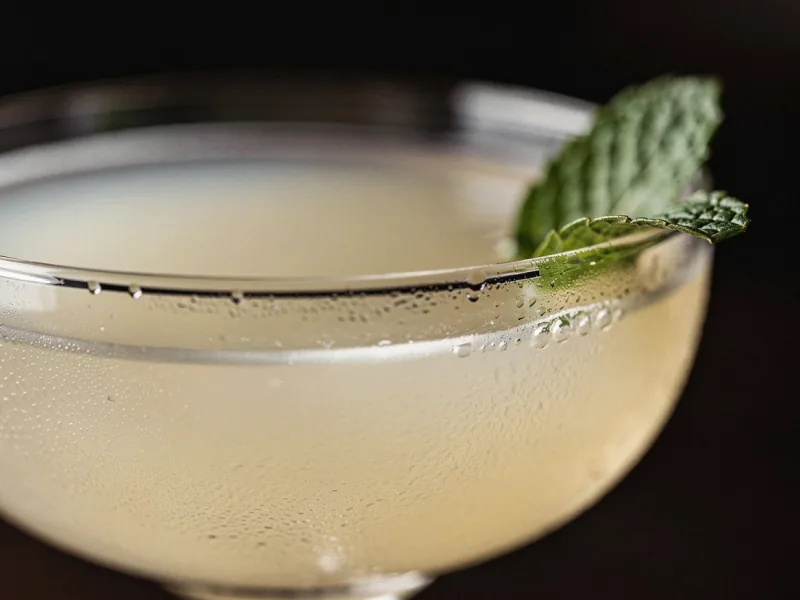
The Stinger has been documented since the early 20th century. It became especially known in American high society. It's unlikely, though, that anyone truly invented it from scratch: brandy with mint liqueur was already being enjoyed together before that. Famous fans appear in many stories, but none of them is automatically the inventor just because of that. What's interesting is the construction. Two aromas that don't seem to belong together create a standout classic here. It's short, it's direct, and it needs no third ingredient.