Demer & Clay Soil
Water & Climate
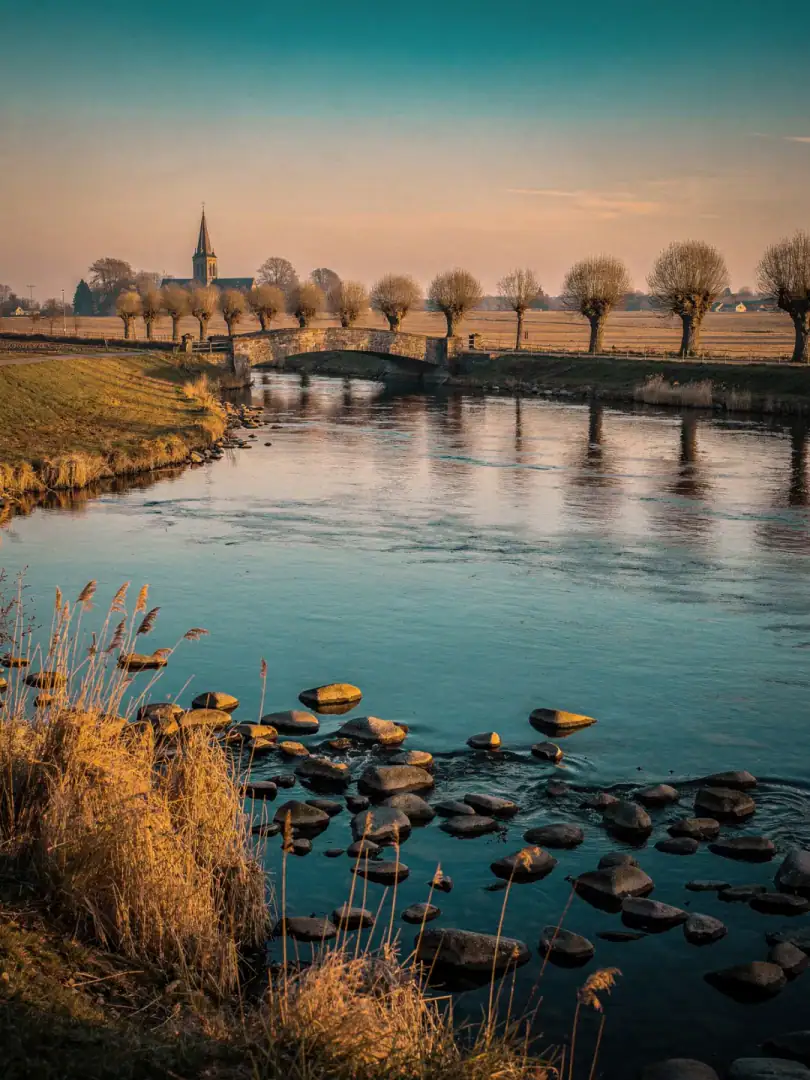
The Demer flows through Hasselt, a small, calm river that divides the town in two. For centuries it set the town's rhythm, as mills, laundries and distilleries settled along its banks. The surrounding countryside is flat to gently rolling, with sandy-loamy soils typical of much of Belgian Limburg.
The climate is temperate and damp, with mild winters and rarely much summer heat. That's ideal for rye and barley, the foundation of moutwijn. Abundant rainfall also means abundant groundwater, and that's exactly what distilleries needed, since they used large quantities for cooling and dilution. Without this steady supply, the dense concentration of distilleries in a single town would hardly have been possible.
Water becomes important at a stage of distilling that's rarely given much thought: cutting the fresh distillate down to drinking strength. Soft, low-mineral water dissolves cleanly with the alcohol, while hard water can cloud the distillate and release harsh off-notes. It was exactly this soft water that the region supplied in abundance, a quiet but decisive advantage for Hasselt's distilleries.
The Demer itself is more a recreational spot than a working river today, but its calm course still runs right through the old town. It's a reminder of how closely water and jenever were once linked here. Passersby along the banks now mostly see ducks and anglers, not steam boilers, and yet the river remains the quiet lifeline of the old distilling town.