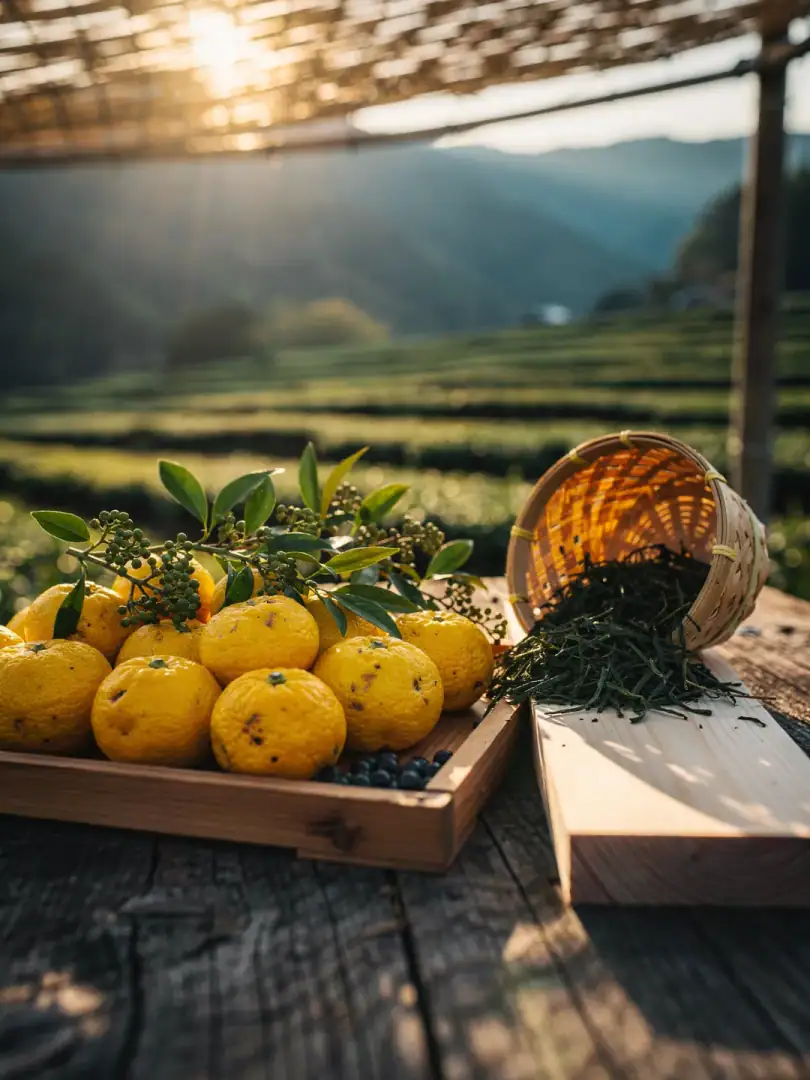
Tea, Yuzu, Sanshō
Botanicals
The juniper used in the gins from Kyoto and Osaka doesn't grow here—like almost everywhere else in the world, it comes from Eastern Europe. It supplies the resinous backbone that makes gin, gin. What defines the region are the botanicals added alongside it.
Ki No Bi from Kyoto uses eleven botanicals, organized into six groups. Juniper and orris root form the base, while yellow yuzu and lemon provide the citrus note. Gyokuro green tea from nearby Uji represents tea, hinoki cypress wood and bamboo leaf bring herbal character. Green sanshō pepper and its young leaf, kinome, add spice, alongside ginger and red shiso.
Gyokuro is no ordinary green tea. It grows shaded under straw mats or black netting for weeks before harvest. This forces the leaves to develop more chlorophyll and amino acids, producing the sweet, almost brothy depth that sets Ki No Bi apart from European gins.
Sanshō is often mistaken for Chinese Sichuan pepper. It gives a slight numbing sensation on the tongue and a green, citrusy heat rather than sharp chili burn. Paired with hinoki, the pale wood used in Japanese temples and bathtubs, it lends the gin a resinous, almost woodland character.
Suntory Roku from Osaka distills the concept down to six botanicals representing the four seasons. Cherry blossom and cherry leaf stand for spring, sencha and gyokuro tea for summer. Sanshō pepper represents autumn, and yuzu peel, winter. According to the distillery, each botanical is distilled separately to preserve its individual aroma.
Shading made from straw or black netting, under which tea bushes for gyokuro grow for weeks
The root: Reduced light forces the plant to pump more chlorophyll and amino acids into its leaves