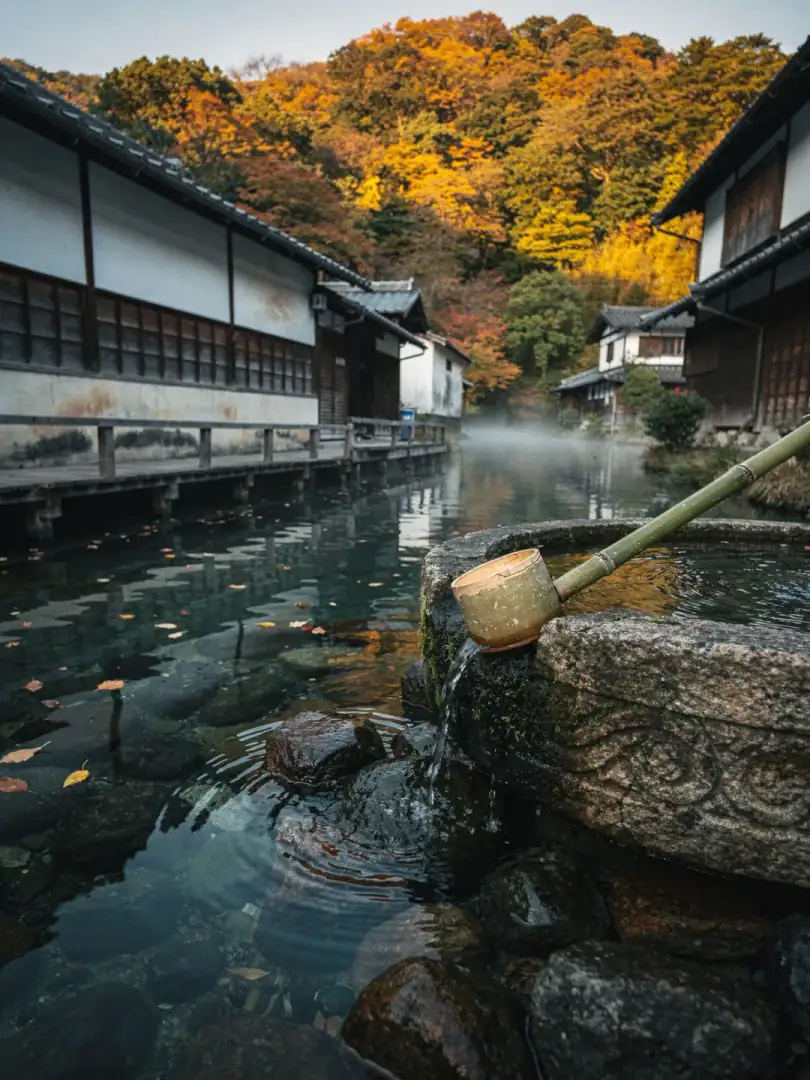
Fushimi's Soft Water
Water & Climate
Kyoto sits in a basin surrounded by hills. Summers are hot and humid, winters cool. For centuries, groundwater has collected beneath the city. At the foot of the Momoyama Hills in the Fushimi district, it emerges as clear springs.
Fushimi translates roughly as "hidden water." Seven famous springs have surfaced here since ancient times, yielding medium-hard water with moderate calcium and potassium levels—soft enough for a delicate, mellow taste. That's why nearly forty sake breweries have settled in Fushimi.
The Kyoto Distillery sources its water from this very district, from one of the local sake breweries. This is how the six separately distilled elements of Ki No Bi are brought back together and diluted to bottling strength. Hard water would mask the delicate tea notes of gyokuro and the citrus sharpness of yuzu with a chalky taste. Soft water lets them shine through clearly.
Osaka lies just under an hour south by train, at the mouth of the Yodo River where it meets Osaka Bay, sharing a similarly hot, humid summer climate. The Suntory Roku distillery sources its water from its own treatment facilities rather than Fushimi's springs. This shows how differently the two cities approach the same raw material: the small distillery uses the terroir right outside its door, while the corporation controls its water quality in-house.
Climate also shapes the botanicals in the gin. The humid summer heat in Kyoto and Osaka ripens yuzu and sanshō quickly. Mild but cool winters let the tea bushes in Uji rest before tender new leaves grow in spring for the next gyokuro harvest.