Six Elements
Distilling
Ki No Bi doesn't start with neutral grain spirit, but with rice spirit—a base alcohol distilled from rice, the same kind used by sake and shochu producers. This is unusual in the world of gin, a deliberate nod to Japan's distilling tradition.
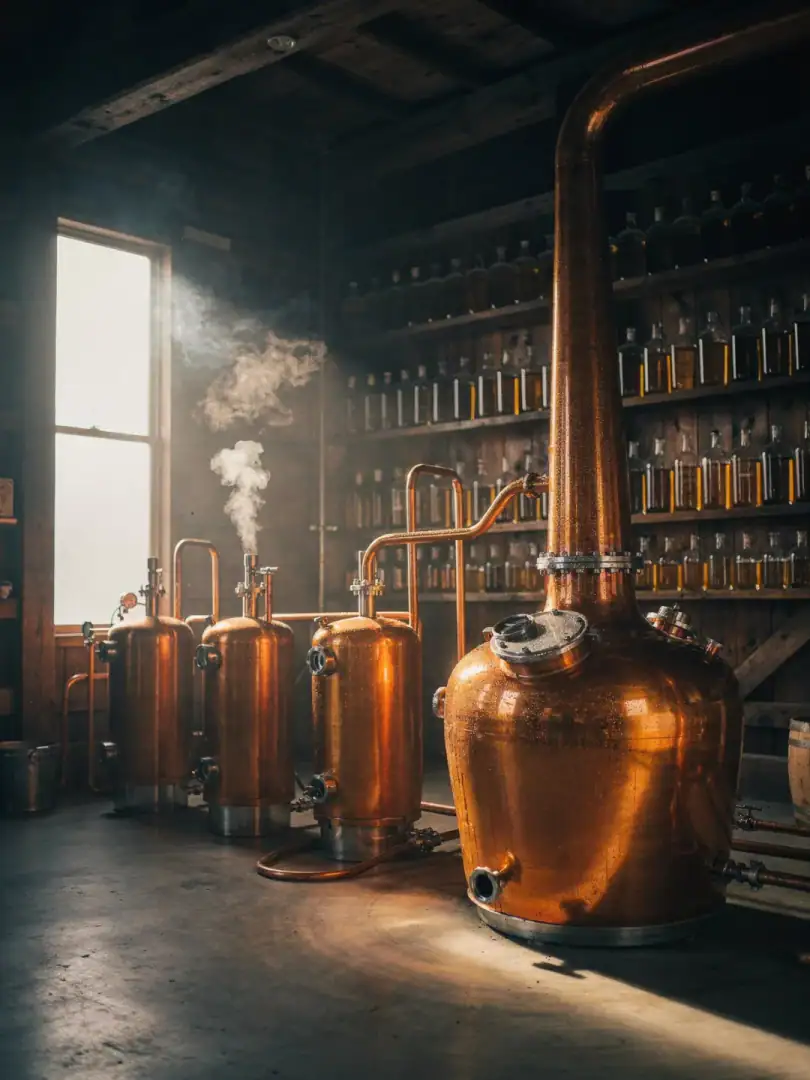
Rather than macerating all eleven botanicals together, the distillery divides them into six groups, called "Elements": base, citrus, tea, herbal, spice, and fruit/flower. Each group is steeped separately in a copper pot still, then distilled individually, apart from all the others.
Afterward, the six distillates are recombined and brought down to bottling strength with water from Fushimi. This isn't the classic one-shot method, where all botanicals end up in a single distillate, but rather a kind of blend of individual distillates. This allows for finer adjustment of the final result, since each ingredient remains distinguishable on its own before blending.
Standard Ki No Bi comes in at 45.7% ABV. The stronger Ki No Bi Sei reaches 54.5% ABV. Both sit well above the EU's minimum requirement of 37.5% ABV for gin. This higher strength leaves plenty of aroma intact even when diluted with tonic or water.
Suntory Roku is made differently. According to the distillery, its six botanicals are also distilled separately, but on the large industrial scale of the Osaka distillery. The facilities there are built for consistent quality across enormous batch sizes, not for the experimentation of a handful of distillers as in Kyoto. Where Kyoto tastes every batch individually, Osaka checks against fixed technical specifications.