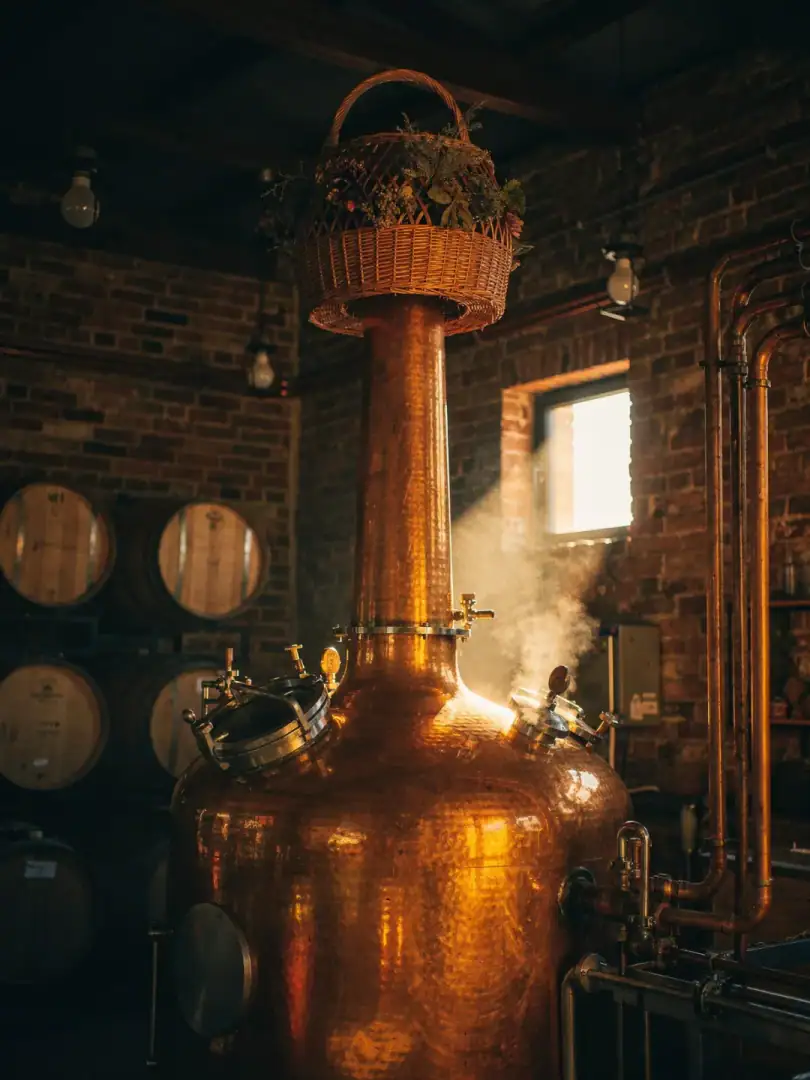
Moutwijn in the Still
Distilling
Genever starts differently than most gin styles. It doesn't begin with neutral alcohol, but with Moutwijn, a malt wine made from fermented grain. Rye, corn, and malted barley are mashed and fermented. The mash then runs through copper pot stills. This produces a robust, grainy spirit with a pronounced character of its own, shaping the eventual drink even before the juniper comes into play.
Only after that does the juniper come into play. It's redistilled with the Moutwijn or macerated with other herbs and passed over steam. This resembles the Carterhead method. Except here, an aromatic grain spirit forms the base, not neutral alcohol. This is what fundamentally sets the work of a Genever distillery apart from a classic London Dry operation.
At Nolet Distillery, stills designed for this double process are still in use today. The same holds true at the historic operation of the Nationaal Jenevermuseum. Visitors can watch the entire process there, from mashing to finished Moutwijn. The copper stills bind unwanted sulfur compounds along the way, rounding out the spirit.
How much Moutwijn ends up in the glass is not just a matter of taste. The proportion determines whether the spirit later becomes a young or an old Genever. That's why the strength of the Moutwijn is carefully documented during distillation. Equally important is the ratio in which it's later blended with the juniper distillate.
One-shot methods, in which all botanicals are processed in a single distillation run, are relatively rare in Schiedam. A multi-step approach is more common. Moutwijn and juniper distillate are produced separately and only combined afterward. In the end, the finished Genever is diluted down to a drinking strength of at least 30 percent ABV.