River Water and Delta
Water & Climate
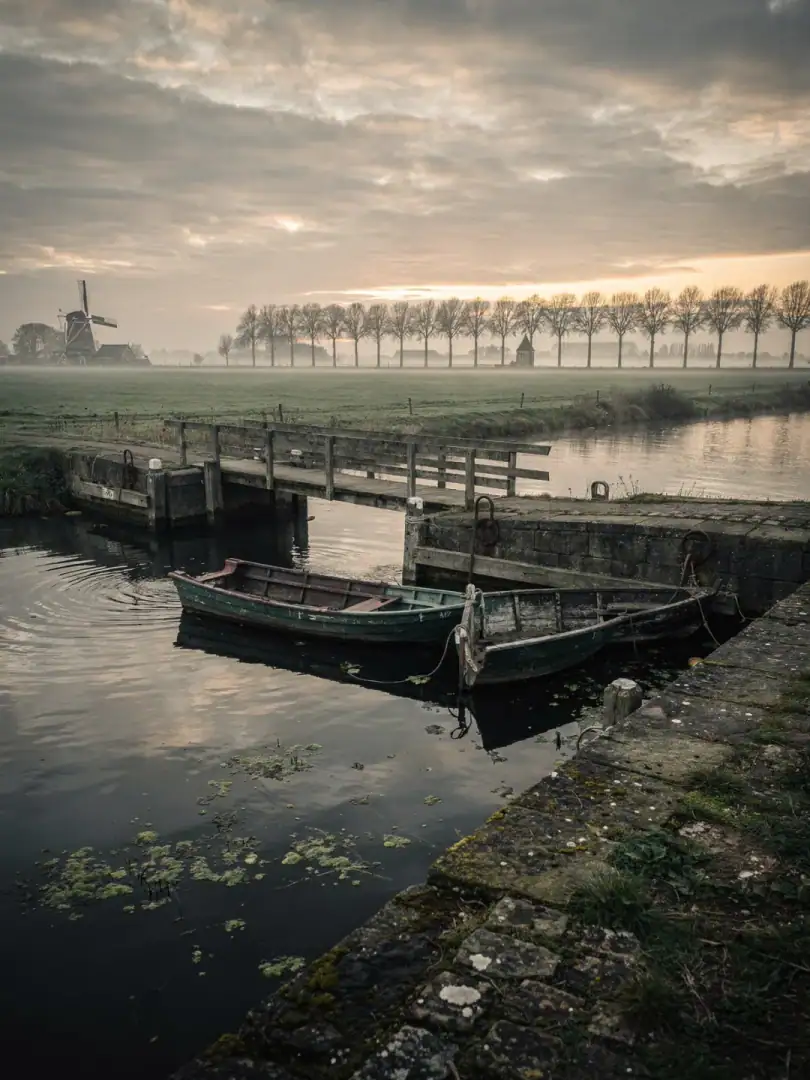
Schiedam lies in the estuary region of the Rhine and Maas, where several river branches merge into the North Sea. The Nieuwe Maas flows right past the city, and beyond it begins the great port of Rotterdam. For centuries, this delta water shaped the daily life of the distilleries, from powering the mills to cooling the stills.
The soil around Schiedam consists of river clay and peat, typical of the Dutch polders. It retains moisture well, which keeps the overall climate mild and damp: cool, windy winters, mild summers, and almost constant wind off the sea. It was precisely this wind that once drove the city's many mills, which ground the malt for the Genever.
Diluting the strong Moutwijn down to drinking strength requires soft, flavor-neutral water; otherwise any mineral note would mask the delicate grain character. Water that's too hard and mineral-rich leaves a noticeable mineral edge and can throw off the fine balance between malt and juniper, which is why distilleries in the region have always relied on filtered, soft water.
Proximity to the open sea also means humid air, which ages barrels and storage rooms more slowly than a drier inland climate would. For aged Genever, such as Korenwijn matured in oak barrels, this affects the pace of maturation. The barrels absorb moisture instead of drying out quickly, and the aroma develops more evenly over the years.
Rainwater plays a role too. It seeps through the sandy subsoil of the surrounding area before reaching the canals and waterways, picking up almost no minerals along the way. For distilleries like Nolet Distillery, this was historically an advantage: soft water could be more easily adjusted to the desired drinking strength without altering the flavor of the Moutwijn.