Spice in gin
Coriander
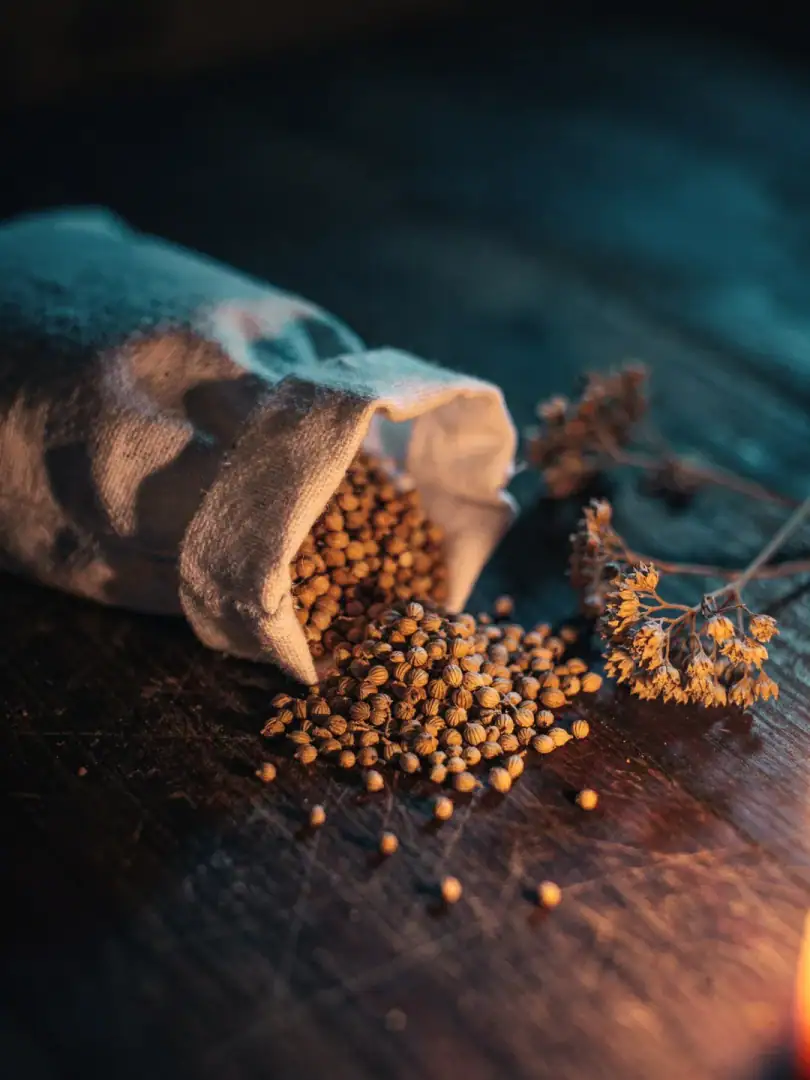
After juniper, coriander is the most important botanical in nearly every gin recipe. This refers to the dried seeds of the plant, not its leaves — the two occupy entirely different flavor worlds. The seeds bring a citrusy, spicy note that rounds out the resinous juniper and gives gin its freshness.
Why seeds and not leaves?
Coriander leaves taste green, sharp and, for some people, soapy — an effect that's genetically determined and puts plenty of people off coriander entirely. The seeds of the same plant, botanically Coriandrum sativum, taste completely different: warm, citrusy and slightly peppery, almost like a mix of sage and orange peel. Only these ripe, dried seeds are used for gin, while the fresh leaves stay in the kitchen. Anyone who crushes and smells the seeds for the first time is often surprised how little they resemble the green herb on the plate.
The reason lies in the chemical composition. The leaves mainly contain aldehydes, which create the soapy impression, while the ripe seeds are dominated by linalool, a floral, citrus-like aroma compound also found in lavender. As the seeds dry and mature, the aldehydes break down further and the mild citrus flavor emerges. Anyone using an unripe, still-green batch of seeds risks exactly the soapy off-note distillers are keen to avoid, which is why harvest timing and drying are carefully controlled.
What role does coriander play in the recipe?
In most classic gin recipes, coriander is the botanical with the second-highest share after juniper. It forms the bridge between the resinous juniper note and the brighter citrus notes that many gins also carry. Without coriander, a gin often feels one-dimensional and heavy; with too much, it turns soapy and overpowering, which makes striking the right balance a genuine art. It's precisely this narrow middle ground between too little and too much that makes coriander one of the most demanding ingredients of all.
Coriander extends the juniper without pushing it aside, while at the same time preparing the palate for the citrus and spice notes that follow. This dual function makes it indispensable in nearly every recipe, even though it's rarely the first thing noticed and works quietly in the background while other ingredients shape the first impression. Some tasters only recognize its contribution when they leave it out as a test and find the gin noticeably flatter, without being able to pinpoint exactly what's missing.
Where do the coriander seeds in gin come from?
The largest growing regions for coriander seeds are Morocco, Russia, Ukraine, as well as Romania and Bulgaria. Moroccan coriander is often considered especially aromatic by distillers and is therefore preferred, even though Eastern European supplies are more attractive in price and remain more readily available in large quantities. Some distilleries deliberately blend several origins to balance price against aroma.
Growing coriander itself is straightforward: as an annual plant, it grows quickly and undemandingly, so crop failures are rarer than with wild-growing juniper. This makes coriander, compared to many other gin botanicals, a reliable ingredient with stable harvest volumes and prices that distillers can count on year after year, unlike the more temperamental wild plants found elsewhere in the recipe.
How do roasting and storage change the flavor?
Some distilleries lightly roast the seeds before grinding them or adding them whole to the still. This releases additional spicy notes reminiscent of cumin or toasted nuts, and shifts the gin's character noticeably toward warmth, away from the pure citrus freshness of unroasted seeds. This technique requires a delicate touch, since over-roasting burns off the fine oils entirely.
Freshness makes an audible difference here too: old, long-stored coriander seeds lose linalool and taste duller, almost dusty. That's why many distilleries buy coriander in smaller quantities rather than stocking up in bulk, and test every new batch before it goes into the recipe — often by simply crushing it between the fingers and smelling it, a testing method that, despite all the technology available, remains common practice to this day.