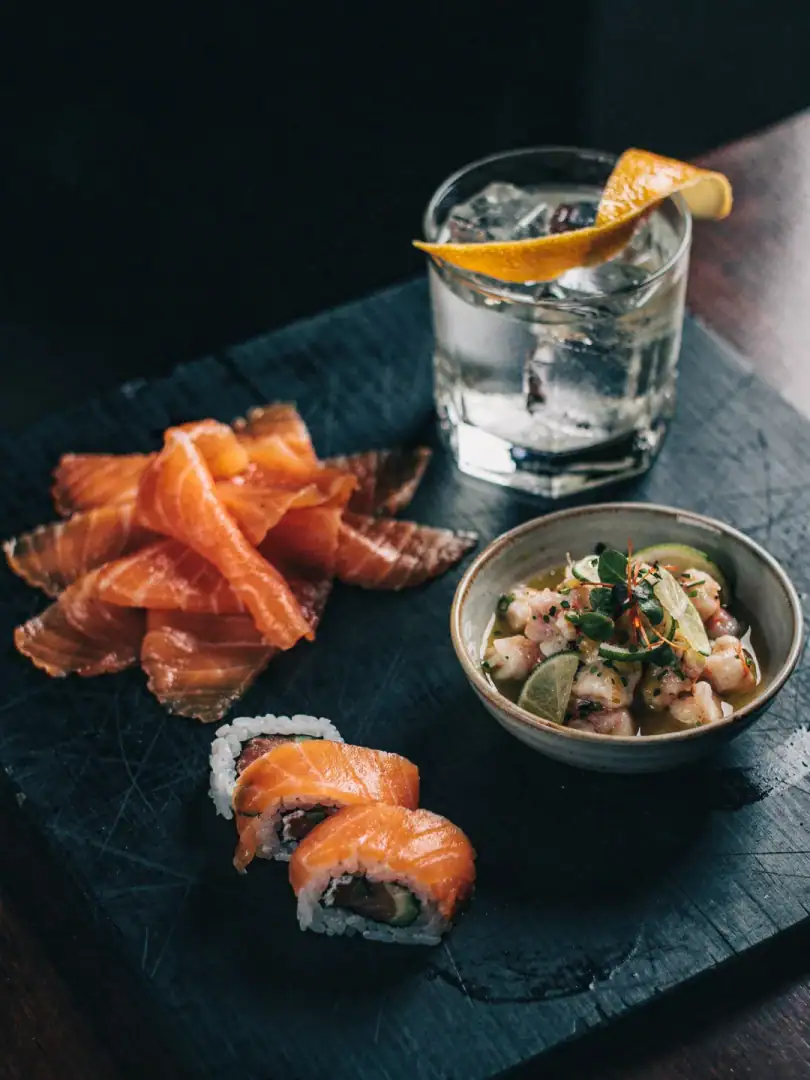
Fish and Sushi
Fish and Sushi
Which gin pairs with smoked salmon, sushi and ceviche? Fish ranges from smoky and fatty to raw and tangy, and each style calls for its own gin profile.
Smoked Salmon: Smoke Needs a Counterweight
Smoked salmon is fatty, salty and carries a distinct smoky note. A gin with juniper and pine aromas, some distilleries deliberately use spruce or pine needles, mirrors that smoke and feels like a relative in the glass. A hint of dill also works well, an herb that's often served with salmon anyway.
A gin that's too sweet or too floral falls short here: it quickly feels thin next to the salmon's strong fat and salt. A dry, herbal gin with noticeable bitterness works better, cutting through the fish's fat and clearing the palate again between bites.
Cold-smoked salmon tastes milder than hot-smoked, which often has a firmer texture and a stronger roasted note. Mild, cold-smoked salmon suits a more restrained, citrus-forward gin better, while hot-smoked salmon can also handle a gin with a clearer pine or juniper note without being overwhelmed by it.
Sushi: Watch the Rice Vinegar and Wasabi
Sushi brings three elements a gin needs to consider: the mild sweetness of the rice, the acidity of the rice vinegar, and the heat of wasabi, green horseradish. A gin with ginger or cardamom botanicals picks up on the wasabi heat without doubling it, feeling like a continuation of the dish.
Fattier sushi, say with salmon or fatty tuna belly, suits a gin with more citrus peel, which cuts through the fat. Leaner sushi like white fish or vegetable maki, on the other hand, is better served by a light, clean gin with little character of its own, so the delicate rolls aren't overshadowed.
The soy sauce for dipping shifts the balance too: dipping generously in soy adds extra salt and umami, which can handle a slightly more herb-forward gin. Using little or no soy sauce, on the other hand, favours a light, clean gin that doesn't mask the delicate raw fish flavours.
Ceviche: Acidity Meets Acidity
Ceviche is a raw fish dish 'cooked' purely by citrus juice, acidity is the defining element here. A gin with an equally pronounced citrus note amplifies that freshness rather than fighting it. Grapefruit or lime peel in the gin work especially well, since they carry almost the same aromas as the ceviche's marinade.
Chilli features in many ceviche variations, for instance in Peruvian cooking. A gin with subtle peppery spice balances that heat without overdoing it. Dilution matters here too: ceviche is served cold, and the gin should be as well, or the pairing will feel unbalanced.
In some countries, sweet potato or corn is added to ceviche, bringing a touch of sweetness to the dish. That sweetness pairs well with a gin that itself shows a light fruity note, rather than one that's strictly dry and purely citrus-driven, keeping the interplay of sweet, sour and spicy in balance.
A Basic Pattern for All Fish Dishes
The fattier the fish, the more bitterness or herbal spice the gin can handle. The rawer and more acid-driven the dish, the more citrus the gin can carry. This simple pattern works for almost every fish course, from starter to main.
Anyone wanting to test this is best off starting with a neutral, citrus-forward gin and tonic, then deliberately changing one variable at a time: first more herbal spice with fatty fish, then more freshness with raw preparations. Over time, this builds an instinct rather than a rigid rule.
Pan-fried fish with butter, say a plaice or a pikeperch, follows the same pattern: the butter brings fat, which calls for a touch of bitterness or acidity in the drink. A gin with citrus peel and subtle herbal spice works reliably as a starting point for most classic pan-fried fish dishes, ready for your own fine-tuning.