Cheese and Gin
Cheese
Which cheese pairs with which gin? From creamy and mild to sharp and pungent, cheese and gin share more aromas than you might first think.
Mild Cheeses: Restraint Pays Off
Cream cheese, young Gouda or mild Brie taste creamy and mildly flavoured. A gin that's too bold or too juniper-heavy quickly overwhelms that delicacy. A gin with bright citrus notes and little bitterness works better, underscoring the creaminess rather than crushing it.
With these cheeses, it's also worth considering the sweetness in the drink: a gin with a subtle floral note, say elderflower or chamomile, complements the mild creaminess without becoming dominant itself. Here too, it's best to dilute sparingly, so the delicate cheese doesn't get lost.
Mozzarella or burrata, even milder and wetter than cream cheese, can barely handle any bitterness in the drink. A very bright, barely diluted gin with a subtle herbal note works best here, while a robust, highly bitter tonic quickly masks these cheeses' delicate milky sweetness.
Pungent and Aged Cheeses: More Power in the Glass
Aged Gouda, Comté or mountain cheese bring bold, sometimes nutty and salty flavours. Here the gin can show more bitterness and juniper spice, since the cheese can stand up to it. Herb-forward botanicals like rosemary or thyme pair well with aged, nutty-tasting cheese.
Salty, very pungent cheeses like an aged Pecorino can even handle a gin with noticeable peppery heat. What matters is that the cheese's saltiness and the gin's bitterness stay in balance, if either tips too far, the pairing quickly feels off.
Smoked cheese, say smoked Gouda, calls for its own approach: its smoky note pairs well with a gin built around pine or juniper, much like with smoked salmon. What matters is that neither the cheese nor the gin carries the smoky note alone, but that both complement each other as equals.
Blue Cheese and Goat's Cheese: Using Contrast
Blue cheese like Roquefort or Gorgonzola is salty, sharp and slightly bitter from the mould itself. A sweeter gin, say a sloe gin with its sloe-berry sweetness, pleasantly balances that sharpness. Here, the contrast of salty-sharp and fruity-sweet works better than a straightforward match.
Goat's cheese carries its own slightly tangy note, which pairs well with a citrus-forward gin. Fresh, young goat's cheese prefers something brighter and more citrus-rich, while aged goat's cheese with a bolder flavour can also handle a spicier, more herb-driven gin alongside it.
With very intense blue cheese, a cask-aged gin with warm spice notes can also be interesting, since its maturation flavours round off the sharpness of the mould. Such aged gins are rarer, but they're worth it as a special accent, especially with a bold cheese board.
Cheese Board: Start with the Mildest Course
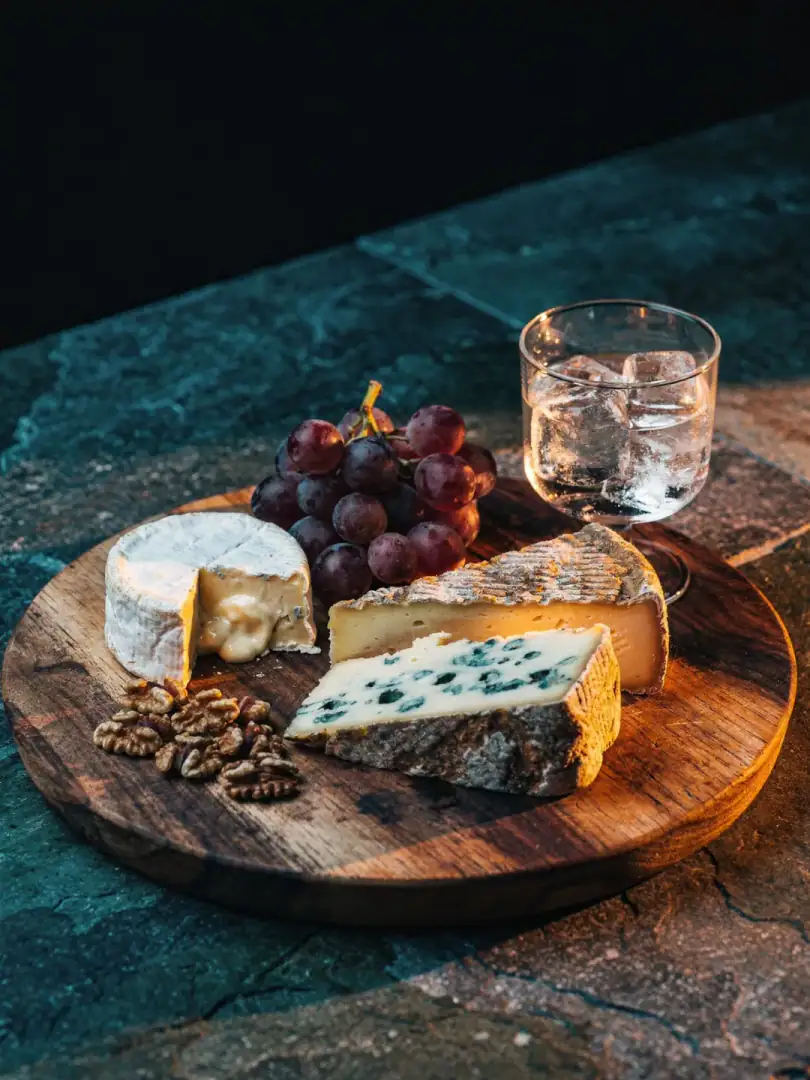
With a full cheese board, the same order as with wine pays off: start mild, finish pungent. A bright, citrus-forward gin suits the opening course of fresh cheese, while an herb-forward or lightly sweet gin accompanies the boldest cheeses at the end of the board.
Anyone wanting a single gin for the whole board is best off with a balanced London Dry Gin with moderate juniper spice and a subtle citrus note. It's mild enough for the start and bold enough to keep pace right through to the end of the board.
If you're hosting several guests, you can also offer two gins side by side: a lighter one for the milder cheeses at the start, and a herb-forward or slightly sweet one for the end of the platter. That way, no one has to settle for a compromise, and each cheese course gets its own fitting companion. It's also worth looking at the bread and nuts on the platter: nutty crispbread pairs well with herb-forward gins, while soft white bread suits lighter, citrus-forward styles better.