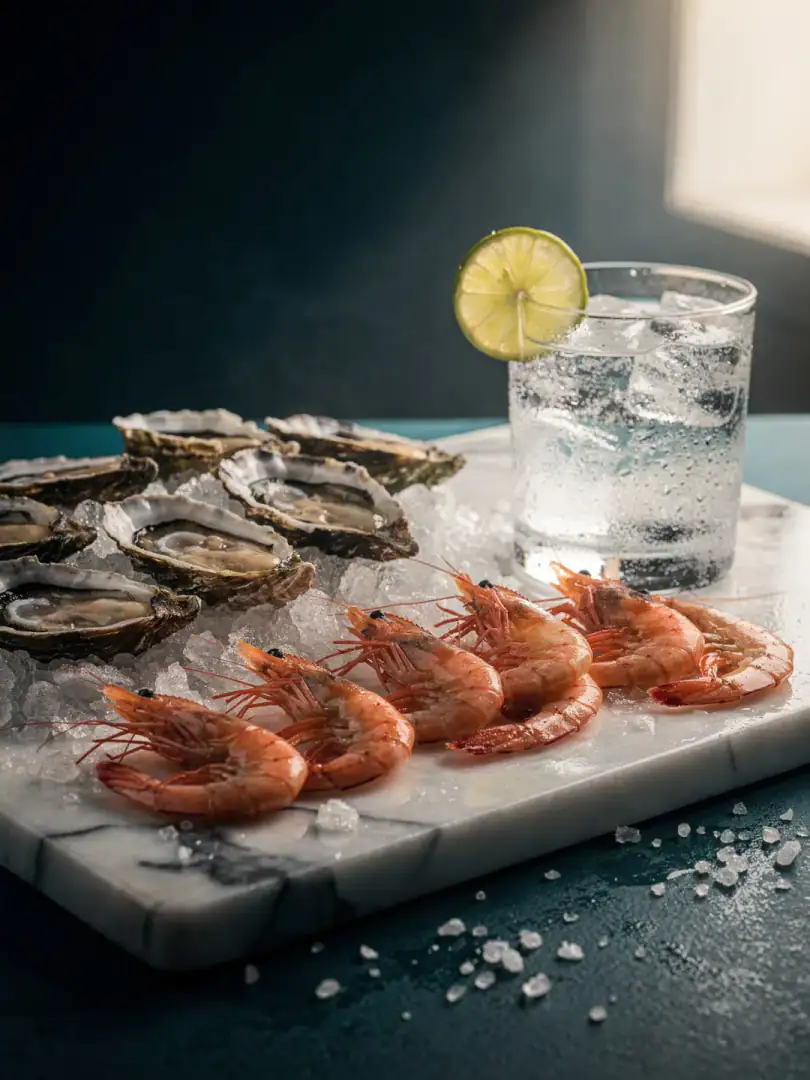
Oysters and Prawns
Seafood
Which gin pairs with oysters, prawns and shellfish? Seafood is salty, briny and delicate – it needs a gin that underscores that delicacy rather than burying it.
Oysters: Salt Meets Citrus
Oysters taste of the sea, brine and a subtle sweetness. A gin rich in citrus peel, be it lemon, grapefruit or yuzu, picks up the salty note while amplifying the sweetness in the oyster's flesh. Overly strong juniper notes, by contrast, often feel like too heavy a glove for such a delicate dish.
A London Gin, the strictest EU category, in which only water and at most 0.1 grams of sugar per litre may be added after distillation, works almost every time with oysters if its profile is bright and citrus-forward. If served with tonic, it should be only mildly bitter, or it will drown out the oyster's delicate briny note.
The oyster's origin plays a role too: mild, slightly nutty oysters from calm farming waters pair best with a barely bitter, very bright gin. Bolder, saltier oysters from rougher waters, on the other hand, can handle a more intense citrus note in the glass without the pairing falling flat.
Prawns and Shellfish: Meeting Sweetness with Spice
Prawns, lobster and crab bring a natural sweetness that's further heightened by roasted flavours from cooking or grilling. Here the gin can afford to be a little bolder than with oysters. Herb-driven botanicals like rosemary, thyme or fennel seed form a natural bridge to grilled or pan-fried shellfish.
If the prawn is prepared with garlic and chilli, it can handle a gin with a distinct kick from pepper or ginger botanicals. A simple, salt-cooked prawn, on the other hand, calls for a more restrained, citrus-led rather than herb-led gin, so the delicate sweetness of the flesh stays intact.
The preparation method also changes the choice: raw prawns served ceviche-style need a different gin than deep-fried prawns in a crisp coating. The crispy version suits a gin with a touch more bitterness to balance the frying fat, while the raw preparation favours a bright, citrus-forward gin without much roasted character.
Why Cold and Carbonation Matter Here
Seafood is almost always served cold or right after preparation. A gin drink should mirror that freshness: plenty of ice, a zesty, well-chilled tonic. The carbonation in the tonic acts like a brush across the palate, sweeping away fat and salt and making the next bite taste fresh again.
Without enough cold or dilution, the pairing quickly turns heavy, and the alcohol pushes ahead of the delicate seafood flavour. With seafood, the lighter approach almost always pays off: more ice, more tonic, less gin than you'd use with a rich, fatty dish.
A simple test helps with judging this: if the gin tastes harmonious neat alongside the seafood dish, it will usually also take light dilution well. If it already feels too forceful neat, more tonic and ice won't help much, it's worth switching to a fundamentally more restrained gin instead.
Common Mistakes with Oysters and Prawns
The most common mistake is a gin that's too bitter or too juniper-heavy, simply overwhelming the delicate brine and sweetness. The second mistake is serving it too warm: at room temperature, alcohol tastes sharper and masks the delicacy of oyster or prawn even more.
If you're unsure, start with a bright, citrus-forward gin and a mild tonic, then work your way up to bolder botanicals step by step. That way, you'll find the right balance of salt, sweetness and herbal spice for every type of seafood.
Another mistake is too little ice: if it melts too quickly, the drink dilutes unevenly and keeps changing character throughout the meal. Generously portioned, fresh ice keeps the dilution stable and ensures the gin stays in harmony with the seafood across the whole meal.