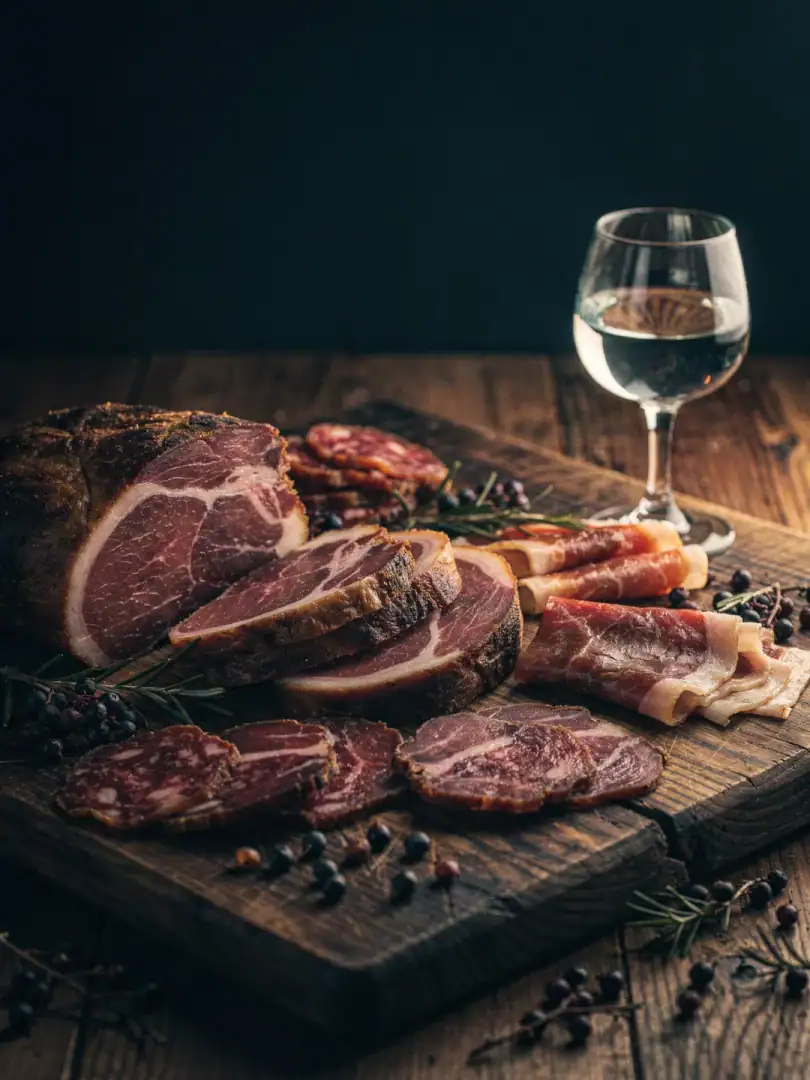
Game and Charcuterie
Meat and Charcuterie
Which gin suits game, ham, and charcuterie platters? Juniper has connected gin and game dishes in the kitchen for centuries.
Game: Juniper Meets Juniper
Juniper berries have long been used in game marinades, sauces, and cures, the very same berry that gives gin both its name and its flavor. This overlap is the most direct bridge you can find at the table. A gin with a pronounced juniper note alongside a venison or deer dish reinforces exactly the spice that's already present in the dish.
With dark game meat in a rich sauce, the gin can afford to show earthy, resinous notes too, from angelica root or conifer, for instance. The rich, often slightly sweet sauce typical of game dishes also handles a gin with noticeable bitterness well, which balances the fat in the meat and clears the palate between bites.
Wild boar and pheasant follow the same pattern, even though they taste milder than venison or deer. With wild boar in a fruity sauce, say made with cranberries, a gin with a subtle fruit note alongside its juniper spice works well, since it picks up on both the game and the sauce at once.
Ham and Bacon: Balancing Salt and Fat
Cured or air-dried ham brings plenty of salt and fat, often rounded out by a slight sweetness from the curing process. A gin with a citrus note cuts through this fat nicely, acting like a squeeze of lemon on the ham. Heavily smoked bacon, on the other hand, pairs better with a gin that carries its own smoky or conifer note, since the two smoky aromas complement each other.
With very salty ham, Spanish jamón for example, the gin itself shouldn't lean too salty or too bitter, as that would needlessly double down on the saltiness. Here, a slightly sweeter, fruitier gin helps, cushioning the salt note rather than amplifying it.
With cooked ham, which is milder and less salty than air-dried ham, the gin can stay more restrained. A very bold, bitter gin would quickly overwhelm the delicate, slightly sweet flavor of cooked ham instead of complementing it.
Charcuterie Boards: A Profile for Every Meat
A charcuterie board, a selection of sliced cured meats and sausages, brings together many flavors at once: spicy salami, mild pâté, fiery chorizo. Rather than picking a single gin for everything, it helps to mentally recalibrate for each type of meat, spicy needs coolness and sweetness, mild needs restraint.
Spicy sausage like chorizo pairs well with a gin carrying peppery or chili spice, while mild pâté suits a lighter, herb-forward gin better. What both have in common: plenty of ice in the glass, so the alcohol doesn't add extra weight to the fat on the board.
Mustard or pickled vegetables, often found on a charcuterie board, also change how the gin comes across. Spicy mustard heightens the perception of bitterness in the drink, while mild pickles bring acidity that really lets a citrus-forward gin shine.
Why Fat Is the Most Important Ingredient Here
Meat and charcuterie dishes almost always come with plenty of fat, and that shapes how a gin performs alongside them. Fat dampens both the sharpness of alcohol and bitterness, which is why fattier dishes can handle bolder, more bitter gins than leaner ones. At the same time, fat needs some acidity or bitterness in the drink, or the pairing ends up feeling heavy and one-dimensional.
As a rule of thumb: the fattier the meat, the more edge the gin itself can show. A lean ham or a light poultry sausage, on the other hand, suits a more restrained, citrus-forward gin that won't mask the delicate flavor.
A simple rule of thumb helps when shopping for the evening: lean meat with a light, citrus-forward gin, fatty meat with a herb-forward or slightly bitter gin. Following this guideline gets you close to a well-matched pairing for most meat and charcuterie dishes.