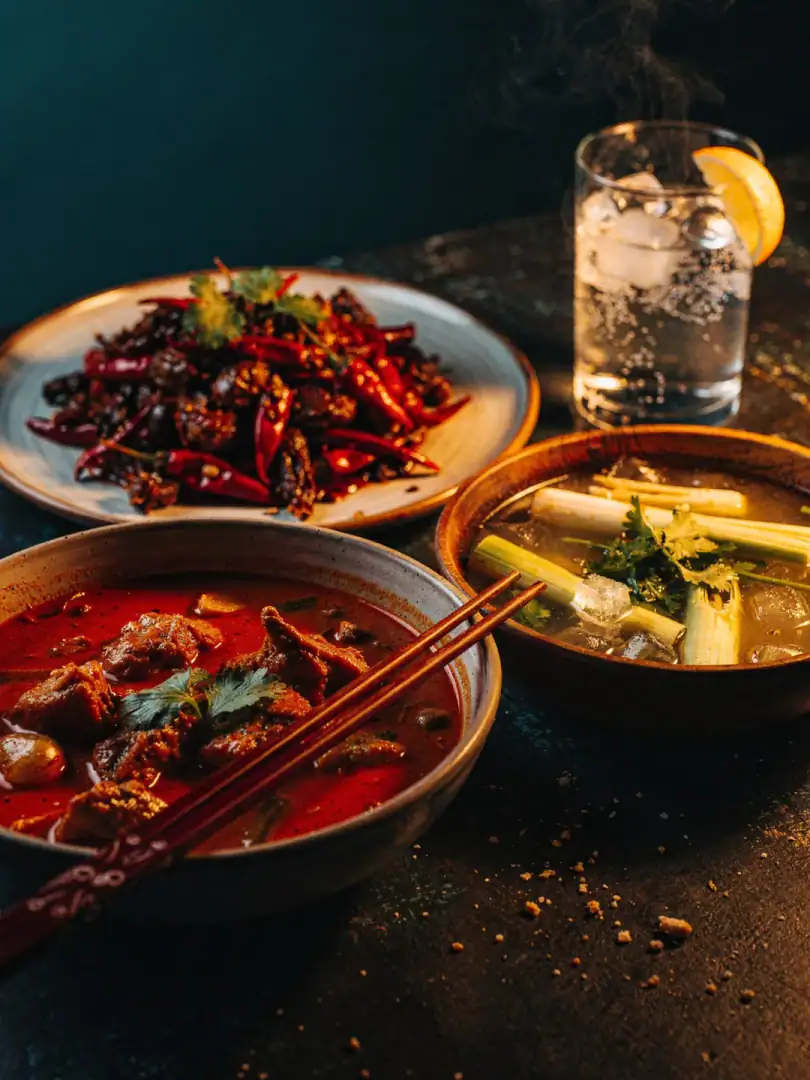
Spicy Cuisine
Spicy and Asian
Which gin suits Thai, Indian, and Japanese cuisine? Heat calls for coolness, sweetness, and sometimes a citrus counterweight.
Thai Cuisine: Coconut, Chili, Lemongrass
Thai dishes often mix heat, sweetness, and sourness on a single plate, curry paste, coconut milk, lime, and chili all colliding. A gin with lemongrass or kaffir lime botanicals, both common in Thai cooking too, builds a direct bridge to the dish and ends up feeling like it belongs there.
With very spicy curries, coolness matters most: plenty of ice, generous tonic, so the heat in your mouth isn't further fueled by alcohol. A touch of sweetness in the gin, from lychee or ginger, for example, also noticeably tames the chili heat.
Pad Thai, with its mix of tamarind, fish sauce, and roasted peanuts, calls for its own gin profile: the sweet-sour tamarind harmonizes with a fruity, citrus-forward gin, while the roasted peanut note benefits from a hint of herbal spice in the drink.
Indian Cuisine: Spices as a Common Language
Cardamom, coriander, ginger, and cinnamon are classic gin botanicals, and these very same spices also define many Indian curries and marinades. This overlap makes gin a natural companion, even though the pairing itself has no long tradition in India.
Creamy, mild curries like butter chicken pair well with a gin that has warm spice notes and little bitterness. Spicy, tomato-forward curries, on the other hand, call for a gin with more citrus freshness, which picks up the tomatoes' acidity while cooling the heat at the same time.
Tandoori dishes, which pick up a distinct char from cooking in a clay oven, also pair well with a gin that leans toward conifer or juniper. The charred aromas from the meat and spice marinade meet the resinous notes of the gin here to form a cohesive whole.
Japanese Beyond Sushi: Ramen, Tempura, Yakitori
Ramen with a rich, salty broth handles a gin with noticeable bitterness and little sweetness well, cutting through the fat in the broth. Fried dishes like tempura, on the other hand, benefit from a citrus-forward gin, which acts like a squeeze of lemon on the fried food and balances the heaviness of the oil.
Yakitori, grilled skewers with soy sauce, brings charred and umami flavors, the fifth taste, savory and hearty. A gin leaning toward conifer or juniper suits the char from the grill well, while a too-floral gin often gets lost next to the savory soy sauce.
Miso soup, with its fermented, salty, umami-heavy character, also handles a gin with subtle bitterness well, which balances the salt without drowning out the delicate fermented note. Sweeter Japanese sauces, teriyaki for instance, pair better with a gin that has noticeable citrus freshness.
The Basic Rule for Spicy Dishes
Heat in food heightens the perception of alcohol, a gin that already feels bold on its own comes across as even bolder next to chili. That's why it's almost always worth generously diluting with tonic and plenty of ice with spicy dishes, rather than serving a strong, barely diluted drink.
Sweetness in the drink also acts as a natural counterbalance to chili heat. A gin with fruity or slightly sweet botanicals, combined with a mild tonic, keeps spicy Asian cuisine pleasantly in check without stripping the dish of its spice.
If you eat spicy food often, it's worth settling on a go-to drink: a citrus- or fruit-forward gin, generously diluted with tonic and ice, as a reliable companion for most spicy dishes. From this baseline, you can then adjust dish by dish, leaning more toward herbal spice or more sweetness. A second glass of still water should always be on the table for very spicy menus. It cools things down noticeably between bites, without watering down the actual gin.