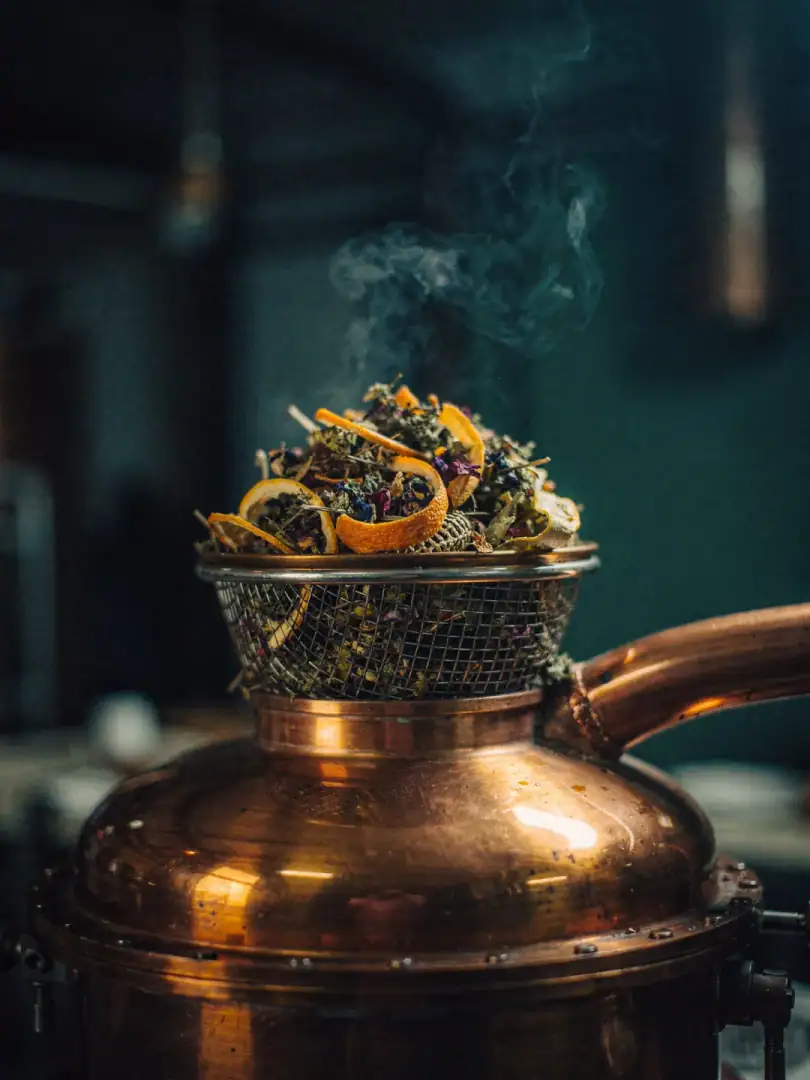
Juniper in the steam
The vapor basket
Some botanicals shouldn't touch the alcohol directly. For them, there's the vapor basket, a method that brings finer, fresher aromas into the glass.
How does vapor infusion work?
In vapor infusion, a basket holding botanicals hangs above the liquid in the still, usually at the level of the rising alcohol vapor. As the still heats, hot vapor rises through the plant matter and carries along only the lightest, most volatile aromas before turning back into liquid in the condenser. The botanicals themselves stay dry and never come into direct contact with the hot alcohol.
This difference from classic maceration noticeably changes the result. Since vapor treats the botanicals more gently than boiling alcohol, delicate, floral, and herbaceous notes are better preserved, while heavy, resinous aromas barely come through. Many distilleries therefore combine both techniques: they macerate robust botanicals like juniper the classic way, and place delicate herbs or flowers in the vapor basket.
What is a Carterhead still?
The name Carterhead belongs to a special still design, named after the British coppersmiths John Dore & Co, who made this construction well known. Its hallmark is a removable head fitted with a built-in vapor basket, through which all the alcohol vapor must pass before continuing on to the condenser.
Because every drop of vapor travels through the botanicals, a Carterhead still works especially consistently toward light, fresh notes. Gins from such stills are often considered particularly delicate and floral, with less weight and less bitterness than classically macerated versions. This design became known above all through distilleries that place great value on an especially gentle profile.
When does this method pay off?
The vapor basket suits botanicals particularly well that quickly turn bitter or heavy if left sitting in hot alcohol too long, such as certain citrus peels or delicate flowers. It's less worthwhile for juniper itself, whose robust resinous aromas usually need classic maceration to fully unfold.
In practice, the desired style often decides: a heavy, earthy gin calls more for maceration, while a light, floral gin benefits from the vapor basket. Many modern distilleries therefore use hybrid stills with both options, switching between methods depending on the recipe to shape their own style.
Which botanicals suit the vapor basket especially well?
Delicate, aromatic herbs like chamomile or lavender release their fine fragrances especially well via steam, without turning bitter. Thin citrus peels also benefit from this gentle treatment, since their essential oils are sensitive to prolonged heat exposure and would otherwise quickly lose freshness.
Heavier botanicals like whole juniper berries or angelica root, on the other hand, release barely enough aroma in the vapor basket, since their active compounds are firmly bound within the plant tissue and need more contact time. That's why most recipes deliberately combine the vapor basket with classic maceration, rather than relying on a single method alone.
Some distilleries even use two vapor baskets stacked on top of each other, to expose different botanicals separately to the same vapor stream without their aromas mixing beforehand. Others experiment with the basket's position within the still, since the vapor arrives at different heights with varying heat and concentration. These details may seem technical at first glance, but they often determine exactly whether a gin ends up tasting fresh and floral or round and resinous. Anyone tasting several gins one after another can often spot this difference right from the first impression, long before knowing which method was used. Beginners would therefore do well to deliberately compare two gins made using different production methods, to develop a feel for their own preferences.