Once or multiple times
One-Shot vs. concentrate
Not every distillery distills anew for every bottle. Some produce a strong concentrate and dilute it later, while others distill each batch individually.
What does one-shot production mean?
In the one-shot method, the distillery calculates the amount of each botanical precisely for the quantity of alcohol that will end up bottled as finished gin. All ingredients go together into a single still, and the complete run yields the finished product directly, with no later addition of flavored concentrate.
This method is considered more traditional and is often associated with especially balanced, natural-tasting gins, since no additional dilution step takes place afterward. Smaller distilleries with manageable bottling volumes work almost exclusively this way, since the effort per batch stays manageable.
How does the multi-shot or concentrate method work?
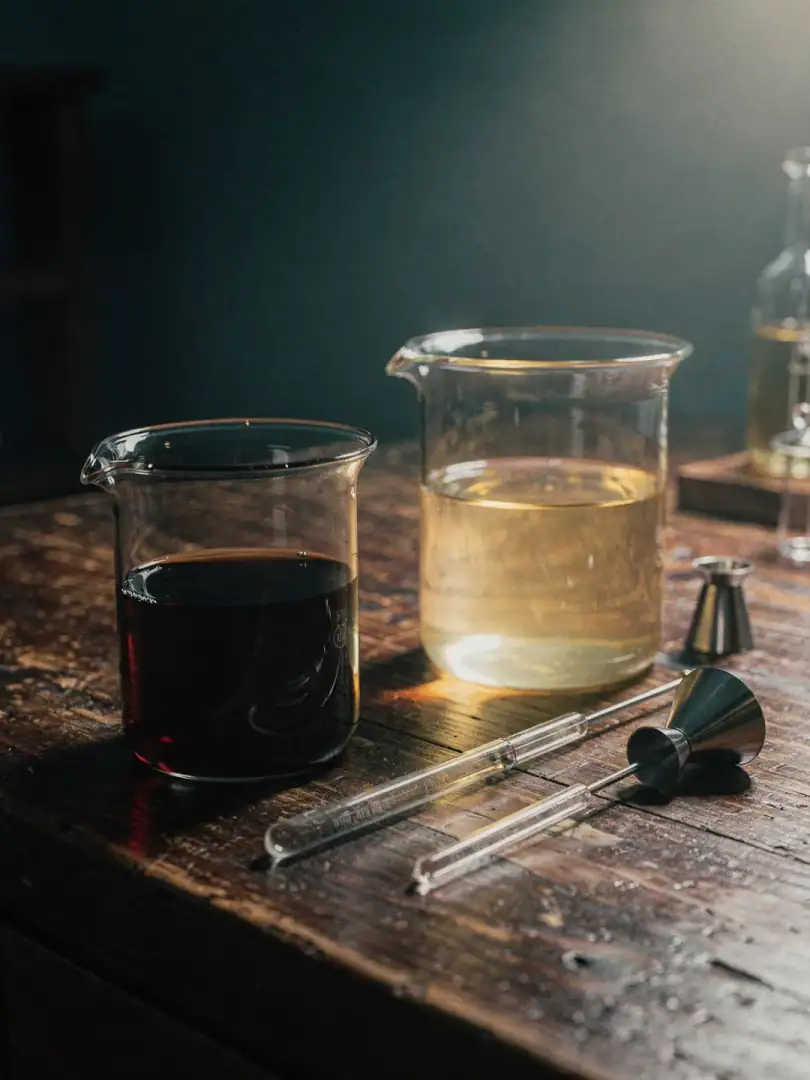
In the multi-shot method, the distillery uses considerably more botanicals for the same quantity of alcohol, producing a highly concentrated distillate. This concentrate is then stretched with additional neutral alcohol and water, often to a multiple of the original quantity, until the desired drinking strength is reached.
For big brands, this method pays off economically because a single still delivers more finished gin per run. Done properly, quality can remain just as high as with one-shot gins, since the ratios between botanicals stay the same — only the overall batch is set up more concentrated.
Which method suits which kind of ambition?
Purists often prefer one-shot gins because they feel the result is more direct and less industrial. This difference is barely provable scientifically as long as the multi-shot dilution is done cleanly, yet the method still appears as a selling point on many labels.
For newcomers, what ultimately matters is the taste in the glass, not the production method behind it. Both approaches can deliver excellent results, and many well-known brands deliberately rely on multi-shot production without it harming their reputation at all.
How can you tell the method from the label?
Most brands are open about which method they use, since both approaches have their own following. If the label explicitly says "One-Shot," or the production process is described on the brand's website, it's usually being used deliberately as a selling point aimed at connoisseurs.
If there's no mention of the method at all, that doesn't automatically mean it's multi-shot, since many one-shot distilleries simply don't bother stating it. Anyone who wants to know for certain will usually find the answer by asking the distillery directly, or through independent trade articles and tasting notes.
Another difference shows up in inventory management: one-shot distilleries must keep fresh botanicals on hand in exactly the right quantity for every batch, while multi-shot operations can store a concentrated distillate and simply stretch it with more neutral spirit and water as needed. This makes multi-shot especially practical for brands that need to respond quickly to fluctuating demand without organizing a full new botanical delivery each time. For small distilleries with fixed, modest bottling volumes, this advantage largely disappears, which is why they tend to stick with the more direct one-shot method. In the end, both approaches come down to economic decisions rather than pure questions of quality, even if marketing sometimes suggests otherwise. Anyone wanting to compare for themselves shouldn't rely on the method alone, but should taste several bottles in the same price bracket side by side and form their own impression of the result. In the end, what matters most to most drinkers is how balanced a gin feels in the glass, not which label sits behind that balance. A look into the glass and a calm first sip often reveal more about quality than any production term on the bottle.