A New, Modern Style
Contemporary Gin
Contemporary Gin, often also called New Western Gin, no longer places juniper at its center. Citrus fruit and floral notes shape this modern style more strongly.
What Is Contemporary Gin?
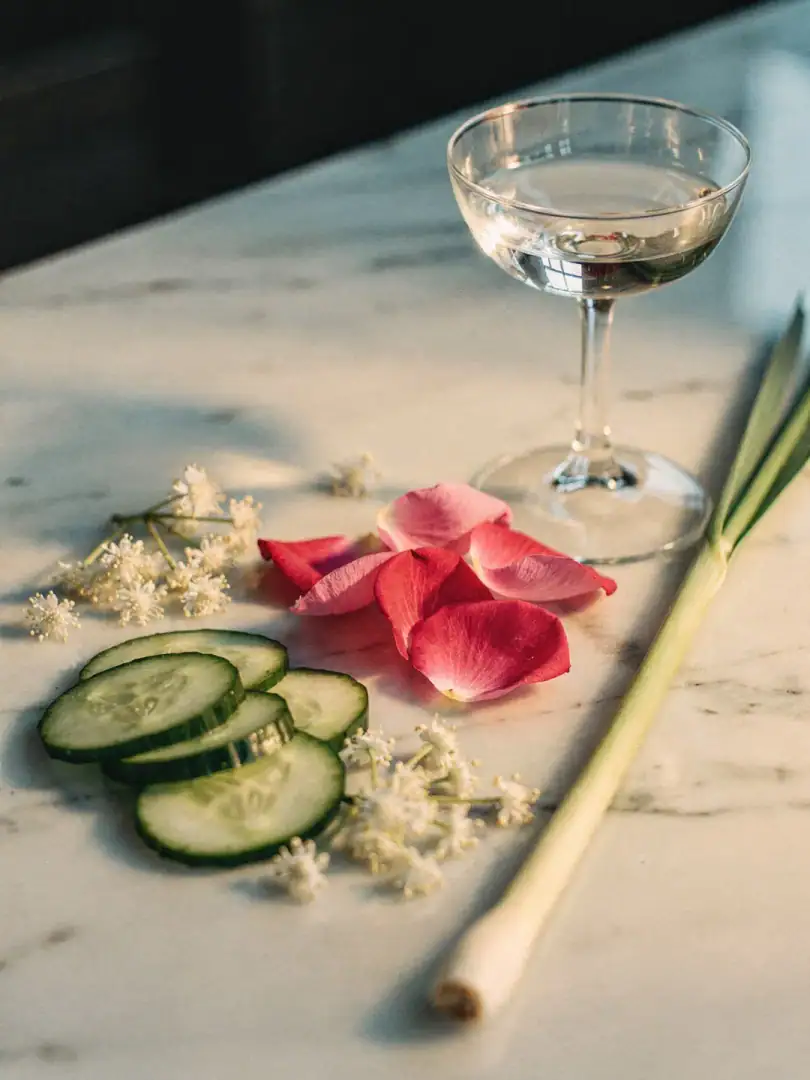
Contemporary Gin isn't a legally defined term like London Gin, but rather a description for a newer direction within the gin world. Legally, this style must still meet the basic rules, meaning juniper must remain clearly identifiable in taste for a product to be called gin at all. The difference lies in the emphasis: instead of putting juniper clearly in the foreground, other botanicals appear on equal footing or even dominate, such as cucumber, elderflower, rose, or hibiscus.
This shift makes the style more accessible to people who find the strong, resinous juniper flavor of classic gins too intense. Contemporary Gin often tastes more floral, fruitier and lighter, yet remains clearly recognizable as gin thanks to the juniper note that still lingers.
For distilleries, this style also means greater creative freedom. Since no strict rulebook like the one for London Dry Gin dictates which botanicals must be used in what ratio, unusual regional ingredients can be tried here, ranging from native wild herbs to exotic fruits. In the end, all that's required is that enough juniper still comes through. This very openness explains why bottles within this single category can differ so greatly, from delicately floral to boldly fruity interpretations that hardly have anything in common anymore besides the word gin on the label.
Where Does the Term New Western Gin Come From?
The term New Western Gin was largely coined by the founders of the Aviation Gin brand in the US, to distinguish their own, less juniper-forward recipe from classic European styles. The Scottish gin Hendrick's is also considered an early pioneer of this movement, having offered a noticeably more unusual taste with cucumber and rose petal as early as 1999, compared to the established London Dry brands.
In the 2010s, numerous new craft distilleries picked up on this idea and brought their own interpretations to market, often featuring regional botanicals like lavender, lemongrass, or native herbs. The craft-driven gin boom of those years would hardly have been possible without this expansion of the flavor spectrum.
The term "New Western" deliberately played on the contrast with "Old World", meaning the traditional European styles. This positioned the new brands not as a replacement for London Dry Gin, but as their own, additional category alongside the established classics, aimed at an audience more open to unusual flavor profiles.
Recognizing Citrus- and Floral-Forward Gins
When tasting, the Contemporary style often reveals itself right away in the aroma: instead of resinous juniper needles, fruit or floral notes come first, lemon, grapefruit, or elderflower, for example. On the palate, juniper usually stays in the background, noticeable but not dominant. These gins work well in light, sparkling long drinks with a pale tonic water, since they won't mask the fruity aromas.
Newcomers to the gin world often find these styles an easier entry point, since they're less reminiscent of classic juniper spirit. Experienced gin drinkers, on the other hand, appreciate them as a change of pace from familiar London Dry Gin, especially when a cocktail could benefit from bright, floral notes.
When shopping, it helps to check the ingredient list or the distillery's description, since the term Contemporary Gin itself isn't a protected designation and is used inconsistently. Descriptions like "floral-forward", "citrus-fresh", or an explicit listing of cucumber, rose, or hibiscus as main botanicals are usually more reliable indicators of whether a bottle truly fits this modern direction. A recommendation on the back label to serve the gin with a pale, low-sugar tonic water is also often a reliable sign of a citrus- or floral-forward Contemporary Gin.