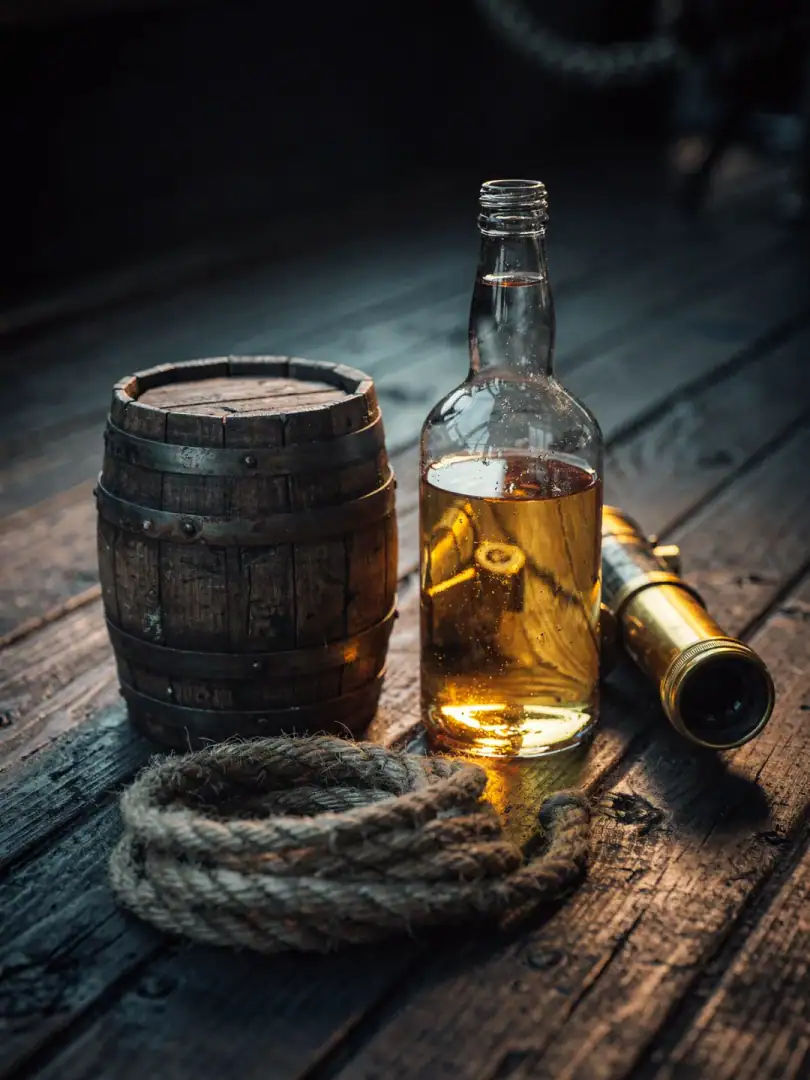
As strong as it was back then
Navy Strength Gin
Navy Strength Gin comes in at a minimum of 57% ABV, considerably more than the usual 40% gin. The name recalls the Royal Navy and a famous legend involving gunpowder.
What does Navy Strength mean for gin?
Navy Strength isn't a legally protected term like London Gin, but a designation for particularly strong gin. The standard is 57% ABV, corresponding to the old British measure of "100 proof." A regular gin usually sits between 37.5 and 43% ABV, so Navy Strength runs a good third above that. This concentration noticeably changes the drinking experience: the alcohol comes through more strongly, juniper and spices feel more intense, and the gin can handle more dilution from ice or mixers in cocktails without losing flavor.
Because the alcohol content is so high, Navy Strength Gin is particularly well suited to cocktails with plenty of ice or to bold stirred drinks, where a regular-strength gin would quickly get lost. Drunk neat, on the other hand, it tastes very intense and is better suited to experienced gin drinkers.
Bartenders use this strength deliberately in drinks meant to sit in the glass for a while, such as classic stirred cocktails with plenty of ice in the mixing glass. Since more water melts into the drink from the ice than in quickly shaken cocktails, the higher alcohol content offsets this extra dilution, so the finished drink doesn't end up tasting watery.
The gunpowder legend
The most famous explanation for the high alcohol content centers on gunpowder aboard British warships. According to legend, sailors stored barrels of gin or rum close to the gunpowder. To check whether a barrel had secretly been watered down, they would drizzle some of the spirit onto a small amount of powder and try to light it. If the powder still ignited reliably despite the moisture, the spirit was proven, or "proof," strong enough not to be diluted. Spoiled gunpowder on board could have been life-threatening in an emergency, so this test was no game, but a matter of practical caution.
This story explains the English term "proof" for alcohol content and to this day provides the tale behind the name Navy Strength. Whether exactly 57% was really the threshold at which gunpowder would still ignite can't be fully verified historically. As a legend, though, it tells a good story for why this particular strength remains tied to the Navy to this day.
Interestingly, the term "proof" was calculated differently in Great Britain and the US, and in some cases still is. The British system, from which the gunpowder story originates, differs numerically from the American proof system, where 100 proof corresponds to just 50% ABV. Anyone reading old figures should therefore check carefully which system is meant, to avoid misjudging the actual alcohol strength.
Navy Strength Gin today
Plymouth produces one of the best-known examples with its Navy Strength expression, since the distillery genuinely supplied the Royal Navy for centuries. Smaller distilleries such as Hayman's in England also carry their own Navy Strength bottlings. The style remains a niche alongside the broad range of London Dry offerings, but it's specifically valued by bartenders looking to build cocktails with real structure.
Anyone looking to buy Navy Strength Gin will usually find it at specialist spirits retailers rather than on the average supermarket shelf, since demand is smaller than for classic London Dry Gin. Still, for anyone who enjoys gin neat or in strong stirred drinks, it's well worth trying.
Because the botanicals come through more intensely at higher alcohol strength, Navy Strength Gin is also a great way to get to know a gin's composition more closely. Tasting the same gin once in its standard version and once in Navy Strength often makes it much clearer which individual botanicals are actually present, since the higher alcohol carries them more forcefully to the nose.