Preparation
- Lightly oil a small loaf tin (about 500 to 750 ml) and line it with cling film, leaving the film overhanging.
- Stir the coffee granules, liqueur or brandy, egg yolks and sugar together in a bowl until the coffee has dissolved. Put the egg whites and the cream into two further, grease-free bowls.
- First whisk the egg whites to stiff peaks, then, without washing the beaters, whisk the yolk mixture until thick and foamy and it leaves a trail when lifted, and finally whip the cream until it holds its shape.
- Gently fold the cream into the egg yolk mixture, then lightly fold in the egg whites in two batches and finally fold in the chopped chocolate.
- Spoon the mixture into the tin, smooth the top and cover with the overhanging film. Freeze for at least 6 hours, ideally overnight.
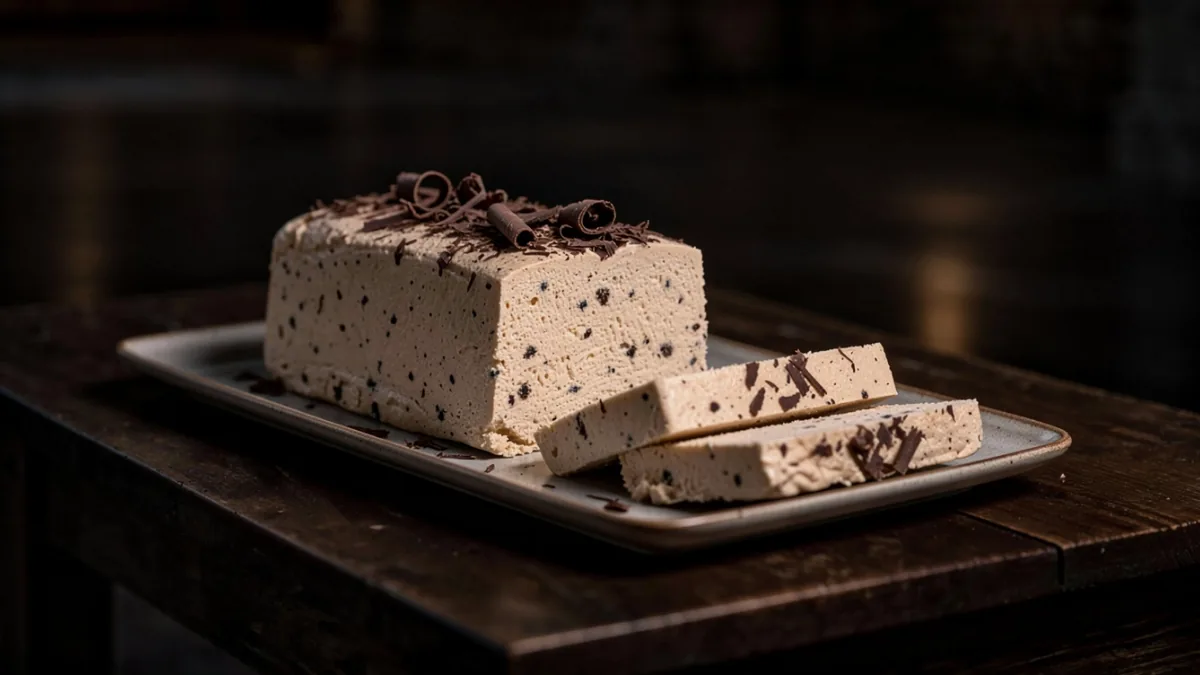
- Shortly before serving, turn the semifreddo out onto a plate, peel off the film, sprinkle with chocolate shavings and let it soften for about 10 minutes, then cut into slices.
Drink with it
Cognac and brandy · excellent match
Cognac VSOP, neat at room temperature
The caramel and vanilla of the Cognac pick up the roasted notes of coffee and chocolate, and its warmth contrasts with the cold of the semifreddo.
Cognac and Armagnac: Two Origins for BrandyFortified wine · excellent match
Pedro Ximénez sherry, lightly chilled
PX itself tastes of raisin, coffee and liquorice and is sweeter than the parfait; in Spain it is even poured over ice cream.
Port wine: understanding Ruby, Tawny, and VintageAged rum · good match
Aged rum, neat or with one ice cube
The molasses and vanilla of the rum meet cocoa and coffee, a tried-and-tested dessert pairing.
Drinking rum neat: how to get to know a bottlingSherry-cask whisky · good match
Sherry-cask single malt, neat
Dried fruit and roasted notes from the sherry cask suit dark chocolate and coffee.
What Does the Cask Do to Whisky?Herbal liqueur · good match
Bitter amaro, chilled or over ice
The herbal bitterness keeps the sweetness of the cream in balance and echoes the bitterness of the coffee.
What is Amaro? Understanding Italian bitter liqueurs