Preparation
- Put the water and kombu in a pot and, if you can, leave to soak for 30 minutes. Do not rinse the kelp: the white bloom on it is umami.
- Heat slowly over a medium-low heat, about 10 minutes. Just before it boils, remove the kombu, otherwise the broth turns bitter and slimy.
- Sprinkle in the bonito flakes, bring to the boil and simmer for 30 seconds at most. Turn off the heat and let the flakes sink for about 10 minutes, then pour through a fine sieve. This gives roughly 4 cups of dashi.
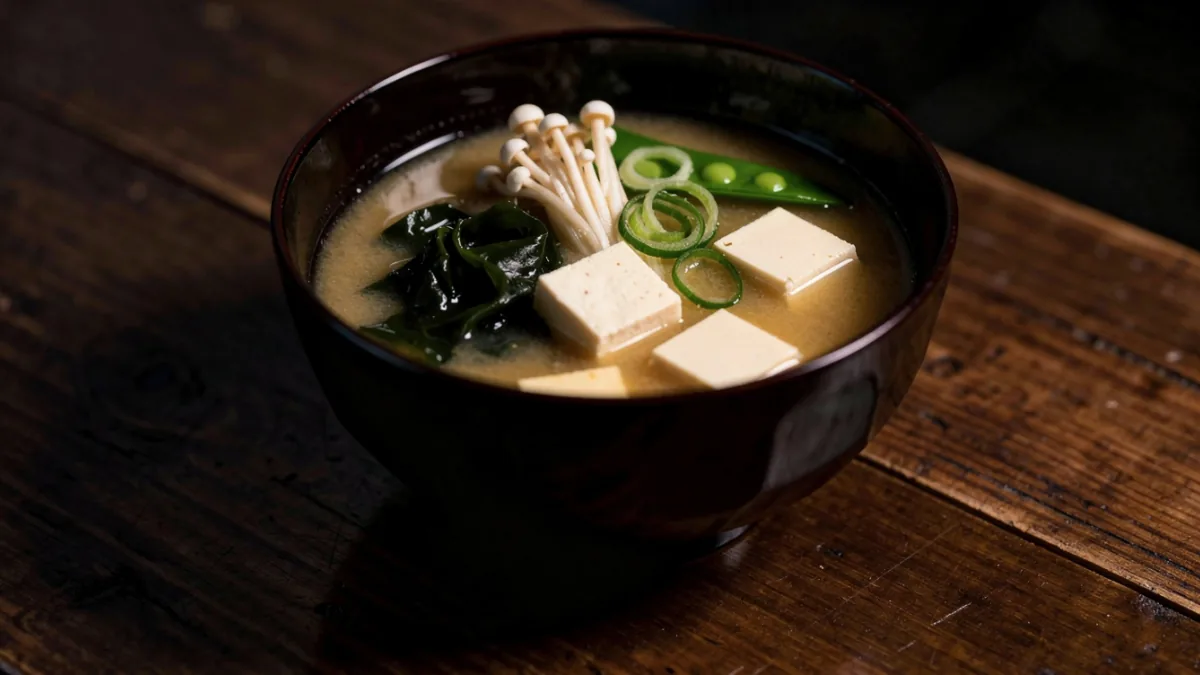
- Reheat the dashi until almost boiling. If you like, cook the mangetout and enoki in it for 3 minutes.
- Turn off the heat. Stir the miso smooth in a ladle with a little hot dashi and add it to the pot. Cut the tofu into 1.3 cm cubes and only then slide them in, so they do not break up when stirred.
- Add the wakame and spring onion just before serving and serve at once. Do not boil the soup again, or the miso loses its aroma.
Drink with it
Junmai sake · excellent match
Junmai, warmed to about 40 °C
The rice sweetness and umami of the junmai mirror the miso and dashi, and the warmth gently offsets the saltiness of the soup.
Junmai, Ginjo, Daiginjo: What do these mean for sake?Ginjo sake · good match
Ginjo, chilled
Delicate fruit and lightness set a fresh counterpoint to the salty, warm broth.
Fortified wine · good match
Fino or Manzanilla, well chilled
The salty, yeasty notes of the fino meet the umami of dashi and miso, and its dryness keeps the soup light.
Port wine: understanding Ruby, Tawny, and VintagePale lager · good match
Japanese lager, ice cold
Slim and crisp, it sets a cool counterweight to the hot, salty broth.
Pils or Helles: What's the Difference?
Why it pairs well
Fino with miso soup is unusual, but it connects through the shared umami of dashi and miso.