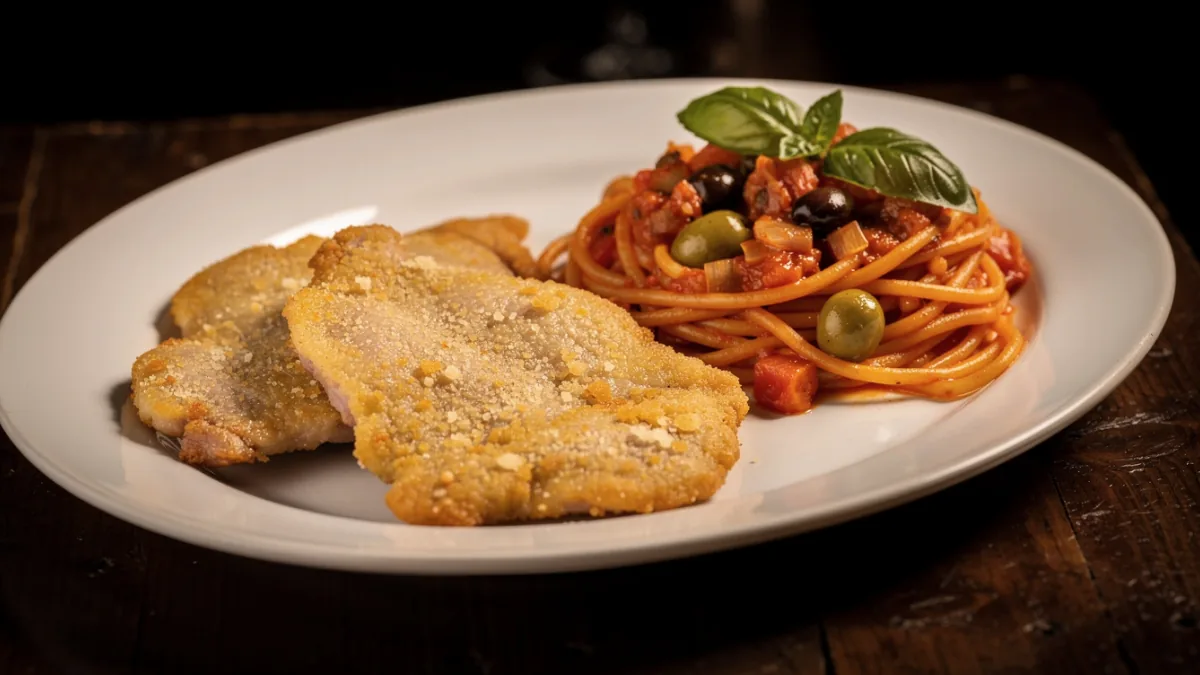
Preparation
- Cut a cross in the top of the tomatoes, dip briefly in boiling water, refresh in cold water, then peel, quarter and deseed.
- Cut the onion into fine strips, finely dice the garlic and sweat both with the olives in the butter without letting them colour.
- Add the tomatoes, tomato purée, oregano, salt and pepper, toss briefly and simmer for a few minutes; then set aside.
- Bring the pasta water to the boil with the salt. Whisk the eggs with salt and pepper and stir in enough Parmesan to make a thick, runny mixture; if it gets too stiff, loosen with a little milk.
- Heat plenty of olive oil in a frying pan. Dredge the unseasoned escalopes first in flour, then draw them through the Parmesan and egg mixture and fry in the hot oil for 1 to 2 minutes per side until golden; keep warm in the oven at 100 °C.
- Cook the spaghetti in the boiling salted water until al dente, drain and reserve 5 tbsp of the cooking water.
- Add the pasta to the tomato sauce, toss with the cooking water until silky, sprinkle with basil and serve with the escalopes.
Drink with it
White wine · excellent match
Lugana or Soave Classico, dry
The clean acidity stands up to the tomato sauce and cuts through the Parmesan coating without overpowering the delicate veal.
Which wine pairs with food? A simple approach to choosingSparkling wine · good match
Franciacorta Brut
Bubbles and acidity clear the frying fat of the cheese coating from the palate; the sparkling wine comes from the same region as the dish.
Sparkling wine, Champagne, and Prosecco: what's the difference?Red wine · good match
Barbera or young Sangiovese, lightly chilled
High acidity and cherry fruit pick up the tomato, and the soft tannins do not disturb the veal.
Pale lager · good match
Italian pilsner or Helles
Carbonation and fine bitterness cut through the frying fat of the coating and refresh the palate for the next bite.
Pils or Helles: What's the Difference?