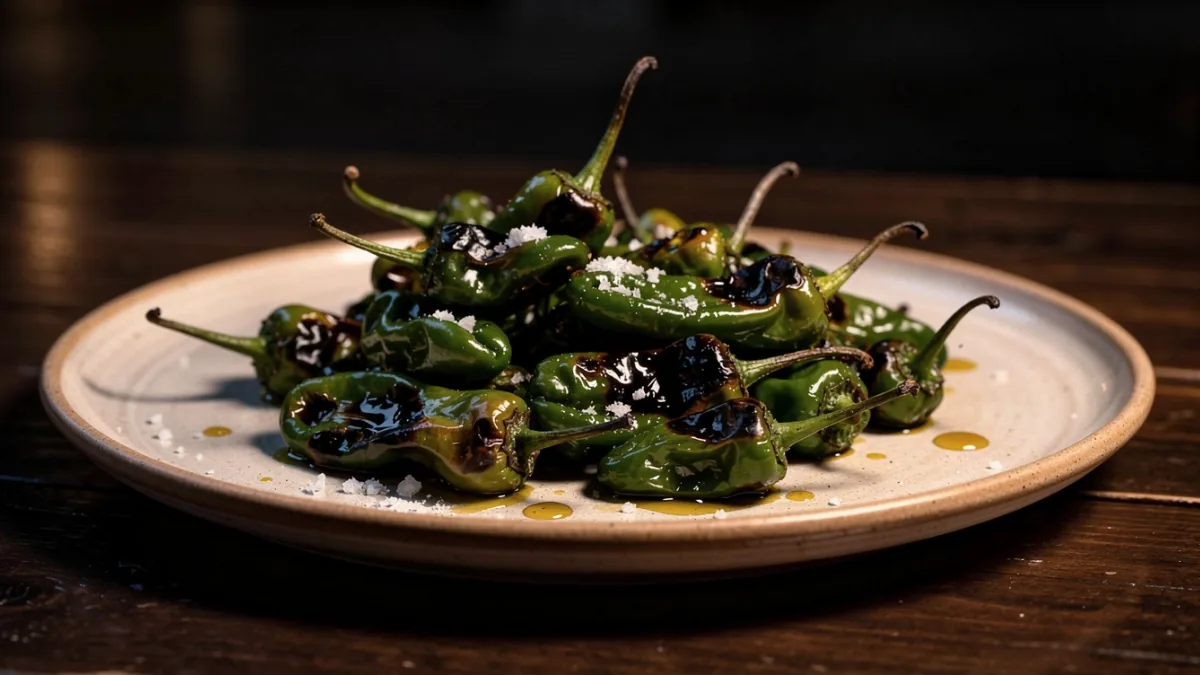
Preparation
- Rinse the peppers and pat thoroughly dry, otherwise the oil will spit badly.
- Heat the oil over high heat in a large frying pan or, better, a deeper pot.
- Add the peppers and fry for about 2 minutes, shaking often, until the skin blisters. Then put the lid on and cook for another 1 to 2 minutes. A few dark spots are fine.
- Arrange on a plate, sprinkle at once with coarse salt and eat hot with your fingers, holding them by the stalk.
Drink with it
White wine · excellent match
Albariño from Rías Baixas, chilled
Wine and peppers both come from Galicia: salty freshness and citrus notes suit olive oil and green pepper aroma, and the acidity keeps the oil light.
Which wine pairs with food? A simple approach to choosingFortified wine · excellent match
Manzanilla or Fino, well chilled
The salty, yeasty dryness of the sherry meets the coarse salt, and the nutty note picks up the charred spots on the skin; a fixture at Spanish tapas bars.
Port wine: understanding Ruby, Tawny, and VintageMezcal · excellent match
Mezcal Espadín, neat in small sips, lightly chilled
The smoke of the mezcal meets the blackened, blistered skin, the green, vegetal agave note meets the pepper aroma, and the coarse salt acts like the salt served with mezcal in Oaxaca: a bar snack like the roasted chillies back home.
Tequila and Mezcal: What's the Difference?Pale lager · good match
Spanish lager (caña), ice cold
Cold and carbonation wash away oil and salt and take the edge off the occasional hot pepper.
Pils or Helles: What's the Difference?Sour beer · good match
Saison or gueuze
Zesty acidity and carbonation wash away oil and salt, and the dry yeast spice suits the green pepper aroma.
What is sour beer? Recognizing intentional acidity