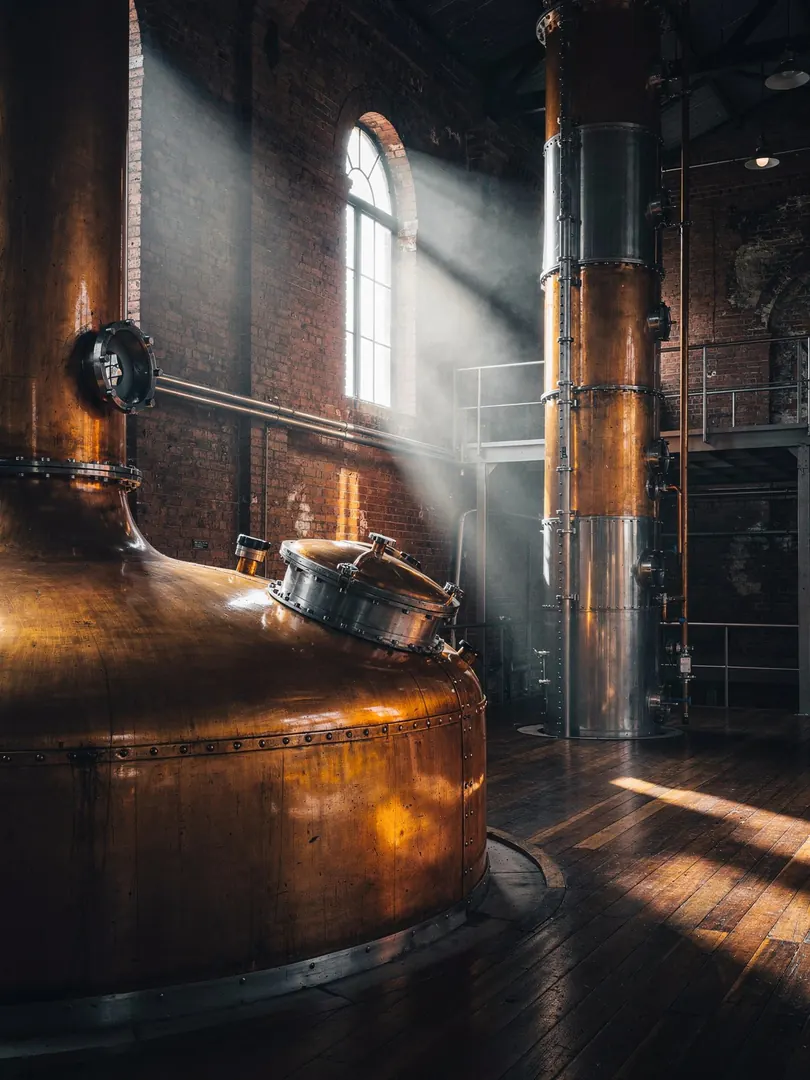
Column, Then Pot
Distillation
Is Bundaberg Rum distilled in a column still or a pot still? In both, one after the other: the first run takes place in a column still, the second in a pot still, which is charged and distilled one batch at a time.
In the column still, the fermented mash is heated with steam. The alcohol rises as vapor, cools at the top, and drips out as liquid. This intermediate product is called "low wine"—meaning weak wine—and still contains a lot of water. It's collected until there's enough for the second run.
In the pot still, this mixture is heated a second time. Pot stills separate less sharply than columns: they let more of the heavy flavor compounds through into the distillate, which is why pot-distilled spirits are considered fuller-bodied. The result is the raw rum, which then goes into the barrel. Think of the difference like sieving: a column filters finely in many stages, a pot still filters coarsely in a single stage. That's why a column distillate tends to taste clean and light, while a pot still distillate tastes heavy and full-bodied.
The sequence is deliberate: the column provides volume and consistent quality, the pot still adds extra body to the spirit. Together, they create the style known from Bundy: round, dark, and sweetish with molasses. Because both stills work one after another, the mash passes through two different separation processes before the spirit ever sees a barrel—giving the master distiller two levers to work with instead of one.
The higher the alcohol content of the distillate, the more neutral the flavor becomes, since fewer flavor compounds carry through; under EU law, rum must therefore stay below 96% ABV so it still tastes like rum.
Several quality tiers are sold under the brand, from the basic standard bottling up to the Master Distillers' Collective, which has existed since 2011.