Two Years in Wood
Cask & Climate
How old must rum be in Australia? Under the Customs Act of 1901, imported brandy, whisky, or rum cannot be released for sale until it has aged at least two years in wood. Industry publications describe the two-year rule as the benchmark that also applies to Australian rum. A sugarcane spirit aged for less time isn't called rum there.
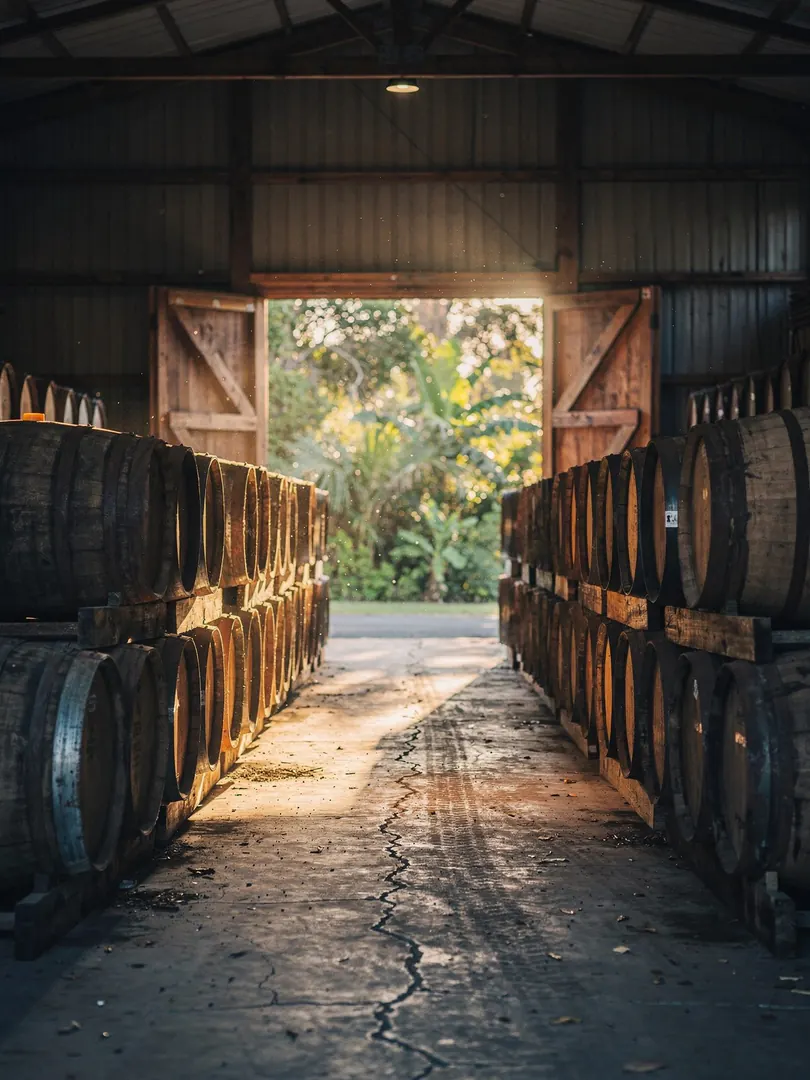
Bundaberg treats this minimum as its baseline. According to the company, the raw rum is aged for at least two years in white oak casks before further processing. According to a description of the production process, the rum matures in a temperature-controlled environment. Samples are checked regularly.
Oak wood lends the spirit vanilla, spice notes, and color, while also letting it breathe: oxygen passes through the wood and rounds out the flavors. White oak is widely used for this because the wood is dense and barrels made from it rarely leak.
Each year, part of the barrel's contents is lost through the wood—the "angel's share." In Scotland, trade publications put this at around two percent a year; in warm climates, it's several times that. Ageing in a country with hot summers means less rum left in the barrel for a given age, and more wood influence in the glass.
The Master Distillers' Collective, launched in 2011 with three rums, shows the range: a ten-year-old rum, the Port Barrel, whose cask type is right there in the name, and the Golden Reserve.
In the EU, a clear rule applies to any age statement: only the age of the youngest component in the blend may be stated. So a "10" on the label there means everything in the bottle spent at least ten years in the barrel, and the maturation must have taken place under customs supervision.