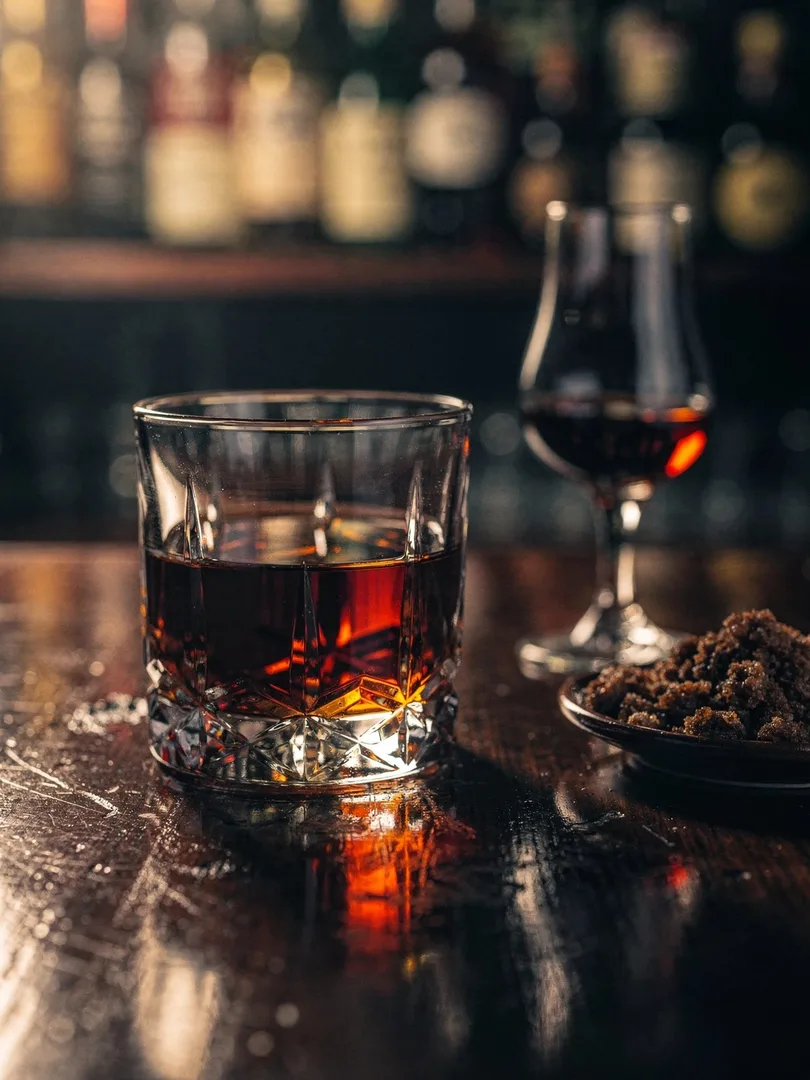
Dark and Smooth
Rum Style
What kind of rum is Bundaberg? A dark molasses rum from Queensland, distilled in both column and pot stills and aged at least two years in white oak. It doesn't carry a distinct category name like "rhum agricole" or "Demerara"; you identify it instead by its raw material, distillation method, and flavor profile.
In terms of flavor, it stays close to its raw material: molasses, caramel, toffee, and burnt sugar form the base, joined by vanilla and spice notes from the oak. Fruitiness is present, but it doesn't take center stage. The color matches this profile—a warm brown that deepens with age.
Compared to a rhum agricole, Bundaberg takes the opposite path: juice-based rum tastes of fresh grass and raw cane sugar, while molasses rum tastes of what's left after sugar syrup has been boiled down. Compared to the lighter, filtered rums of the Spanish style, it comes across as darker and woodier. The difference lies mainly in the raw material, not in quality.
In Australia, the rum is simply called "Bundy"—that's how familiar it's become. One drinks magazine compared it to Vegemite, the salty spread almost everyone there knows: a product you don't think twice about, yet one that's part of everyday life.
The older bottlings in the Master Distillers' Collective are better suited to sipping neat. With ten years in the barrel, the wood typically comes through more strongly, and the molasses recedes into the background. Stylistically, it remains a molasses rum from column and pot still even there.
The fact that this style developed in Queensland comes down to the raw material: wherever raw sugar is produced in factories, molasses is left over as a byproduct, and distilling it is the obvious next step. Unlike juice-based rum, it doesn't originate in the field, but beside the sugar mill.
Bundaberg Molasses RumMolasses · Pot still and column still
- Alcohol
- 37–40 % vol
- Cask ageing
- 2–10 Years
Dark, molasses, caramel and toffee, with vanilla and spice from white oak; smooth on the palate.