Short Fermentation
Fermentation
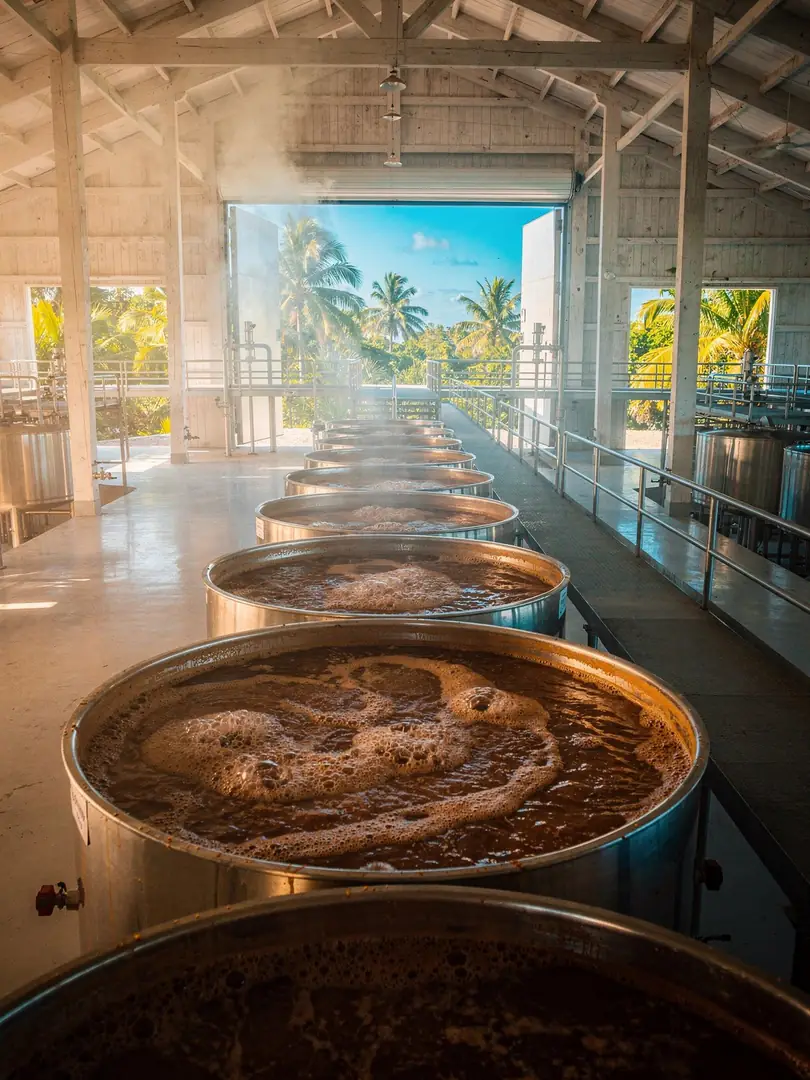
How long does the mash ferment for rum from Barbados? At the West Indies Rum Distillery in Brighton Beach, according to trade press reports, only about a day. Diluted molasses, water, and yeast produce a wash of roughly eight percent alcohol, which then flows into the still. Ammonium sulfate is reportedly added as a nutrient for the yeast.
One day is short. Distilleries in Jamaica that work with wild yeasts and fermentation pits let the mash sit far longer—historically up to ten days. During this time, bacteria and yeasts transform the mixture, producing acids that later yield flavor compounds.
These acids give rise to esters, volatile aroma compounds that can smell of banana, pineapple, or even glue. A short fermentation leaves little time for this to happen. The result is a clean, light distillate that blends well and leaves plenty of room for the cask to make its own contribution.
This suits the distillery's history well. For a long time, it worked for merchants and bottlers who ordered a consistent profile. A fermentation that runs like clockwork makes every batch comparable—exactly what's needed when distilling for many different clients.
The lack of esters is no shortcoming here. Rum from Barbados isn't meant to taste like a high-ester Jamaican rum, but rather smooth and rounded. What the fermentation doesn't contribute in fruitiness, the still and the cask make up for: the pot still lends body, and the wood adds vanilla and spice.