Copper or column
Distillation
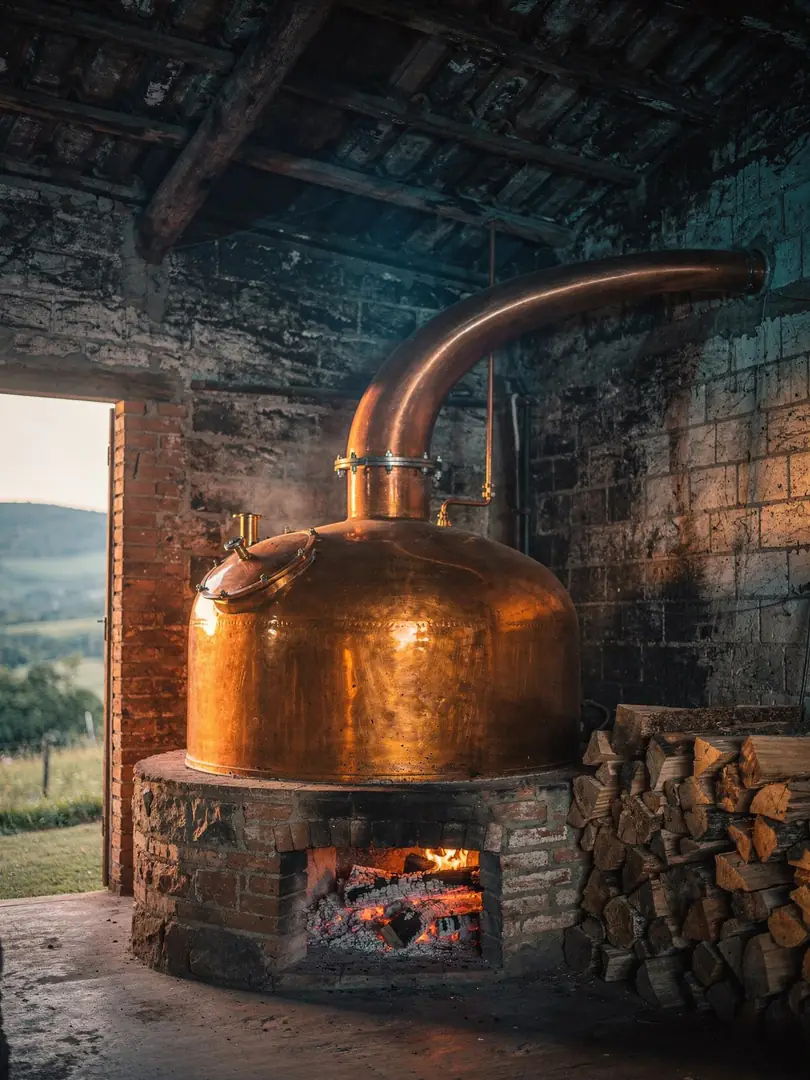
Two distillation methods divide the world of Cachaça. In the alembique, a copper pot still, the wash is heated batch by batch. In the column still, made of stainless steel, the wash instead flows continuously through a tower with multiple plates. Industrial producers mostly work with columns, small operations with copper.
With the alembique, the distiller's skill is key. The run is split into three parts: the heads (cabeça, literally "head"), the heart (coração), and the tails (cauda, "tail"). Only the heart goes into the bottle; the heads and tails contain compounds that taste harsh or musty. How generously the distiller makes the cuts determines how clean or how robust the Cachaça turns out. That takes experience and a steady hand at the fire.
The strength at which the heart comes off the still is higher than what ends up on the bottle. Before bottling, the Cachaça is cut with water; Article 53 permits 38 to 48 percent ABV. A sugarcane spirit with a higher alcohol content can't legally be called Cachaça. It falls instead into the broader category of aguardente, which runs up to 54 percent.
The distillation method shapes the profile. Copper binds sulfur compounds and gives the distillate more roundness; Cachaça from the alembique therefore usually tastes fuller, with cane and fruit character. The column separates more sharply and yields a cleaner, lighter spirit suited to mixed drinks. On labels, the term de alambique usually points to the copper still.
Regional examples show the range. Paraty and Salinas are known above all for artisanal distilleries whose origin is specifically protected. On the other side are operations that send large volumes through columns. Between the two there are differences in aroma and effort, but not in name: both may be called Cachaça.