About a day
Fermentation
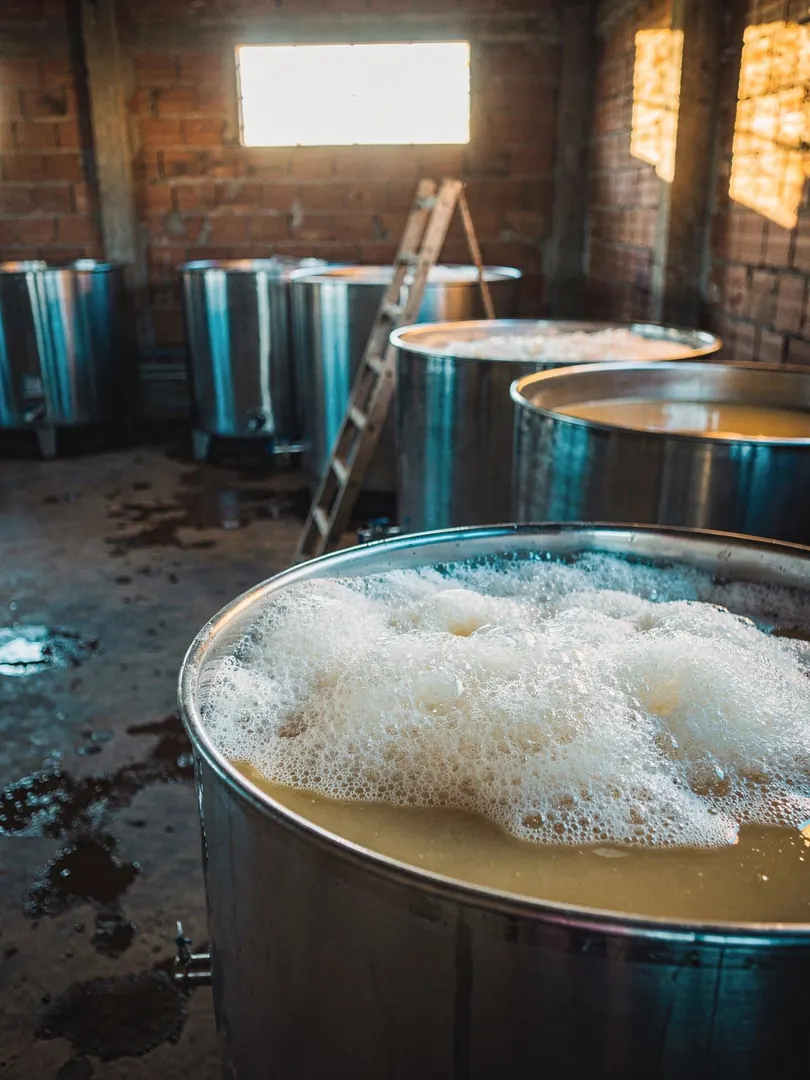
After pressing, the yeasts get to work. The diluted cane juice, called mosto in the decree, sits in vats and ferments, usually in about a day, into an alcoholic wash. The timeframe is tight, because sugarcane juice spoils fast in the heat. This is notably shorter than the fermentations at some Jamaican distilleries, which can stretch on for days.
Which yeasts do the work varies by producer. Large manufacturers mostly use cultured yeasts, since they make the outcome predictable. Many small alembique operations, however, work with wild yeasts from the cane and the air, or with a homemade starter. A common one is fermento caipira, a starter made from corn flour and cane juice, in which the yeasts multiply before going into the vat.
The vats today are often stainless steel, since it's easy to clean. Cleanliness matters more than romance here, because unwanted bacteria multiply alongside the yeast in the sweet, warm juice, producing acids and off-flavors. The temperature in the vat has to be watched closely: too warm, and fermentation falls out of rhythm.
Flavor-wise, fermentation lays the groundwork. A short fermentation from fresh juice brings out green, grassy notes and the freshness of the cane. Wild yeasts can add fruity esters, such as banana or pear. The raw juice supplies the freshness; the yeast supplies the fruit.
After fermentation, the wash is ready for the still. In Brazil it's often called vinho, even though it has nothing to do with wine. Distillers check the alcohol content and acidity and don't wait longer than necessary, since the wash would otherwise turn sour and develop acetic acid. Anyone wanting a Cachaça with a clean sugarcane aroma keeps fermentation short and clean; anyone after more fruit gives the yeasts more room.