Brazilian woods
Cask & Climate
Freshly distilled Cachaça is clear. Whether it rests in casks is up to the producer, since the law doesn't require aging. Unaged Cachaça is often labeled branca or prata; it goes from stainless steel straight into the bottle. That sets it apart from rum, which Brazilian law describes as aged.
Article 53 sets out a single age category: a Cachaça may be called cachaça envelhecida if at least half the contents have aged for at least one year. The rest may be unaged. Caramel coloring is permitted for color adjustment, caramelo in Portuguese. Anyone familiar with the EU rule, where an age statement must reflect the youngest component, should read the label carefully here. In this case, one year of aging can refer to just half the bottle.
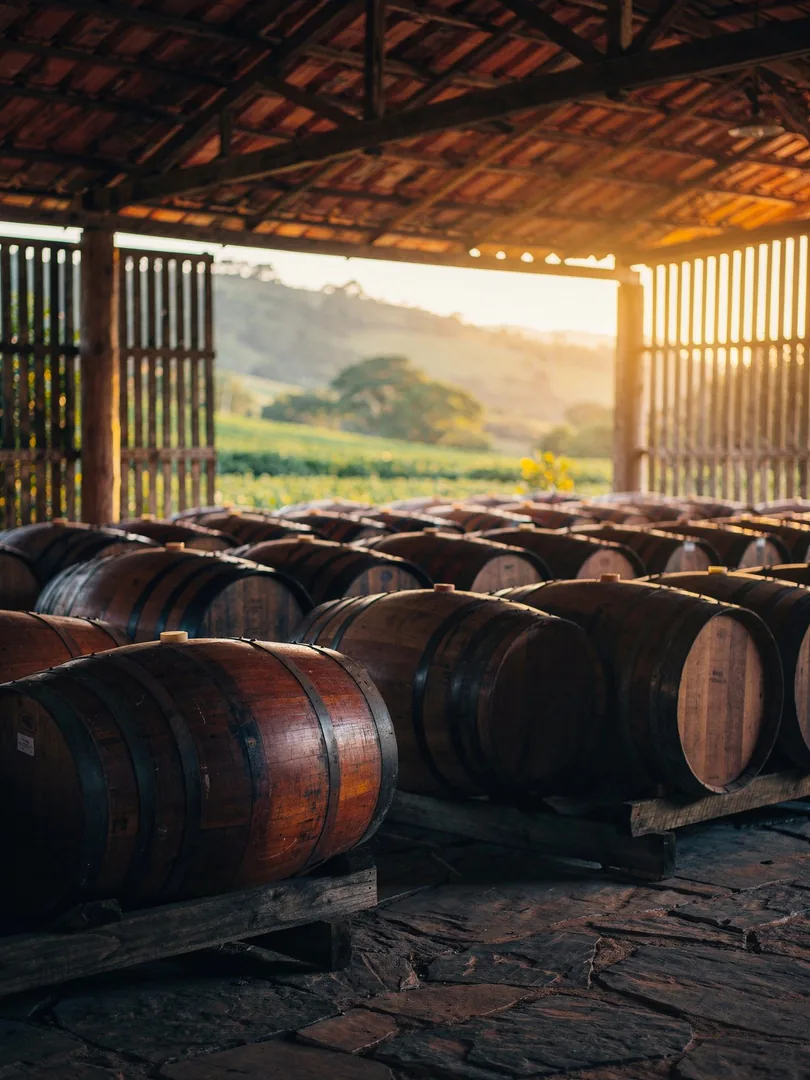
Cask aging in Brazil doesn't automatically mean oak. Alongside oak, native woods are used, especially Amburana, Jequitibá-rosa, and Bálsamo. Amburana, a tree whose wood smells of cinnamon and vanilla, turns the Cachaça golden and lends it spice notes. Jequitibá-rosa, a tree of the Atlantic Rainforest, stays more restrained, lightly sweet with delicate spice. Bálsamo colors the spirit dark, almost burgundy.
Heat speeds up what happens in the cask: the wood releases color and aroma faster, and part of the contents evaporates. How much depends on the warehouse, cask size, and wood type. The brand Avuá, according to the producer, rests its Bálsamo-aged expression for up to two years in casks of the same wood. Amburana- and Jequitibá-aged Cachaças are also sold at three years of age.
Aged Cachaça often feels softer in the glass than its younger counterpart. The cane note recedes, while wood and spice come forward. How long the wood has really been at work is only revealed by an age statement, if the producer provides one. The cask itself may be old and have held spirit many times before, in which case it imparts less.