Three styles
Rum Style
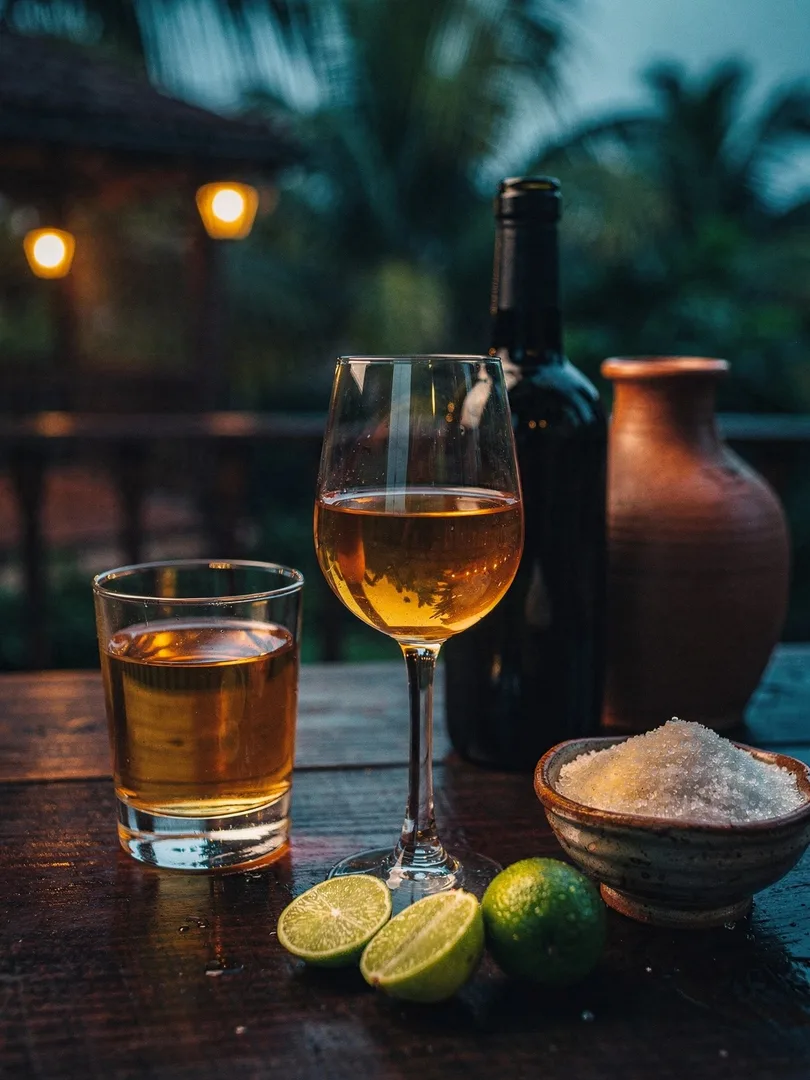
What types of Cachaça exist? Three styles dominate the shelf. Cachaça branca, also called prata, is unaged and clear, often comes from the column still, and smells of freshly pressed cane, grass, and citrus. Cachaça de alambique comes from the copper pot still, is also often unaged, but rounder, with fruit and more body. The envelhecida has seen wood, turns golden to amber, and smells of vanilla, spice, and nuts.
The adoçada, with six to 30 grams of sugar per liter, isn't a fourth style but a note on the bottle: this one has been sweetened.
What separates Cachaça from rhum agricole is less the raw material than the rulebook. Both use cane juice. The AOC Martinique, however, mandates the creole column, a historic type of column still from the Antilles, whereas Cachaça leaves copper and stainless steel, tank and cask, open options. On the bottle, that's why you'll always see 38 to 48 percent ABV, never less, never more.
Two regions stand for craft. Paraty, on the coast of the state of Rio de Janeiro, has held a protected geographical indication since 2007; Salinas, in northern Minas Gerais, since 2012. Both bring together small producers under one seal; that doesn't mean a uniform flavor follows. The seal guarantees origin and production rules, not a particular taste.
Where rum made from molasses draws its depth from cask and time, young Cachaça lives on the freshness of the juice. That makes it a natural match for lime, sugar, and crushed ice, since nothing heavy competes against it. Aged expressions, on the other hand, are better suited to sipping neat.
On the shelf you'll also come across aguardente de cana. It's a sugarcane spirit that doesn't meet the requirements for Cachaça, for instance because it's bottled at a higher strength. In that case, it may reach up to 54 percent ABV.
Cachaça branca (column still)Cane juice · Column still
- Alcohol
- 38–48 % vol
- Cask ageing
- 0 Years
Clear and fresh: sugarcane, grass, citrus; lighter, cleaner body, the base of the Caipirinha.