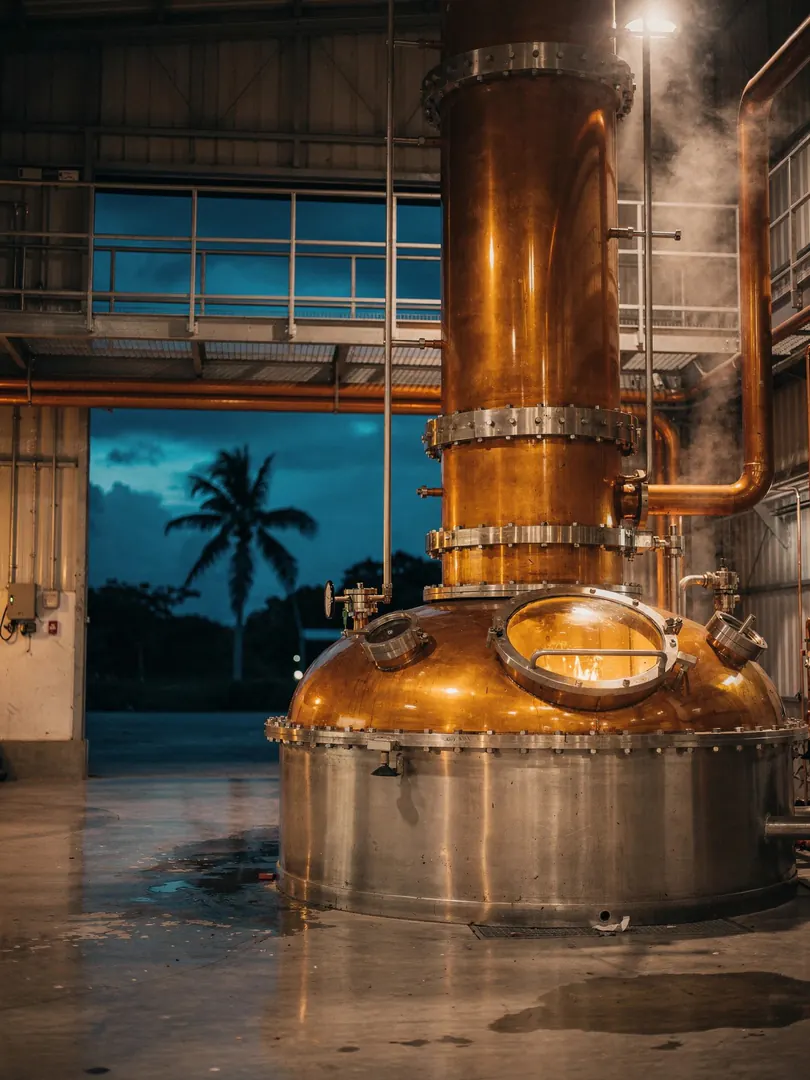
Column Instead of Pot
Distillation
Two columns, one goal: a light, clean distillate that, after fermentation, becomes the actual raw material for all of the house's brands. According to reports, Brugal works with two columns connected in series, the first of which runs under reduced pressure. Distillation takes place not in Puerto Plata, but in San Pedro de Macorís.
A column is a tall tower in which vapor rises and condenses repeatedly on the plates. Alcohol becomes concentrated as it rises, while heavier aromas remain below. Unlike the pot still, which is filled batch by batch, the column runs continuously.
The result is a very pure, almost neutral distillate. Only after distillation is it brought down to barrel strength with water and then aged in oak. White rum in the Spanish style is often also passed through activated charcoal to keep it clear and mild.
From this distillate, Brugal builds its range: Extra Viejo, on the market since 1976, the 1888, available since 2010, and the special bottling Papá Andrés. According to the house, blending is handled by the Maestros Roneros, currently Jassil Villanueva and Gustavo Ortega, the fifth generation of the family.
Bermúdez in Santiago de los Caballeros likewise produces light, Spanish-style molasses rums, known in Spain and Latin America as well as at home. Notable among them are Aniversario, the house's flagship, and the Don Armando range, a blend of rums aged in oak barrels for up to ten years.