A Second Life in Wood
Barrel & Climate
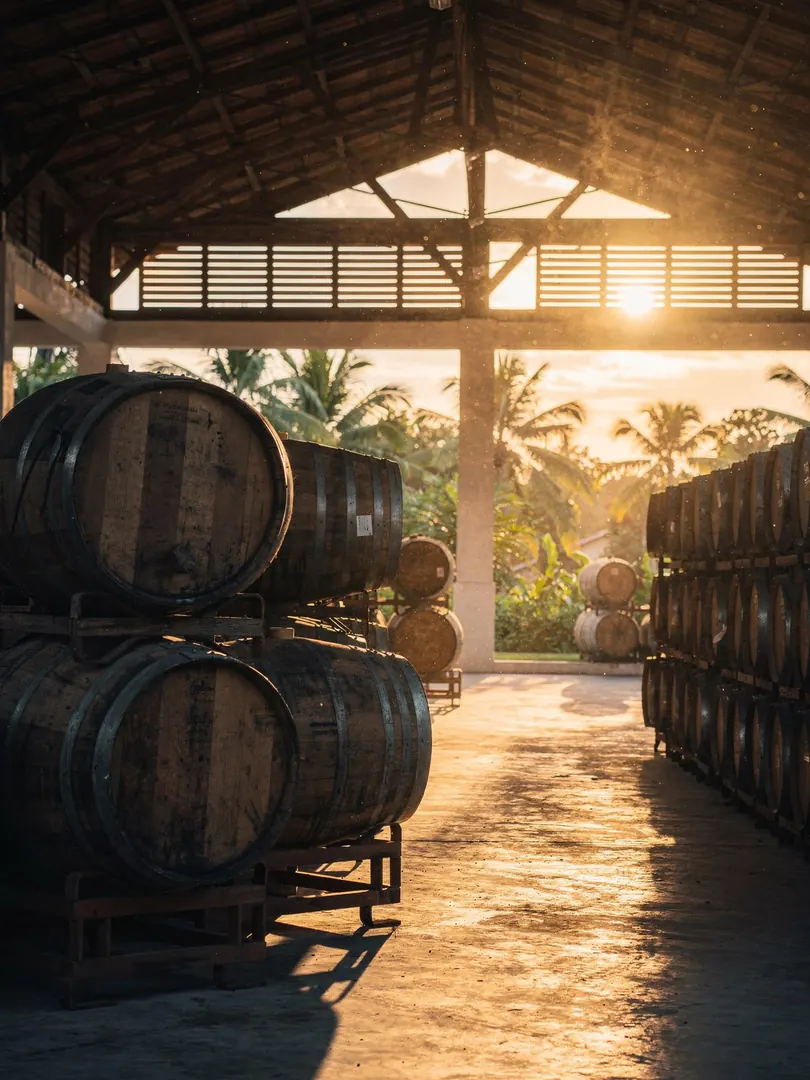
According to industry figures, the warehouses of Puerto Plata hold around 150,000 barrels. Brugal ages its rum in former bourbon barrels made of American oak and in sherry casks made of European oak. In the US, bourbon may only be made in new barrels, which is why large numbers of used barrels make their way to rum houses.
The wood gives the rum its flavor. American oak brings mainly vanilla, coconut, and caramel, while sherry casks lean more toward nut, raisin, and dried fruit. Anyone tasting one barrel after another often ends up tasting less the rum itself and more the history of what was in the barrel before.
In the Cibao, barrels rest in Caribbean warmth. There, several times as much evaporates each year as is lost in Scotland—often around eight percent. The rum picks up wood character faster, but it also loses volume more quickly. The oft-cited rule that one tropical year equals three European ones is a rule of thumb and not chemically exact.
On the label of a rum sold in the EU, only the age of the youngest component may be stated. If a house blends rums aged twelve, eight, and five years, the label must read five. Solera numbers are not age statements under EU law—they only reveal the oldest component. Terms like Añejo, Reserva, or Extra Viejo are marketing terms without a uniform standard.
At Bermúdez, according to trade information, the Reserva in the Don Armando range is aged in white oak and given a final touch in French casks that previously held Bordeaux wine. Such secondary maturations are called finishes and visibly shape the flavor, without changing the age stated on the label.