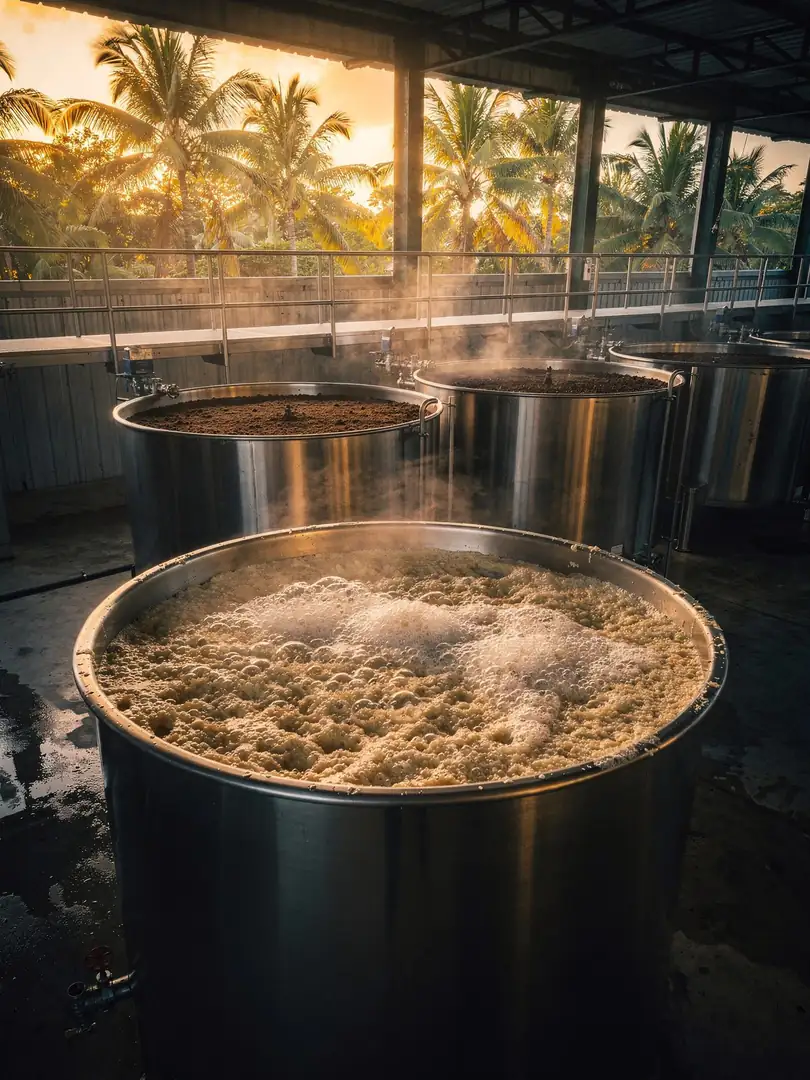
Yeast and warmth
Fermentation
Once the molasses is in the fermentation tank, yeast takes over. Undiluted, it would be too thick and too sweet, since yeast can't tolerate that much sugar. So it's diluted with water, then yeast and warmth are added, turning sugar into alcohol, carbon dioxide, and a wealth of aromatic compounds.
How long this takes determines the style. The shorter the fermentation and the cleaner the yeast, the lighter and more neutral the rum becomes. The longer the mash works and the more microbes get involved, the more esters form — those compounds of acid and alcohol that smell of fruit or glue.
Dominican rum belongs to the light, Spanish style. The goal is a clean, soft distillate. A rum with as much character as Jamaica's isn't meant to emerge here, which is why fermentation is treated more as a controlled process than an adventure.
Whether in Santo Domingo or along the coast near San Pedro de Macorís, the mash ferments quickly on its own in the warm climate. Cooling keeps it in check, since above roughly 35 degrees Celsius the yeast runs out of steam and fermentation stalls. Large operations mostly use stainless steel tanks, since they're easier to clean than wood, where microbes can take hold.
What results is a cloudy, foaming liquid with only a few percent alcohol, somewhat like a very weak beer. It smells sweetish, yeasty, and slightly fruity. Only distillation extracts the alcohol and determines how much of these aromas remain in the rum.