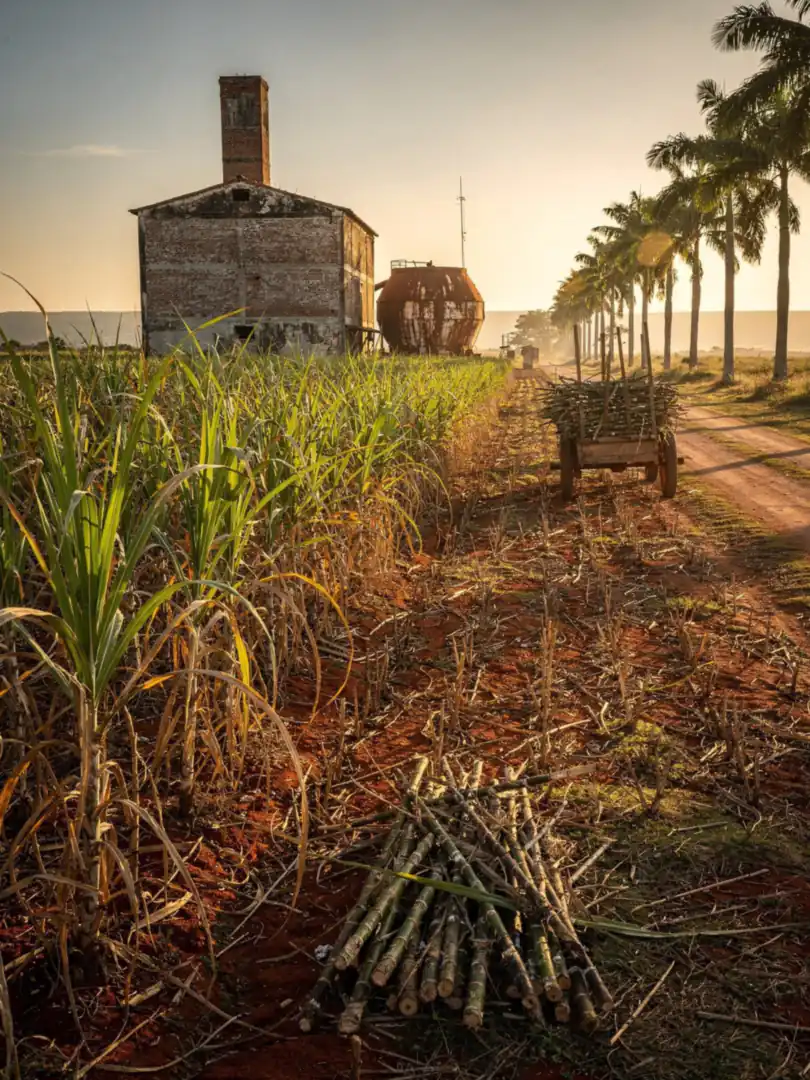
Cane in the East
Sugarcane & Molasses
Traveling from Santo Domingo eastward toward San Pedro de Macorís and La Romana, sugarcane fields stretch across the flat coastal plain. The Southeast is the country's classic sugar region, and that shapes the rum right down to the bottle.
Sugarcane is a grass that can grow several meters tall. After harvest, the zafra, it must get to the factory, the ingenio, quickly, because the juice loses sugar rapidly once cut. There the cane is pressed and the juice boiled down until sugar crystals form. Only the stubble remains in the field, from which new shoots grow the following year.
What the crystals leave behind is molasses: dark, viscous, sweet, but no longer economical to crystallize further. Syrup is the term for the thickened juice that hasn't yet been separated into crystals and residue. Fresh sugarcane juice, finally, is the third option, the one used to make Rhum Agricole, though it plays no role here.
Dominican houses mostly distill from molasses, as is typical for the Spanish style. This gives the rum a rounder, less grassy character than a cane-juice rum like those made on Martinique. For the protected designation Ron Dominicano, the sugarcane must come from within the country.
Whatever molasses the factory yields goes to the distilleries. Brugal, too, whose company history begins in the north, is linked to San Pedro de Macorís. Sugar and rum thus share the same cane here, and often the same landscape — only the path afterward differs.