First city, sugar
Region & History
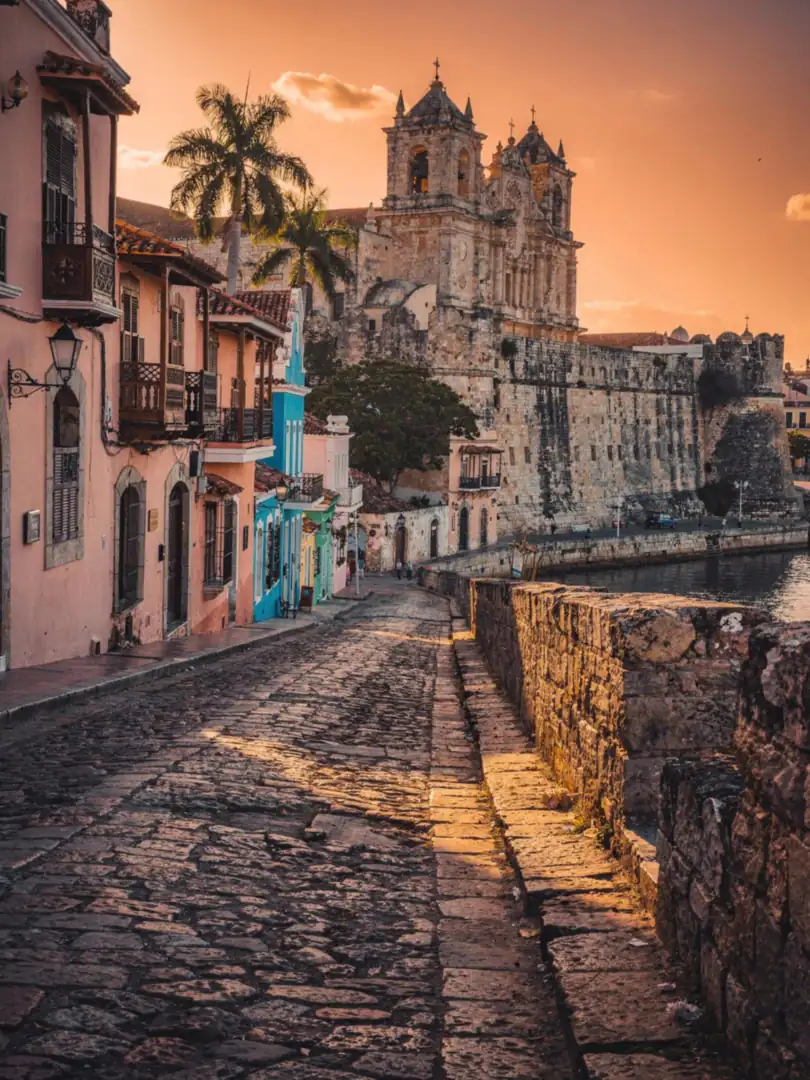
Rum from the Dominican Republic begins where the New World got its first city. Bartolomé Columbus founded Santo Domingo in 1496 on the banks of the Ozama, and the Zona Colonial is now a UNESCO World Heritage Site. Sugarcane arrived almost at the same time: according to tradition, Christopher Columbus brought cuttings to Hispaniola in 1493 on his second voyage.
By around 1516, sugar mills are documented on the island. Sugarcane was grown and processed on plantations by enslaved people. A decree of 1518 permitted the import of 2,000 people from Africa for the cane fields, followed by another authorization in 1523. Rum was not yet the focus at the time. It only emerged later from the byproducts of sugar production.
In the Southeast, sugar got a new boost in 1848, when the industry took off in San Pedro de Macorís. Workers from English-speaking Caribbean islands such as Anguilla, St. Kitts, Antigua, Nevis, and Tortola were brought in for the harvest. They were derogatorily called "cocolos." Their descendants still shape the city today.
In 1929, the Spaniard Julián Barceló arrived in Santo Domingo, and the company Barceló & Co. is dated to either 1929 or 1930, depending on the source. A hurricane destroyed the young distillery in 1930, and Barceló rebuilt it. Ron Barceló now belongs to Grupo Barceló and in 2024 ranked sixth among the best-selling rum brands with 2.2 million nine-liter cases, according to The Spirits Business.
For some years now, "Ron Dominicano" has been a protected designation of origin under the authority ONAPI, following an eight-year approval process. The rum must be fermented, distilled, and aged for at least one year in oak casks within the country. The other two major houses, Brugal (Puerto Plata, 1888) and Bermúdez (Santiago de los Caballeros, 1852), are based in the north.