Twelve months in oak
Cask & Climate
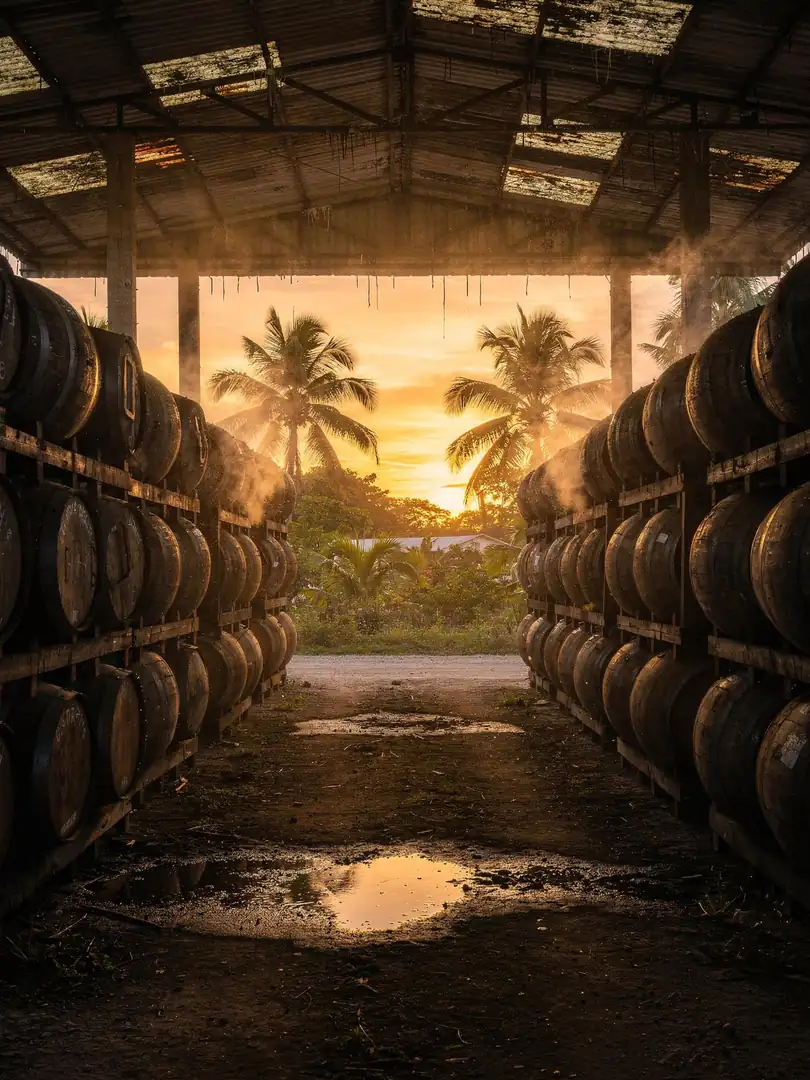
Twelve months is the minimum: the Ron Dominicano designation of origin requires the rum to age at least one uninterrupted year in oak casks within the country. Labels often indicate this with "añejo," Spanish for aged.
Members of the industry association Adopron report storing more than 300,000 casks. From these, blenders assemble their mixes, and the larger the stock, the more consistently a line can be maintained year after year.
The warehouses are warm, and in the heat, the wood works quickly. The rum moves into the cask walls and back out again, picking up vanilla, caramel, and toasted notes. In the process it loses volume: around eight percent evaporates per year, many times the Scottish rate.
How old a rum actually is depends on whether a number appears on the label. In the EU, such a figure refers to the youngest component of the blend. Terms like Añejo, Reserva, or Gran Añejo are marketing terms without a standardized definition. And a number next to the word Solera refers to the oldest component, not the bottle's actual age.
Aging mostly takes place in white oak casks. A house blends rums of different ages into a single line, so the taste doesn't depend on any individual batch. The result is a rum whose maturity is tasted without being tied to a single cask. The designation of origin may only appear on the bottle if fermentation, distillation, and aging all took place within the country.