Ron añejo
Rum Style
The defining style of the Southeast is ron añejo, aged molasses rum, soft and round with few rough edges. Under the Ron Dominicano designation, it falls into the class requiring at least one year in oak. It belongs to the Spanish style also found in Cuba, Puerto Rico, Venezuela, and Panama.
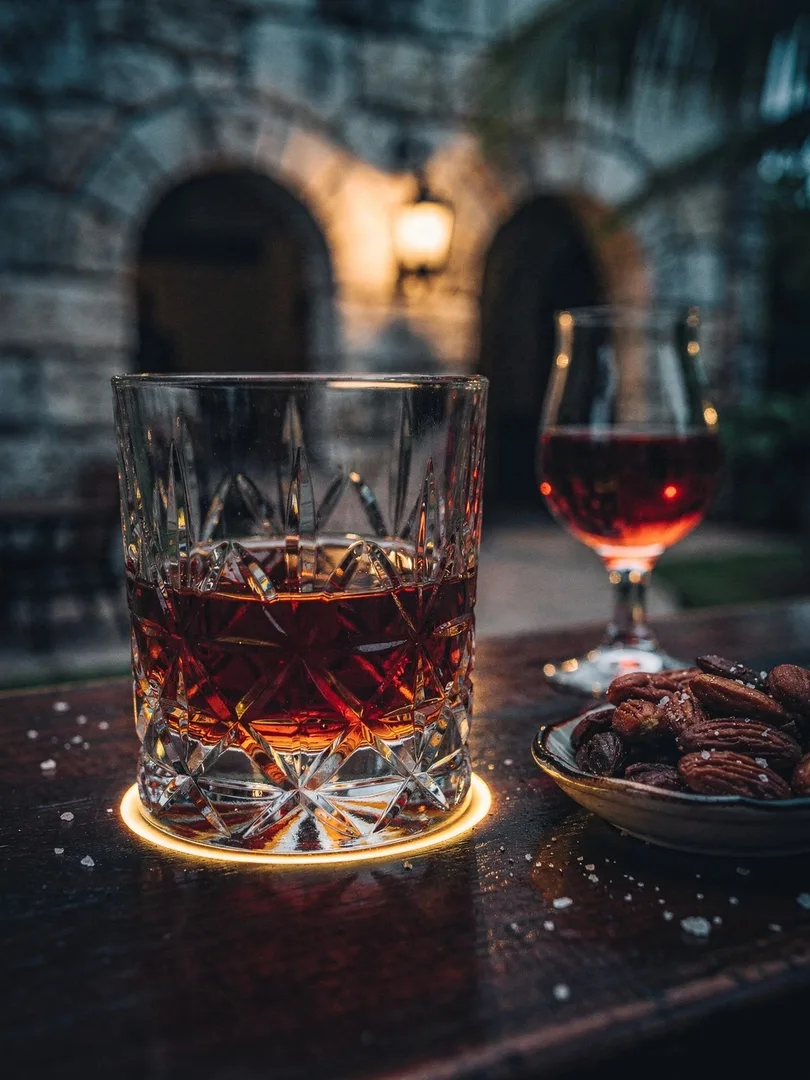
In the glass, such a rum shows vanilla, caramel, toffee, and dried fruit, along with a touch of wood. Sweet notes lead, while tannins and sharpness stay in the background.
Compared to Jamaican rum, it lacks the fruity power that comes from pot stills and long fermentation. Compared to Rhum Agricole, it lacks the grassy note, since no fresh cane juice is fermented here. What remains is a rum without sharp edges, one that holds its own in mixed drinks too.
The minimum one-year aging links it to Puerto Rico, where it's set by law; here, it's set by the Ron Dominicano designation of origin. Ron Barceló in Santo Domingo shows the style across several levels: Blanco is the lightest and freshest, Dorado sits in between, and Añejo carries the most cask influence.
Many rums of this style are lightly sweetened, up to 20 g per liter in the EU. The sugar content isn't listed on the label, since beverages above 1.2% ABV are exempt from ingredient labeling. Anyone wanting to gauge the sweetness is best off comparing several rums side by side.
Differences within the style are subtle, found mainly in the length and type of aging, the blend of casks, and the degree of filtration. A pale Blanco and a dark Gran Añejo share the same light distillate. What separates them is time in wood and the work of blenders who combine many casks into a consistent line.
Dominican Ron añejoMolasses · Column still
- Alcohol
- 37.5–40 % vol
- Cask ageing
- 1–25 Years
Soft and round, vanilla, caramel, dried fruit; light body, often lightly sweetened.