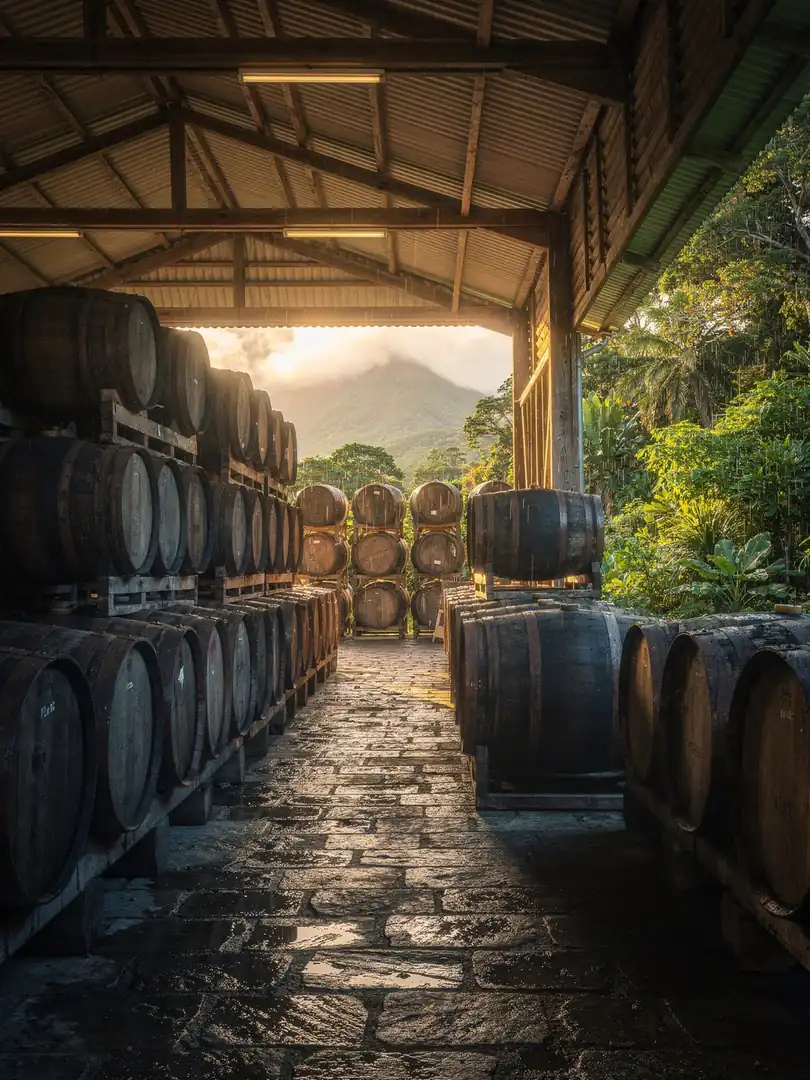
Wood in the Rain
Cask & Climate
How long must rum age? The white rhum agricole doesn't age at all — it goes to market after a brief rest. The Rhum de la Guadeloupe PGI, however, recognizes three categories: blanc, élevé sous bois, and vieux. "Élevé sous bois" means the rum was aged in wood; "vieux" denotes longer-aged bottlings.
Aging commonly takes place in used bourbon barrels made of American white oak, and for French rums, also in cognac casks. The wood contributes vanilla, spice, and toasted notes, rounding out the rum. Longueteau offers lines such as Harmonie and Genesis and has a six-year-old rhum vieux in its range.
The climate shapes the aging process. On Basse-Terre, the air stays humid, several meters of rain fall each year in the mountains, and the heat drives the rum deep into the wood. On Basse-Terre, roughly eight percent is often lost to the barrel each year, many times the Scottish rate. The French call this loss the part des anges, the angels' share.
Because the wood works so quickly, a rule of thumb is often cited: one year in the tropics is said to equal several in Europe. It originates from marketing and isn't chemically precise. Only the label is binding: in the EU, an age statement always refers to the youngest rum in the blend. If it says six years, every drop has aged at least six years.
Karukera turns aging into a craft of its own. The house sources distillate from distilleries on the island and handles aging and finishing itself, within the rules of the PGI. According to the brand's own account, it dates back to the 1970s. Between cask and bottle there are often blends of several vintages, with the age labeled according to the youngest component.