Yeast, time, esters
Fermentation
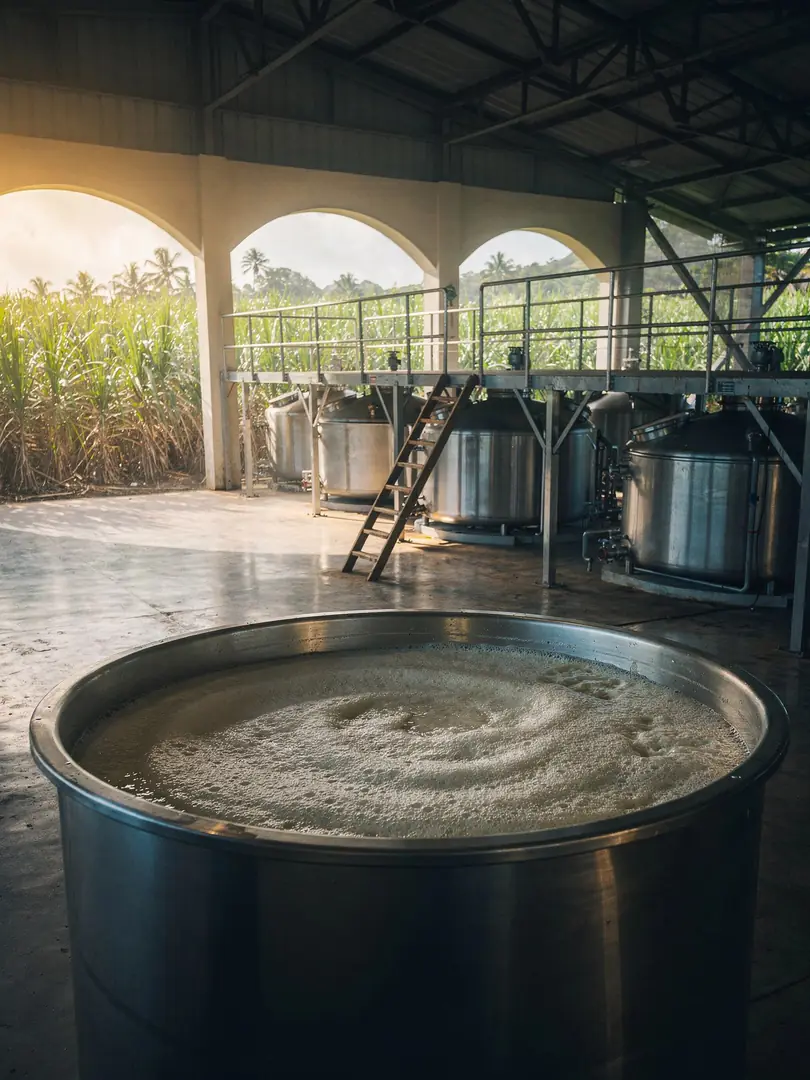
The fermentation room of a cane-juice distillery smells of fresh grass, yeast, and a hint of acidity. Here, the sugar in the juice turns into alcohol, and since this happens quickly with cane juice, fermentation takes only a few days. With molasses, which must be diluted with water, it usually takes longer.
The yeast does the work. Some houses add cultivated strains that work reliably and evenly. Others let wild yeasts, found on the cane and in the air, do the job. The result then varies more but often tastes more distinctive. Both approaches are common in rum production.
In the tropics, there's an added challenge: fermentation generates heat, and if it gets too hot for the yeast, it works poorly or dies off. That's why vats are kept in airy halls or cooled. On Grande-Terre, the trade wind helps too, sweeping almost constantly across the limestone plateau and through Le Moule and in through the open sides of the buildings.
Today, the juice usually ferments in stainless steel vats, which are easy to clean. Wooden vats are considered harder to keep clean but carry their own microbial world, which can alter the flavor. Cleanliness matters in both cases, since unwanted bacteria can sour the batch.
During fermentation, acids form alongside alcohol, and acid and alcohol combine to form esters. These are the aromatic compounds reminiscent of banana, apple, pineapple, or glue. Juice fermentation usually produces a light, grassy, floral profile. Molasses delivers fuller, sweeter, and spicier aromas. The law measures this through volatile compounds, meaning everything in the distillate besides water and ethanol. A rum labeled "traditionnel" must contain at least 225 grams of these per hectoliter of pure alcohol and may not be sweetened.