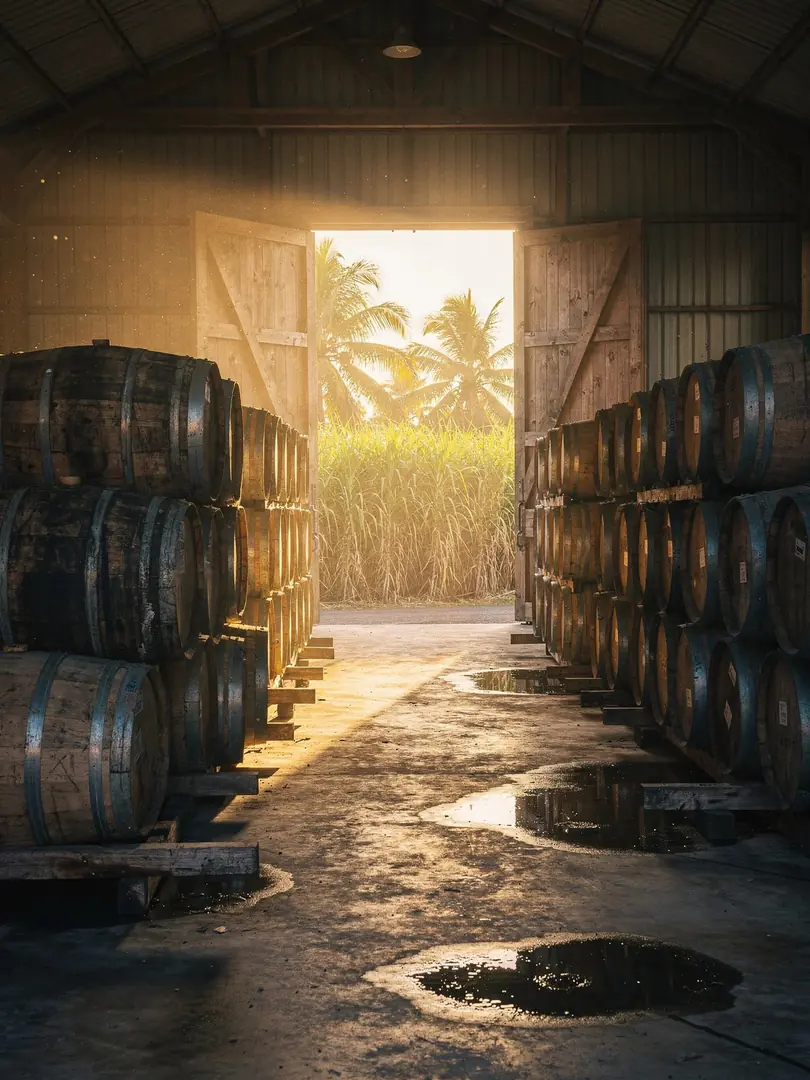
Bourbon barrel, heat
Cask & Climate
After distillation, the waiting begins in Le Moule. The young rum is crystal clear and sharp-edged. To turn it into Rhum vieux, it's filled into oak casks, where it rests for years. According to its own statements, Damoiseau uses former bourbon barrels, charred on the inside.
Bourbon may only mature in new barrels, so once used, large numbers of these casks become available. They lend the rum notes of vanilla, coconut, and toasted wood. The climate plays a role too: in the tropics, warehouse temperatures rise high enough that the liquid penetrates deep into the wood and draws back out again.
The price for this is evaporation. In tropical warehouses, casks often lose around eight percent of their contents each year, compared to about two percent in Scotland. A commonly cited rule of thumb says one year in the tropics equals three years in Europe. It's a marketing formula, not a chemical law.
Rhum de la Guadeloupe comes in three categories: blanc, élevé sous bois, and vieux. Blanc is unaged or rests in tank. Élevé sous bois has spent time in wood, though no specific number of years is required. Vieux is the aged pinnacle. Damoiseau also bottles an Ambré at 40 percent, a trade term for golden rums.
An age statement on the label may, under EU law, only refer to the youngest rum in the blend and requires maturation under tax supervision. A number like "3 years" therefore guarantees that no drop is younger. Names like "Gold" or "Ambré," on the other hand, say nothing about age. Color is no indicator either: the EU permits the use of caramel coloring to standardize the hue.