Juice, molasses, cask
Rum style
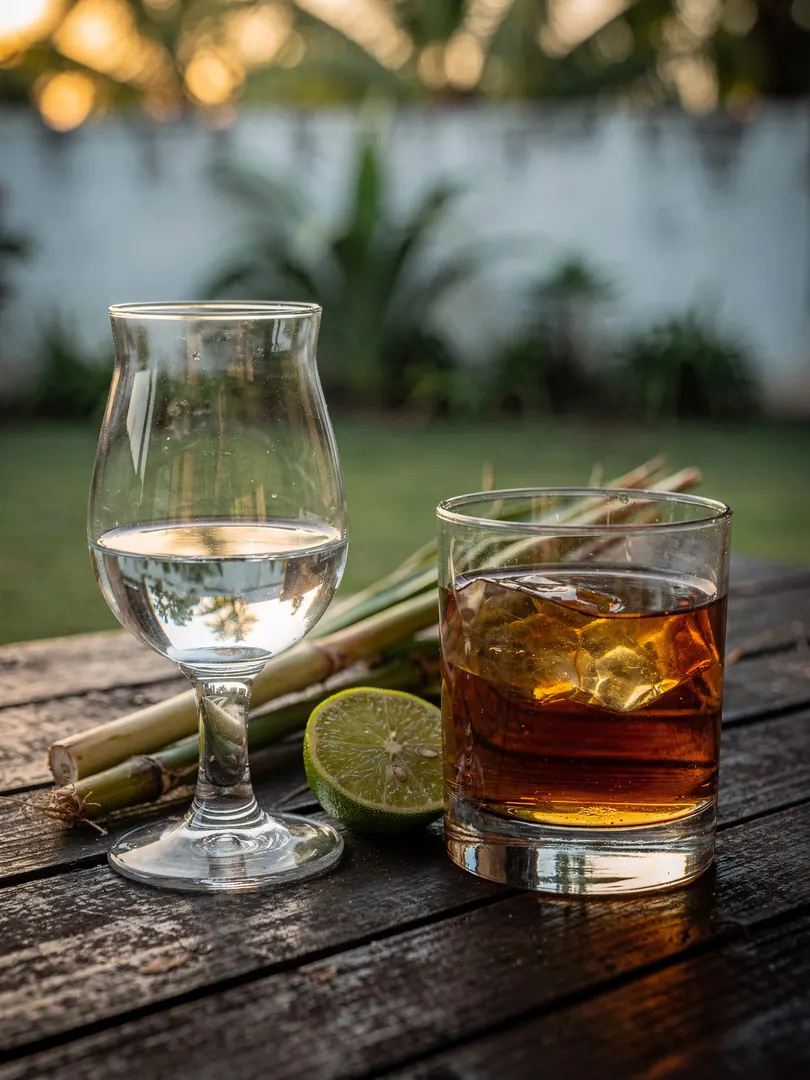
On Grande-Terre, three styles run side by side, answering the question of what sets Rhum agricole apart from Rhum de sucrerie. The first is Rhum agricole blanc. As at Damoiseau, it's made from freshly pressed cane juice, distilled in a column still, and bottled unaged. It smells of sugarcane, grass, and white pepper.
The second is Rhum de sucrerie. Its raw material is molasses or syrup from a sugar factory like Gardel, and the name says it all: it comes from the byproduct of sugar production, not straight from the cane field. It tastes rounder and sweeter, with notes of caramel and dark sugar. In Guadeloupe, it is its own, legally defined category.
The third style is Rhum vieux. It is usually an Agricole that has spent years in cask. The clear, grassy juice then turns into a rum of vanilla, toasted wood, and dried fruit, often bottled at 42 percent. Maturation makes the difference: the cask rounds out the green profile and adds depth.
Compared to neighboring Martinique, the difference shows up on paper. Martinique has the AOC with fixed minimum aging times for VO, VSOP, and XO. Guadeloupe only has the protected geographical indication and additionally allows the molasses designation. Both islands distill cane-juice rum, but under different levels of regulation.
The profile lists Grande-Terre's three styles along with their typical characteristics. The figures describe common bottlings, not legal requirements, and trade terms like "Ambré" don't appear there, since they say nothing about the production method.
Rhum agricole blanc (Guadeloupe)Cane juice · Column still
- Alcohol
- 40–55 % vol
- Cask ageing
- 0 Years
Grassy and fresh, sugarcane, white pepper; unaged, dry finish.